-

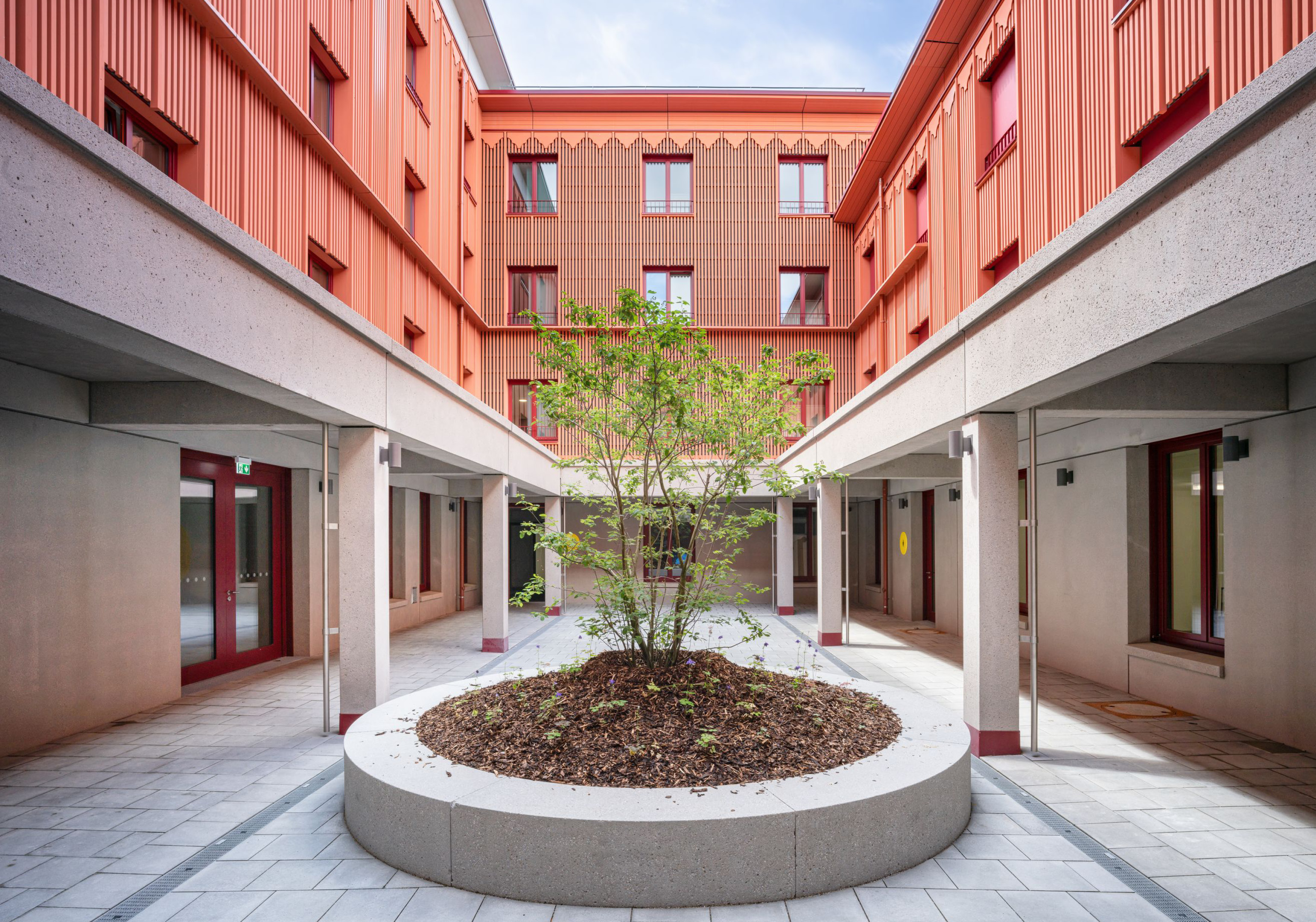
A central courtyard leads the different groups to separate areas.
-
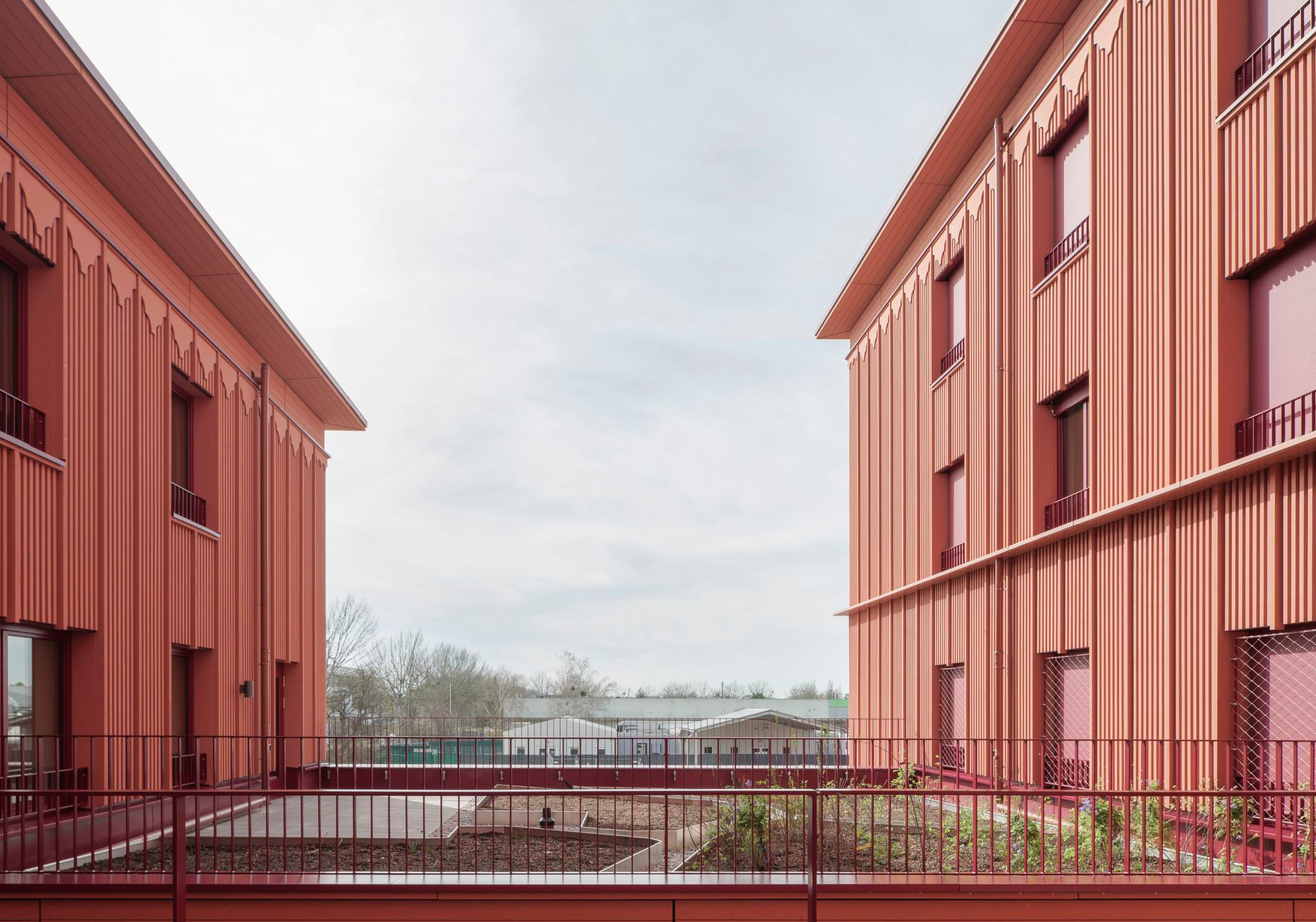
Individual "building fingers" are staggered and connected only at the corners.
-
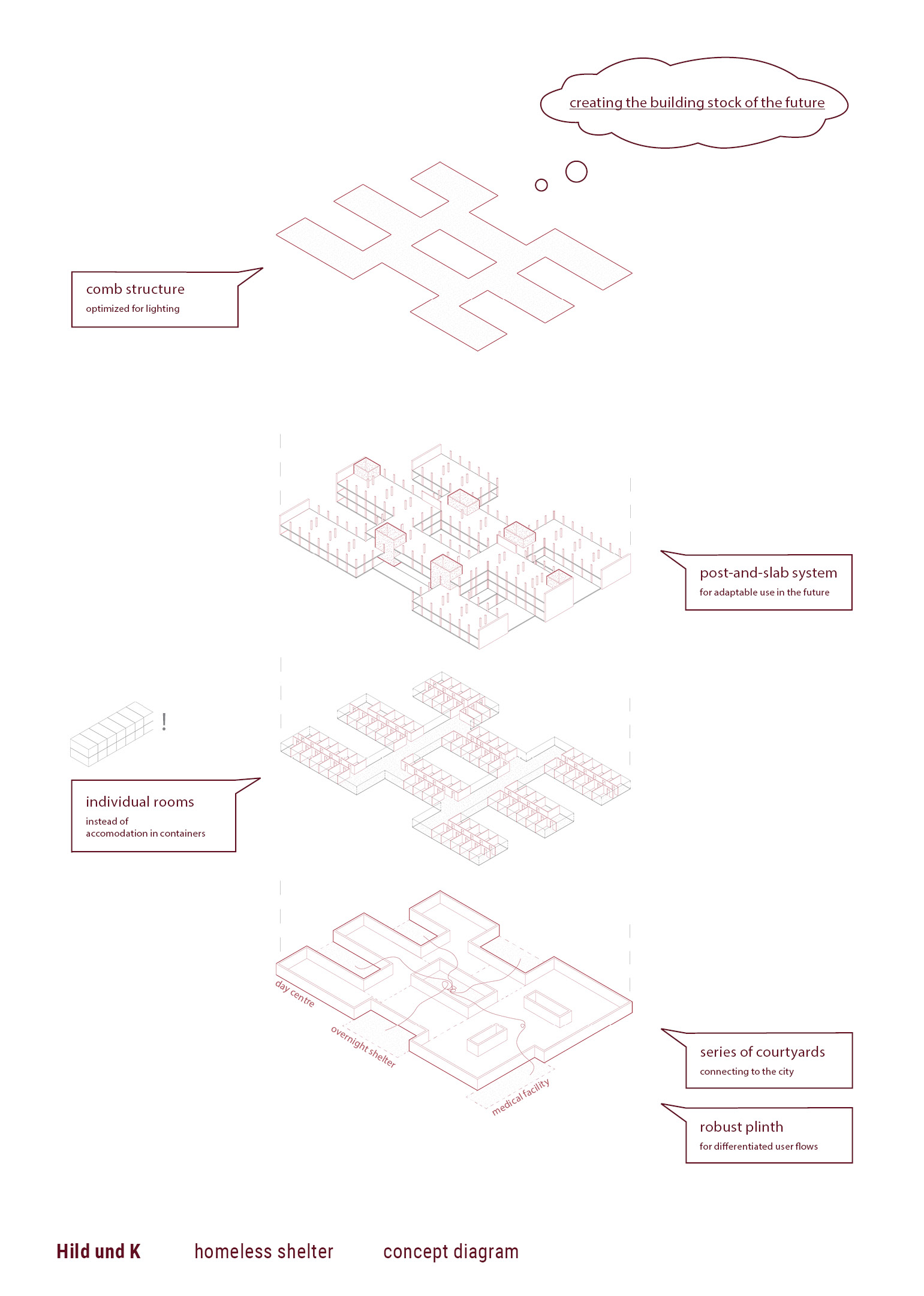
The comb-like floor plan minimises conflict within the facility.
-
Located in a commercial area, the house might be an initial element for a mixed-used neighbourhood.
-
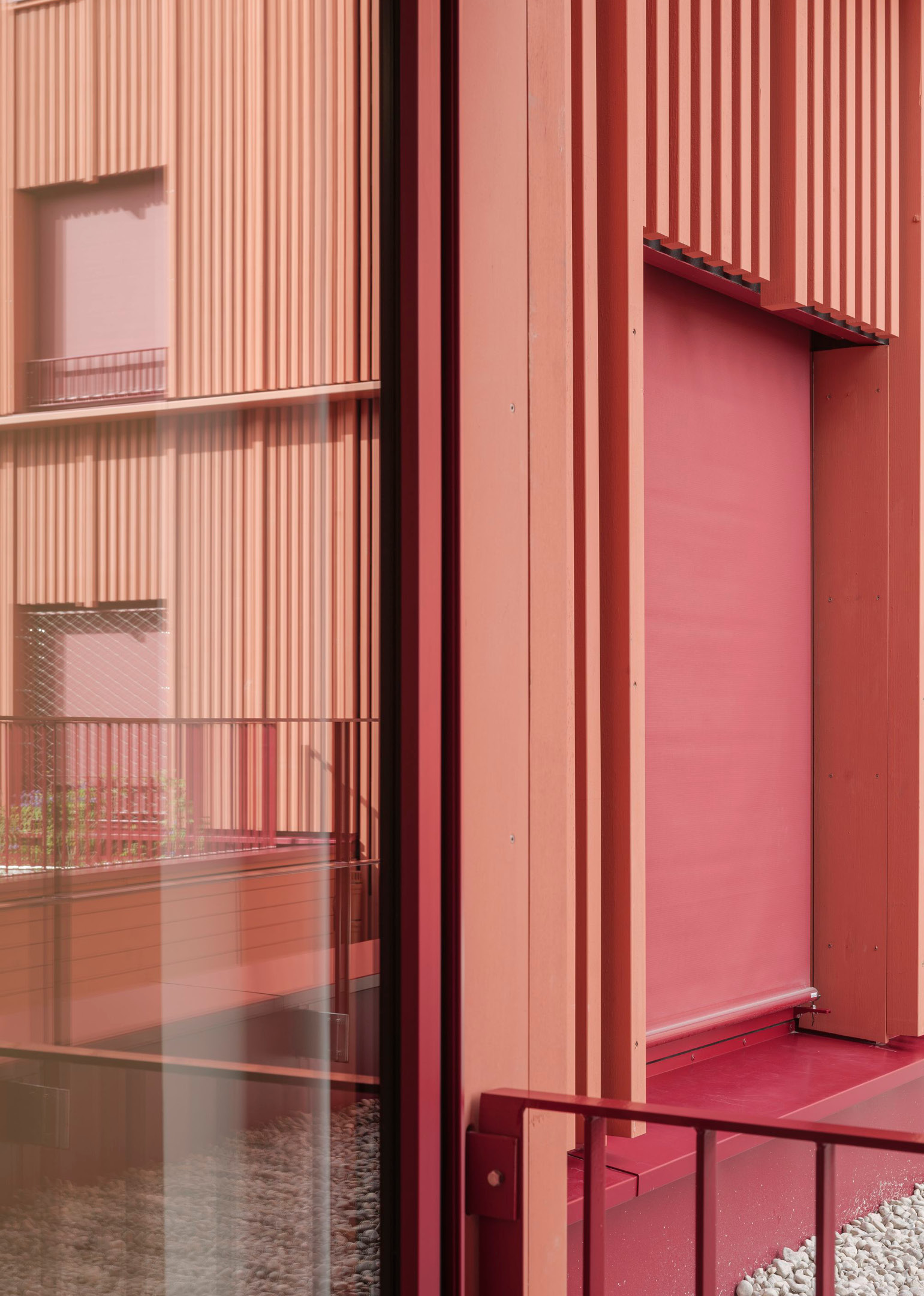
The upper façade is constructed from prefabricated timber frame elements painted in a red hue.
-
The facility offers comprehensive support to those seeking shelter, here: a daytime gathering area.
-
concept diagram
-
axonometric drawing
-
ground floor plan
-
typical floor plan
-
cross section and south elevation
Homeless shelter Lotte Branz
Hild und K Architekten BDA, Studio Vulkan Landschaftsarchitektur. München, Germany
-
Name of work in English
Homeless shelter Lotte Branz
-
Name of work in original language
Übernachtungsschutz und medizinische Einrichtung Lotte Branz Strasse
Prize year
EUmies Awards 2026
-
Work Location
München, Germany
-
Studio
Hild und K Architekten BDA, Studio Vulkan Landschaftsarchitektur
EUmies Awards 2026 Nominees





The concept of Munich's overnight shelter – a facility for homeless people – is nationwide unique. Within a narrow framework, the specifically drafted building creates a temporary home with urban qualities amidst a commercial area. High social, sustainable and architectural goals are achieved.
Collaborators
Collaborator (office): Katharina Benz - Hild und K; Structure: Sailer Stepan Tragwerkteam; Project management: Drees & Sommer; Building physics: Möhler + Partner; Installations: Planunion; Fire Safety and Accessibility: K33 Brandschutz
Program
Social welfare
-
Labels
Community
Site area
21521 m²
-
Client
Landeshauptstadt München
Total gross floor
13000 m²
In contrast to the monotony of standard container constructions, this refuge was designed with exceptional care and attention to detail. The underlying intention is to provide people in extreme need not only with emergency assistance, but also with a ‘temporary home’. The façade made of red painted timber frame elements above a robust base of concrete sandwich elements gives horizontal and vertical structure to the large volume. An urban building came into being. Located in a currently commercial area, it might also serve as an initial element for a planned, mixed-use neighbourhood.
The new building offers 730 places. Those seeking shelter are no longer accommodated in rooms with eight to twelve people but rather in rooms with four beds. What’s more, the facility’s purpose has evolved from merely providing overnight accommodation to offering comprehensive support, including dedicated spaces for counselling, medical treatment, and a daytime gathering area. To minimise conflict, separate areas are provided for different groups. At the same time, a certain degree of openness between spaces is essential. The spatial layout, based on these functional requirements, draws typological inspiration from Theodor Fischer’s historic “Ledigenheim”. Individual "building fingers" are staggered and connected only at the corners. This floor plan introduces an additional, critical quality—particularly given the uninviting location of the building amidst wholesale markets, warehouses, and parking areas: the inclusion of attractive courtyards that create additional, sheltered spaces.
For reasons of cost and time efficiency, a modular construction approach was ideal. Above a sturdy base made of precast concrete elements, the upper façade is constructed from prefabricated timber frame elements. The decorative coverings beneath the parapet conceal horizontal surfaces which would otherwise be at risk from moisture. Highly insulated façades, external sun protection and heat recovery enable energy-efficient building operation well below the legally required values. The interior features materials such as wood, linoleum, polished screed, and ceramic tiles—were chosen for their durability yet ability to create an inviting atmosphere. While renewable raw materials with their very low carbon foodprint play an important role in the façade and interior finishes, the structure consists of a precast concrete skeleton. This construction allows for straightforward dismantling, reconfiguration, and expansion, providing flexibility to adapt to potential future scenarios.