-

The old classroom with uncoloured glacial clay plaster & hemp-lime acoustic ceiling
-
Joinery in the old school is re-crafted from the original timber flooring
-
The new barn on the old barns footprint in Danish grown timber
-
The entrance hall with reddish site-based clay plaster and swedish limestone on limecrete sub-floor
-
The garage transformed into a residence, with new half-timbered frame & clay floors
-
Timber is Danish grown and new doors & windows locally produced.
-
Ground Floor Plan
-
First Floor Plan
-
Bio-regional map
-
On-site materials & processes map
-
School Detail Section
-
Garage Transformation Detail Section
Hedeskov Living Lab
Djernes & Bell. Rønde, Denmark
-
Name of work in English
Hedeskov Living Lab
Prize year
EUmies Awards 2026
-
Work Location
Rønde, Denmark
-
Studio
Djernes & Bell
EUmies Awards 2026 Nominees
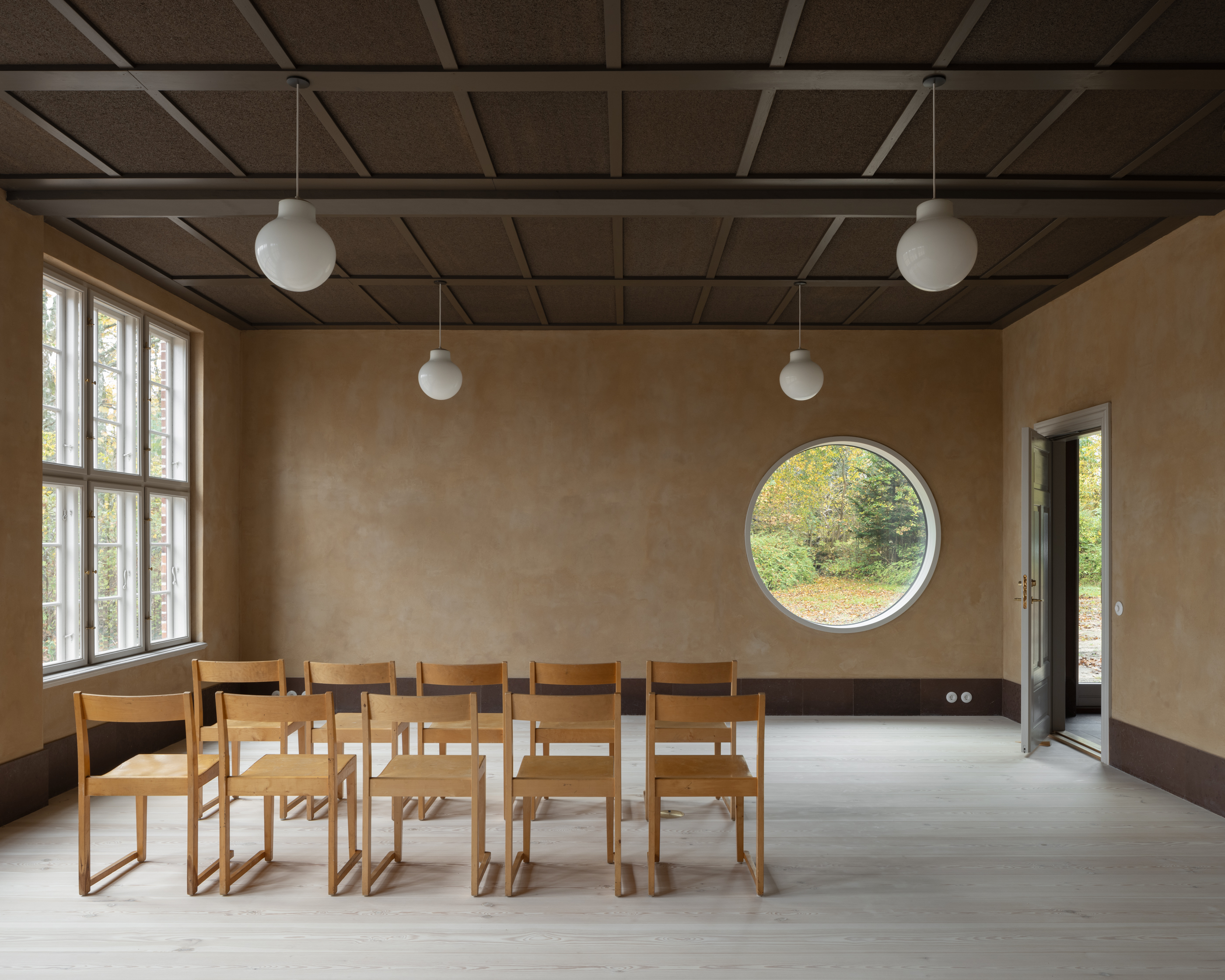


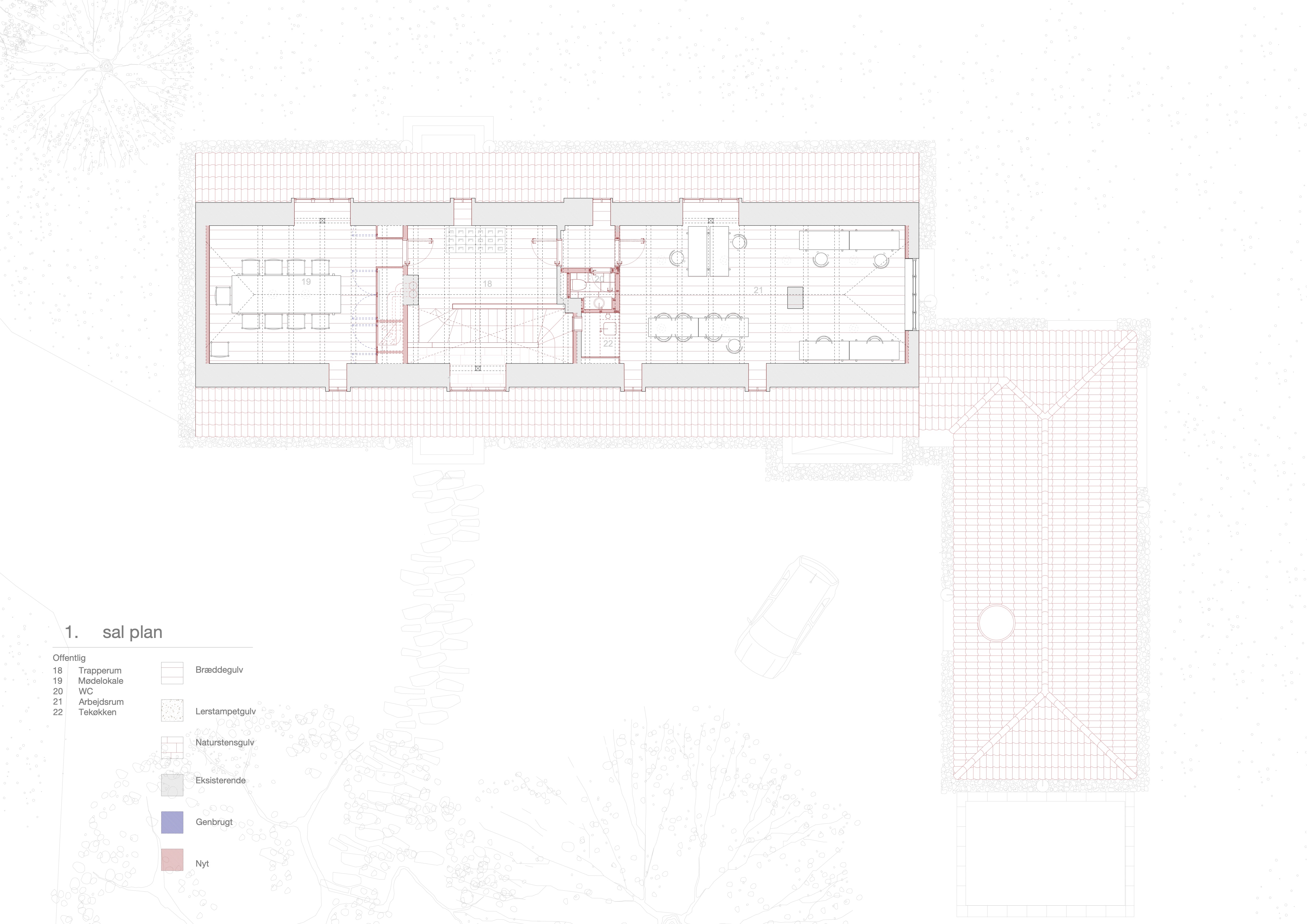


Hedeskov Living Lab is the transformation of a former rural school through preservation, repair, and the reuse of on-site building and landscape materials. A living lab for regenerative practice and reconnection of architecture to the natural systems and landscapes that sustain it.
Collaborators
Collaborator (office): Ben Bosence - Local Works Studio; Collaborator (office): Loretta Bosence - Local Works Studio; Building physics: Torben Valdbjørn Rasmussen - Aalborg University BUILD; Anthropology: Marie Stender - Allborg University BUILD; Anthropology: Lene Wiell - Aalborg University BUILD; LCA: Regitze Kjær Zimmermann - Aalborg University BUILD; LCA: Christoffer Ole Olsen - Aalborg Univesty BUILD; Master Mason: Kim Åge Plesner - HUJ A/S; Master Mason: Kenni Wurtz - HUJ A/S; Construction management: Hans-Ulrik Jensen - HUJ A/S; Master Carpenter: Svend-Erik Sørensen - Svend Erik Sørensen A/S; Master Carpenter: Niels-Peter Sørensen - Svend-Erik Sørensen A/S; Installations: Kaj Dahl Andersen - Kaj Dahl Andersen A/S; Environmental: Malte Kvist Brøgger Kjer - ETOS; Master Cabinet Maker: Ole Hjort - Kalø Køkkenet; Groundworks: Erik Pedersen - Erik Pedersen A/S; Master Painter: Bjarne Kildahl - Malerfirmaet Kildahl; Structure: Jakob Gottlieb - VITA; Fire Safety and Accessibility: Flemming Bo Johansen - FBJ Engineering; Clay Floors: Lasse Koefoed Nielsen - Ler & Liv; Acoustics: Bo Mortensen - Gade Mortensen; Local biogenic material supply: Magnus Henriques - Havnens Hænder; Funding: Stig Hessellund - Realdania; Geology: Inga Sørensen - Inga Sørensen
Program
Mixed use - Commercial & Offices
-
Labels
Aggregation · Facilities · Farm · Food · Heritage · Office · Research · Visitors Centre · Pavilion
Site area
1800000 m²
-
Client
Hedeskov Center for Regenerative Practice
Total gross floor
700 m²
The Hedeskov project follows the method of “making good”, which prioritises repair, reuse, and restoration as primary design drivers. Regenerative and vernacular methods draw on site-based materials from both the landscape and existing buildings, aligning construction with the local ecology of moraine soils, woodlands, and wetlands. Alongside a cross-disciplinary ecology of practice — spanning crafts, land stewardship, and research — the aim was to forge a tangible connection between buildings and processes of nature restoration, allowing architecture itself to communicate ecological repair.
Hedeskov Living Lab redefines architecture as an active agent in ecological repair. Guided by four regenerative principles — preservation and reuse, biodiversity support, replacement of carbon- and chemical-intensive materials, and integration with natural systems — the project becomes a living prototype for regenerative practice. Geological core scans shaped the interior palette, while materials were mapped and harvested with geologists, farmers, and craftspeople from nearby soils, wetlands, and forests. Construction followed seasonal rhythms, non-extractive processes, and traditional craft knowledge, aligning building with land care. The resulting architecture reveals the origins of its materials, strengthens ecological cycles, supports biodiversity, and evolves as a shared tool for research, collaboration, and demonstration — offering a replicable model for future bioregional transformation.
Construction and materials are centred on preservation, reuse, and site-specific resources. The old school was carefully restored, while a former garage was rebuilt with a half-timbered frame, limecrete side foundations, and hemp-lime infill. Moraine clay, glacial sand, bulrush fibres, and local horse manure were crafted into breathable plasters and clay flooring, while timber was either Danish-grown or reused from the existing buildings. The strategy replaces carbon- and chemical-intensive materials with low-impact, non-toxic alternatives. Materials echo the site’s geological and built history, and harvesting practices are designed to enhance local biodiversity. All interventions are low-tech, reversible, and easy to maintain, reducing embodied energy and extending building life. Post-occupancy monitoring of moisture, air quality, biodiversity, and use ensures the building continues to evolve as a prototype — demonstrating how architecture can actively regenerate ecological systems.