-

The design of Grønningen-Bispeparken flows like natural waterscapes throughout the park.
-
Form follows nature and creates room for all kinds of life: social, cultural, and ecological
-
Grønningen-Bispeparken is placed between two separate social housing estates, healing olddivisions
-
The park's wooden art structures are deliberately ambigously designed to invite innovation and play
-
The 'social swales' can collect large rainfalls - functioning as social meeting places when dry
-
Tiles and stones are reused and channel the cultural heritage of the neighbourhood
-
The landscape plan of Grønningen-Bispeparken
-
The cloudburst plan of Grønningen-Bispeparken
-
Technical drawing of Grønningen
-
Technical drawing of Court yard in Grønningen-Bispeparken
Grønningen-Bispeparken
SLA. København, Denmark
-
Name of work in English
Grønningen-Bispeparken
-
Work Location
København, Denmark
-
Studio
SLA
Nominees
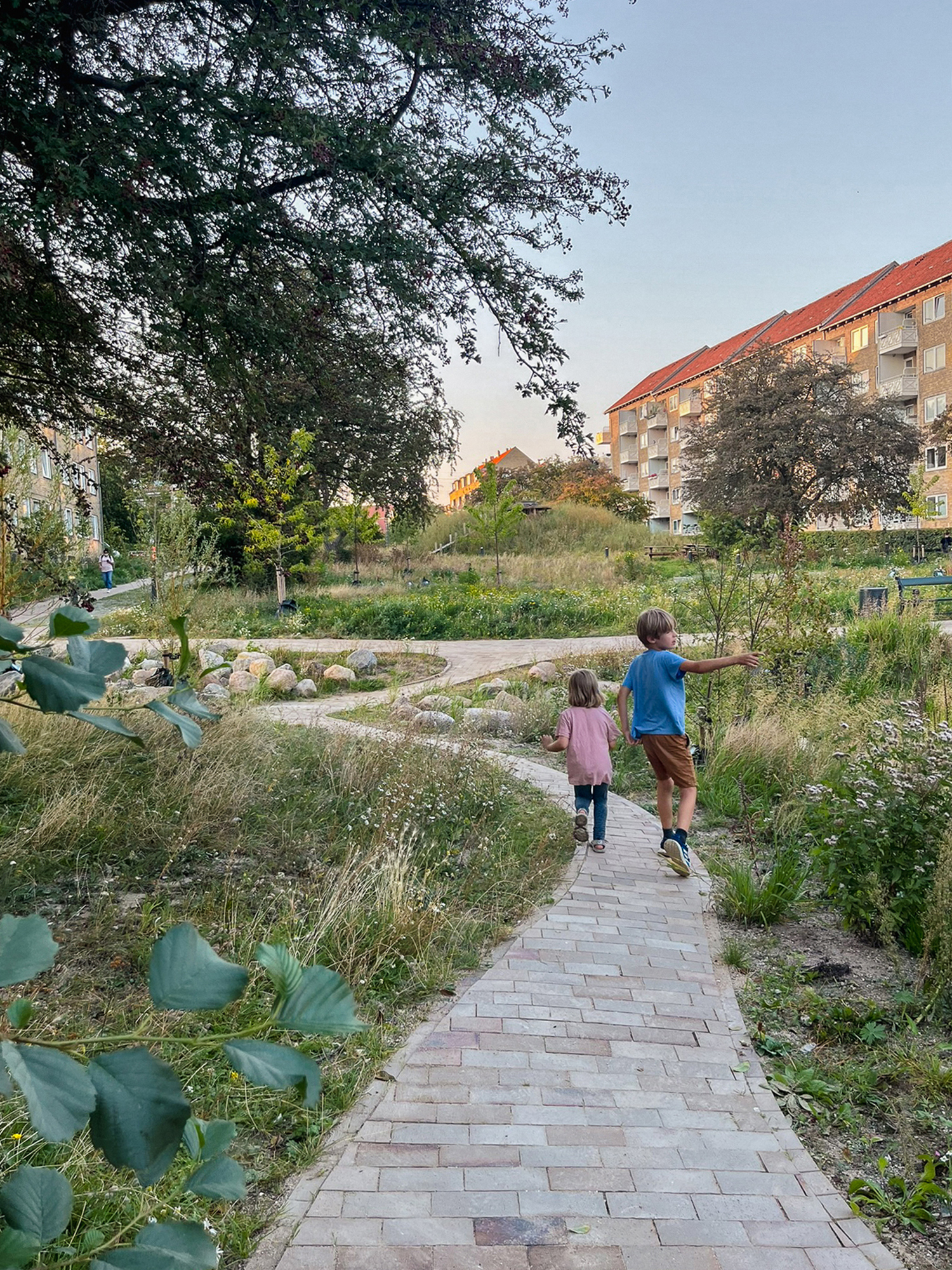


Grønningen-Bispeparken is Copenhagen’s latest and most radical climate park to date, where form follows nature and architecture’s foremost task is to create spaces for life – all life. Rainwater flows through a series of stormwater basins, which, when dry, double as social places for the community.
Collaborators
Environmental: Niras; Artist: Kerstin Bergendal; Structure: Efterland; Construction management: Ebbe Dalgaard A/S
Program
Landscape
-
Labels
Gardens & Parks
Site area
20000 m²
-
Client
City of Copenhagen
Total gross floor
20000 m²
Cost
462 €/m²
Grønningen–Bispeparken is Copenhagen’s most radical climate park to date. Located in the socially diverse district of Nordvest, it transforms 20,000m² of neglected lawns between two 1950s housing estates into a lush, biodiverse, and socially cohesive landscape. The park merges rainwater management, biodiversity restoration, artistic community engagement, and social regeneration into one living framework. Meandering paths, wooden art structures, and richly planted rain basins create an ever-evolving environment where form follows nature, and architecture becomes a catalyst for life – all life.
Once a barren and unsafe green strip dividing two housing blocks, the site suffered from flooding, social fragmentation, and lack of identity. The strategy was to let nature and community guide both form and process. Through a long-term co-creation with residents, artists, and engineers – much of it carried out during the COVID pandemic – the design team developed a shared narrative built on listening, trust, and participation. Ecological resilience, water management, social cohesion, and cultural heritage were treated as inseparable forces shaping every decision. Artist Kerstin Bergendal’s participatory art project introduced ambiguity, dialogue, and openness, ensuring that the park remains co-owned and constantly adaptive over time. Grønningen–Bispeparken thus redefines the process of designing urban parks as a democratic, evolving ecosystem – creating a place where nature, culture, and community meet, coexist, and continuously remake one another.
The park’s form and structure follow the flows of water. Eighteen interconnected bioswales can collect and infiltrate over 3,000m³ of rainwater, protecting surrounding homes while creating new habitats. These green infrastructures double as social spaces with a mix of social programs - turning technical necessity into shared social experience. Materials were chosen for resilience, tactility, and resonance with context: reused bricks and stones, low-carbon gravel, yellow tiles referencing the nearby Grundtvig’s Church, and locally sourced wood for the park’s ambiguous art structures. Planting includes 149 trees of 23 species and over four million specially designed wildflower seeds, ensuring rich seasonal variation and long-term ecological health. Maintenance is adaptive, balancing wildness and care to support both biodiversity and human life. Grønningen–Bispeparken shows how climate resilience, low-cost construction, and beauty can coexist in a single living system.