-

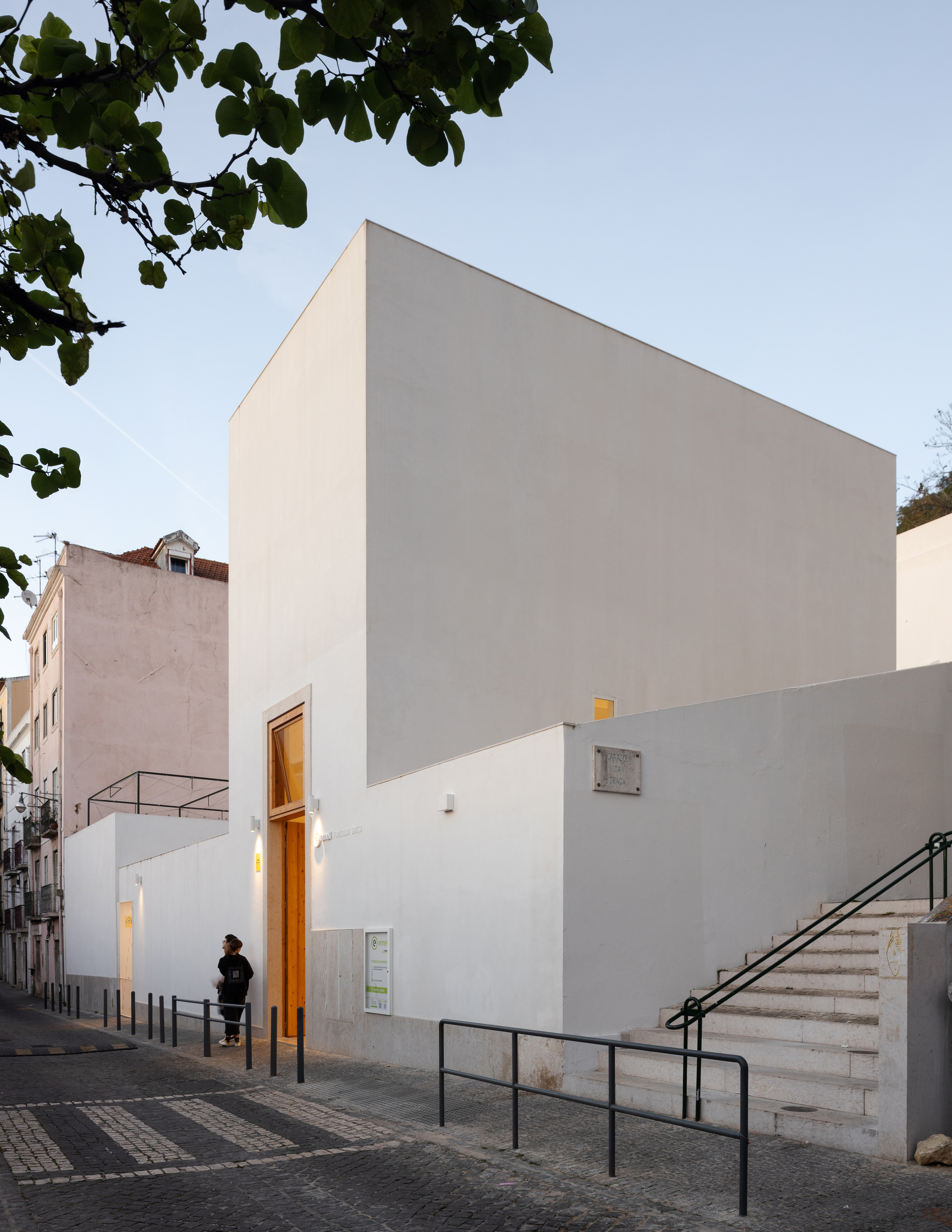
View from Rua dos Lagares of the lower station
-
View of the interior of the lower station
-
Bottom view of the access of the upper station
-
View of the cabin approaching the upper station
-
Top view of the access of the upper station
-
Aerial view of the Colina da Graça
-
General Plan
-
General Plan of Interiors
-
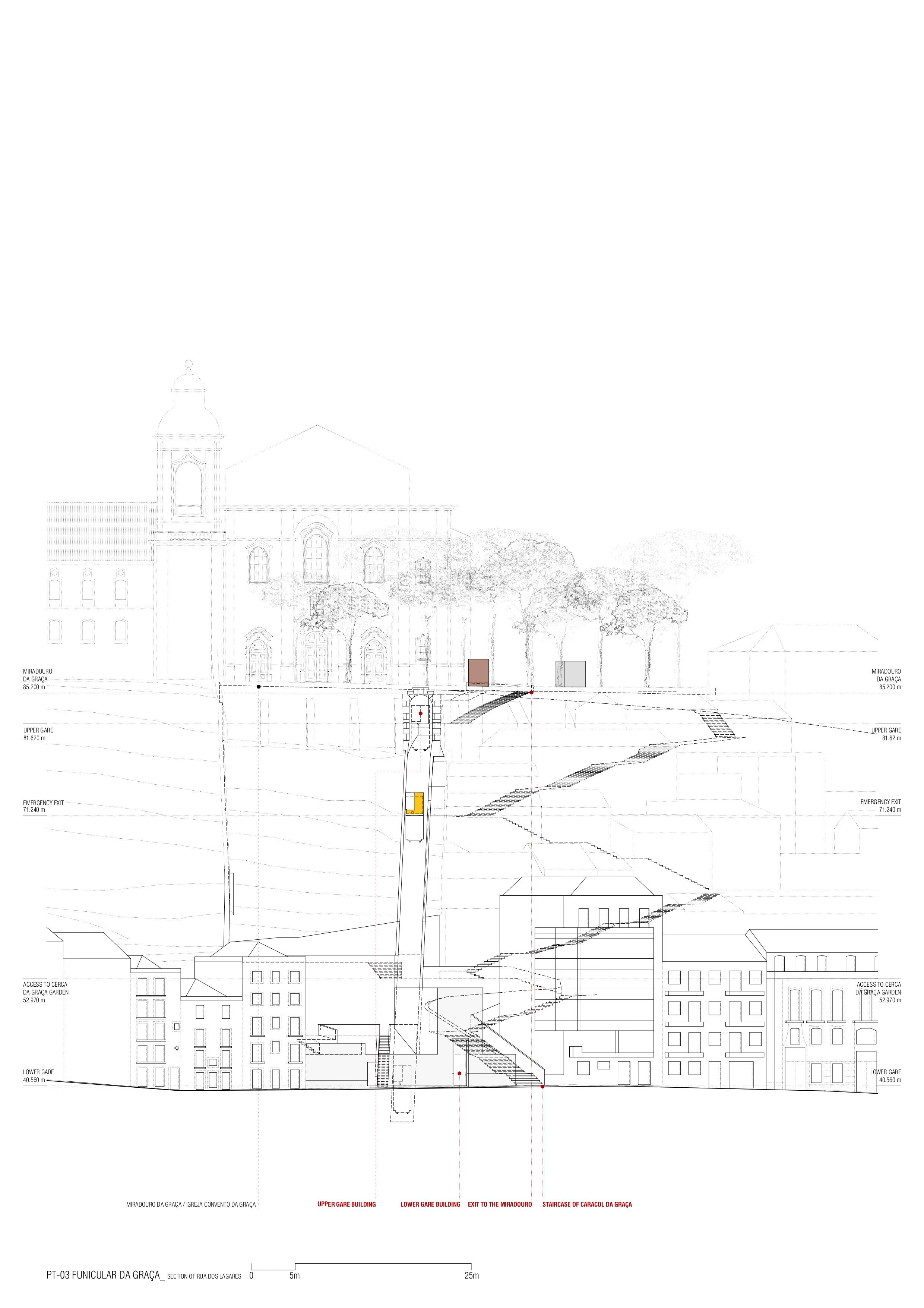
Section of Lagares Street
-
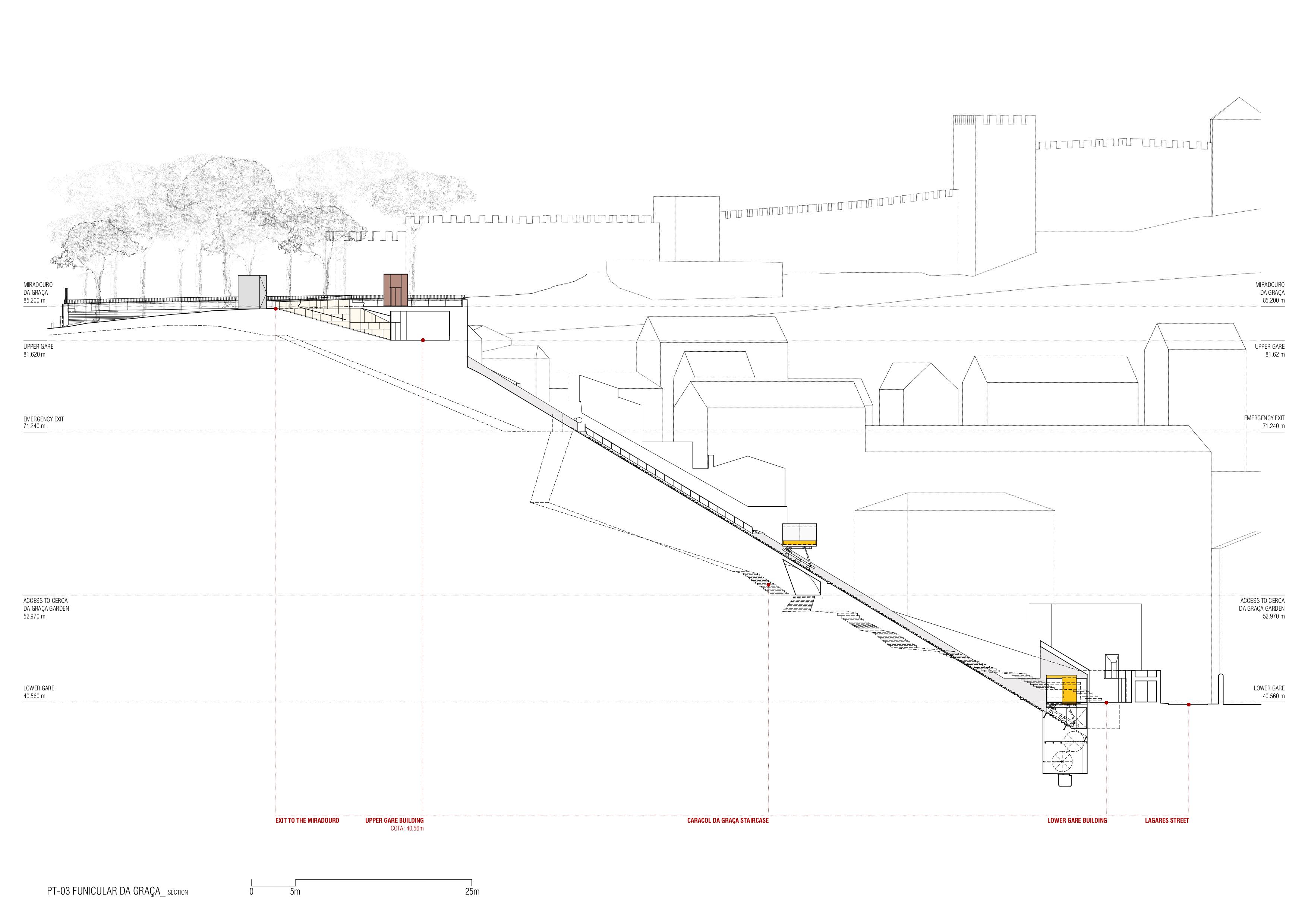
Main Section of the Funicular
-
Detail Drawings of the Upper Gare
-
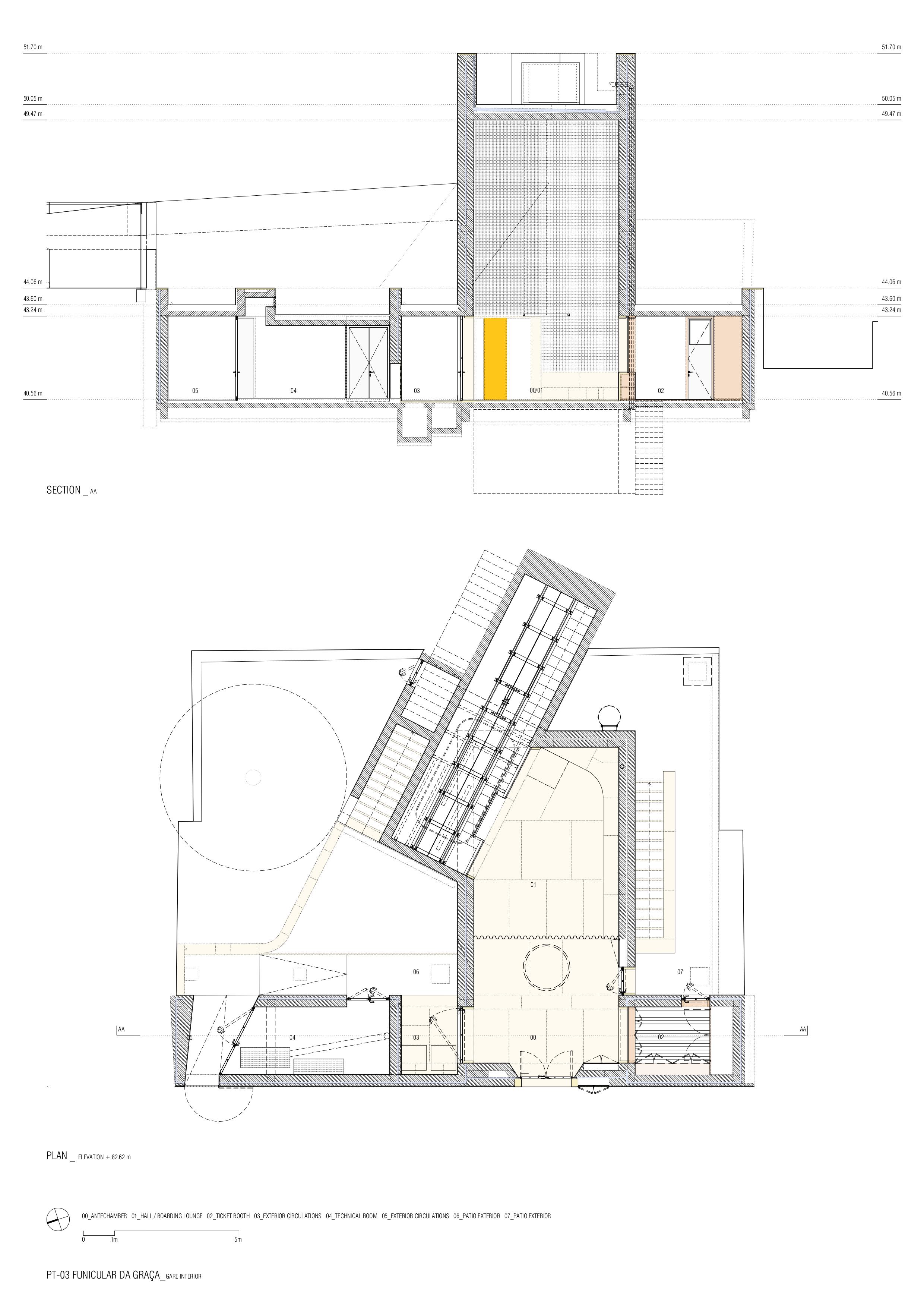
Detail Drawings of the Lower Gare
Graça Funicular
Atelier Bugio. Lisboa, Portugal
-
Name of work in English
Graça Funicular
-
Name of work in original language
Funicular da Graça
-
Work Location
Lisboa, Portugal
-
Studio
Atelier Bugio
Nominees



In the context of a new dynamic promoting inclusive mobility and encouraging the use of public transport, the accessibility between the city’s downtown and the Castle hill was rethought, creating a continuous route that links the Miradouro da Graça to the Mouraria neighbourhood.
Collaborators
Collaborator (office): Ana Loureiro - Atelier Bugio; Collaborator (office): Bruno Oliveira - Atelier Bugio; Collaborator (office): Fernando Amado - Atelier Bugio; Collaborator (office): Francesco Mariani - Atelier Bugio; Collaborator (office): Hugo Amaro - Atelier Bugio; Collaborator (office): José Cano - Atelier Bugio; Collaborator (office): José Pinto - Atelier Bugio; Collaborator (office): Luís Ferro - Atelier Bugio; Collaborator (office): Marlene Santos - Atelier Bugio; Collaborator (office): Mauricio Martins - Atelier Bugio; Collaborator (office): Miguel Antunes - Atelier Bugio; Collaborator (office): Miguel Moreira - Atelier Bugio; Collaborator (office): Pedro Alves - Atelier Bugio; Collaborator (office): Ricardo Correia - Atelier Bugio; Structure: Miguel Villar - Betar; Building physics: João Mira - Ohmsor; Installations: Marta Azevedo - Campo D'Água; Installations: Mário Boucinha - Blue Horizon; Surveyor: Rodrigo Basílio; Measurements: Ana Cotrim - Tribato; archaeologists: Arqueohoje; Supplier of the funicular: Rui Pinheiro - Liftech; Construction management: Tecnoplano; Construction management: Rioboco
Program
Infrastructure
-
Labels
Tram
Site area
2014 m²
-
Client
EMEL - empresa de mobilidade e estacionamento de Lisboa
Total gross floor
676 m²
The Castle Hill, articulated here with Graça Hill, is one of the city’s main references, with undeniable historical, cultural, and urban value. While the steep slopes and ancient urban morphology are among the area’s most valuable characteristics, they also make accessibility to the Castle and the surrounding historic neighbourhoods, Graça and Mouraria, difficult. These features create significant barriers for both visitors and residents. The project addresses these challenges, intersecting with pre-existing structures and generating a new dynamic essential to the city.
The large public space of Graça is reunified, recovering its ancestral structure as an entrance to the city. The notable building of the Convento da Graça, embraced by the Fernandina Wall, positions the church within the reorganized public space and the city itself. In a single gesture, Mouraria is connected to Graça through mechanical means—in this case, the funicular—which finds its rightful place, reinforcing the existing layout and linking the Convent Wall and the Escadinhas do Caracol to the viewpoint and garden. This delicate relationship strengthens and streamlines the connections and interactions of different times and populations, both of the neighbourhoods’ residents and the more transient visitors. The choice of this transport mode proved straightforward, sustained in a long tradition of people-moving mechanisms, mostly electric, such as vertical and inclined lifts present on Lisbon’s hills. Following archaeological works, the initial proposal was adjusted to ensure better integration with the archaeological findings in the area of arrival at the Miradouro da Graça.
The Graça Funicular project follows a route along a hill with variable slope, describing a horizontal curve. At the ends of the route, there are two buildings for boarding and disembarking the cabin: one at the lower level, Rua dos Lagares, and another at the upper level, connecting to the Miradouro da Graça. At the lower level, continuing the Rua dos Lagares façade, a building opens a large public door to the street. This entrance provides access to the funicular through a “gare” building, where the equipment is stored when idle and passengers wait before starting the journey. The upper “gare” is slightly below the viewpoint, allowing the funicular, when physically passing the retaining wall, to meet the viewpoint at a sunken level so as not to interfere with the archaeological remains uncovered during excavations. Passenger access to the viewpoint is then provided via a slow staircase or an elevator as an alternative.