-

Gampa - gallery
-
Sféra - projection space
-
Sféra - workshop
-
Exterior
-
Exterior - entrance
-
Public space - gap in between volumes
-
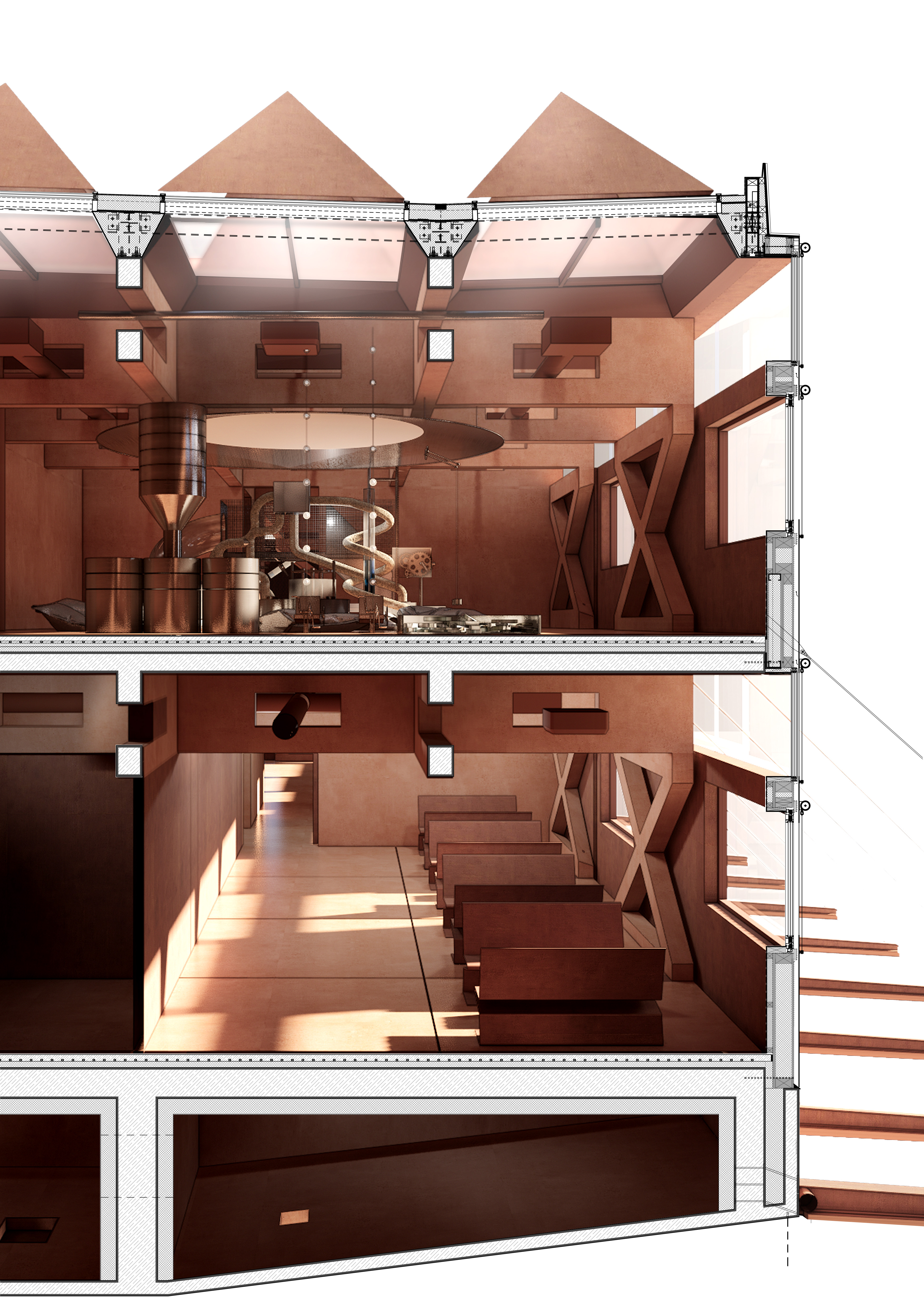
3D section - details
-
Longitudinal section
-
Short section
-
3D short section
-
3D section Sféra
-
Floorplans
GAMPA and Sféra Pardubice
Sepka Architects. Pardubice, Czechia
-
Name of work in English
GAMPA and Sféra Pardubice
-
Name of work in original language
GAMPA a Sféra Pardubice
Prize year
EUmies Awards 2026
-
Work Location
Pardubice, Czechia
-
Studio
Sepka Architects
EUmies Awards 2026 Nominees
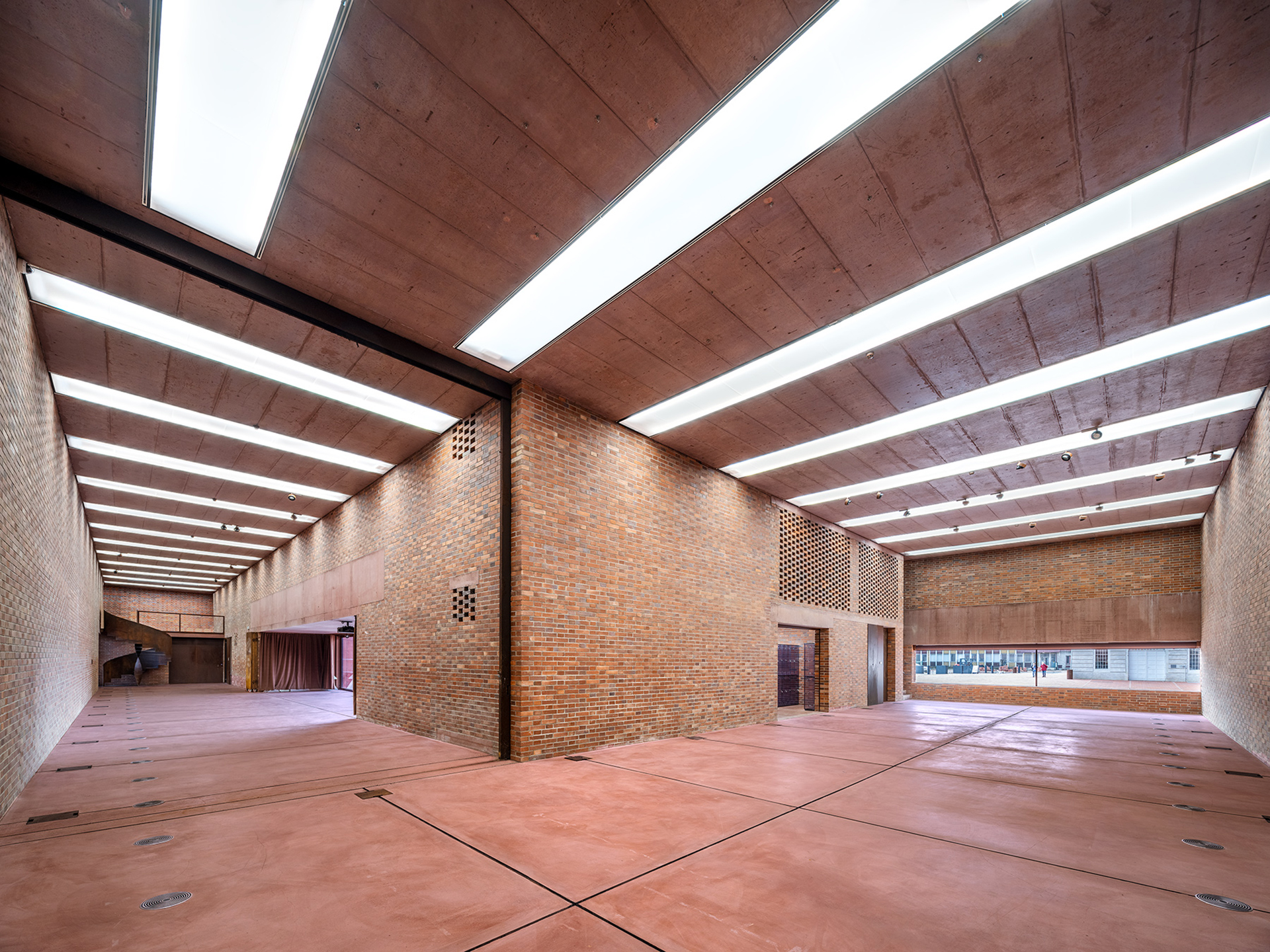



The object of the polytechnic workshops - Sféra levitates above the Gallery GAMPA . We left a gap between the two with a view to the surroundings so that the large mass of the new building does not act as a barrier. Gampa, which is located in the lower part, is more connected to the public space.
Program
Culture
-
Labels
Art Gallery · Culture Centre
Site area
1006 m²
-
Client
City of Pardubice
Total gross floor
2522 m²
The new building of the GAMPA and Sféra encloses the proposed block of the complex of the former Winternitz automatic mills in Pardubice from the north side. These are two objects financed by the city, each of which has its own special programme. The gallery represents a kind of plinth; its roof is also publicly accessible. The building is completely brick and connects to the public space of the Automatic Mills, which thus acquires another dimension by the fact that an amphitheatre for 250 people is located here, where a number of open-air events can be organized in the summer.
Thanks to the elevation of the Sféra building, the quiet necessary for students’ work is ensured on the higher floors, while GAMPA, which is located in the lower part, is more connected to the public space. When solving the object, we asked ourselves the question of the truthfulness of the arch. expression. Our answer is recognized construction and material design. Where we see the bricks are actually masonry load-bearing walls, where there is exposed concrete, it is a load-bearing concrete structure, and where there is weathering-steel sheet cladding, there is a non-load-bearing shell of panels. When solving the object, we asked ourselves the question of the truthfulness of the arch. expression. Our answer is recognized construction and material design. Where we see the bricks are actually masonry load-bearing walls, where there is exposed concrete, it is a load-bearing concrete structure, and where there is weathering-steel sheet cladding, there is a non-load-bearing shell of panels.
The effort was to design a coherent material design in the interior and exterior. The lower part of the gallery is brick, and thus follows the industrial construction of the mills. Brickwork not covered with plaster does not only mean a reference to a monument-listed building, but it is a natural effect of the wall itself. The same can be said about other structural elements, such as ceilings, walls, and floors. In the case of the workshops, we used coloured concrete for the structures and floors. The construction of the workshops is based on load-bearing concrete ribs, which support X-beams at the edges near the façade. We are helped to bridge the nine-meter spans by one-meter beams with openings that allow the installation of approved distribution systems in the interior. Thus, classrooms do not have to have additional internal supports. Light panels with insulation, covered with weathering-steel sheet, are placed on the outside.