-

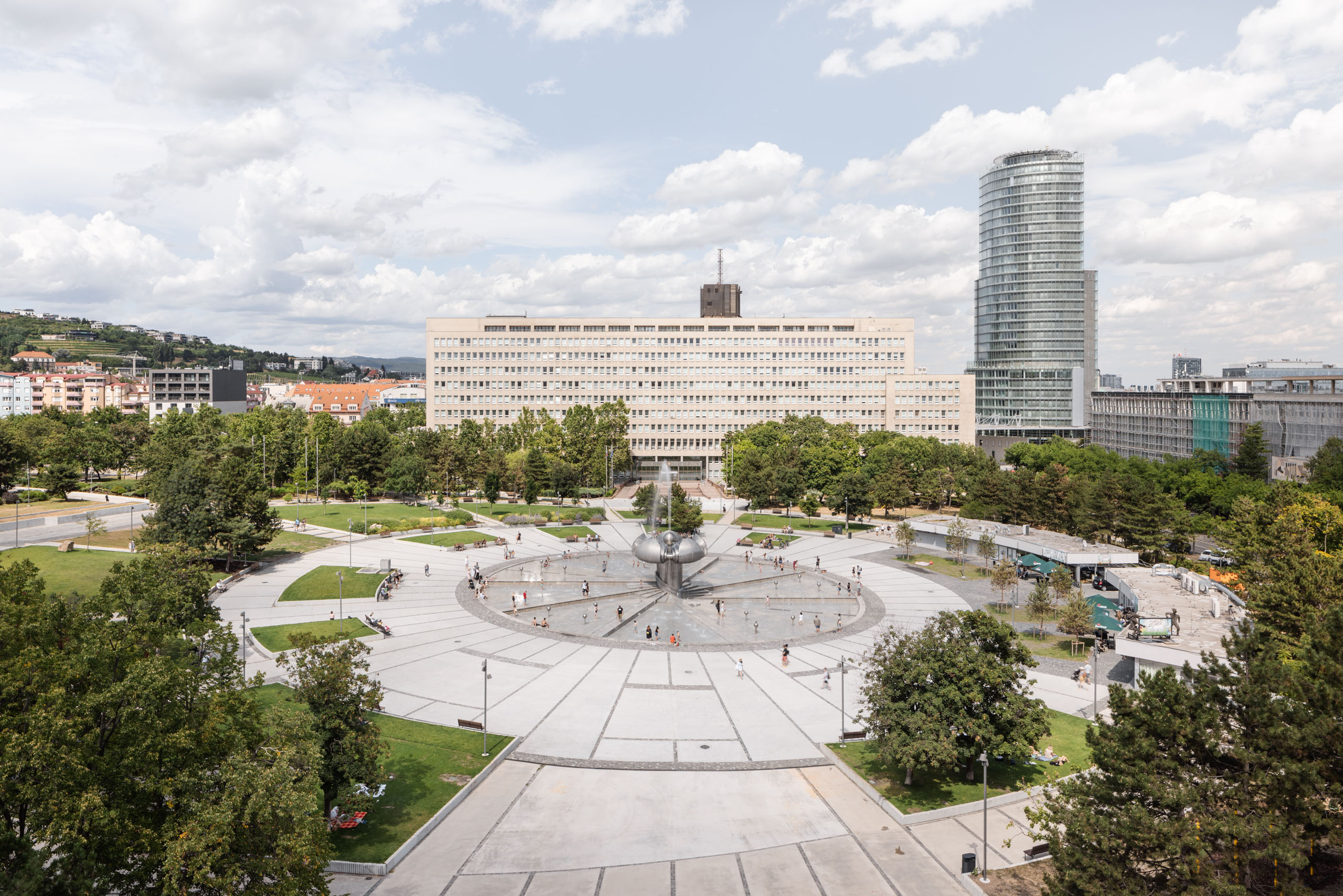
overview
-
high overview
-
accessible fountain
-
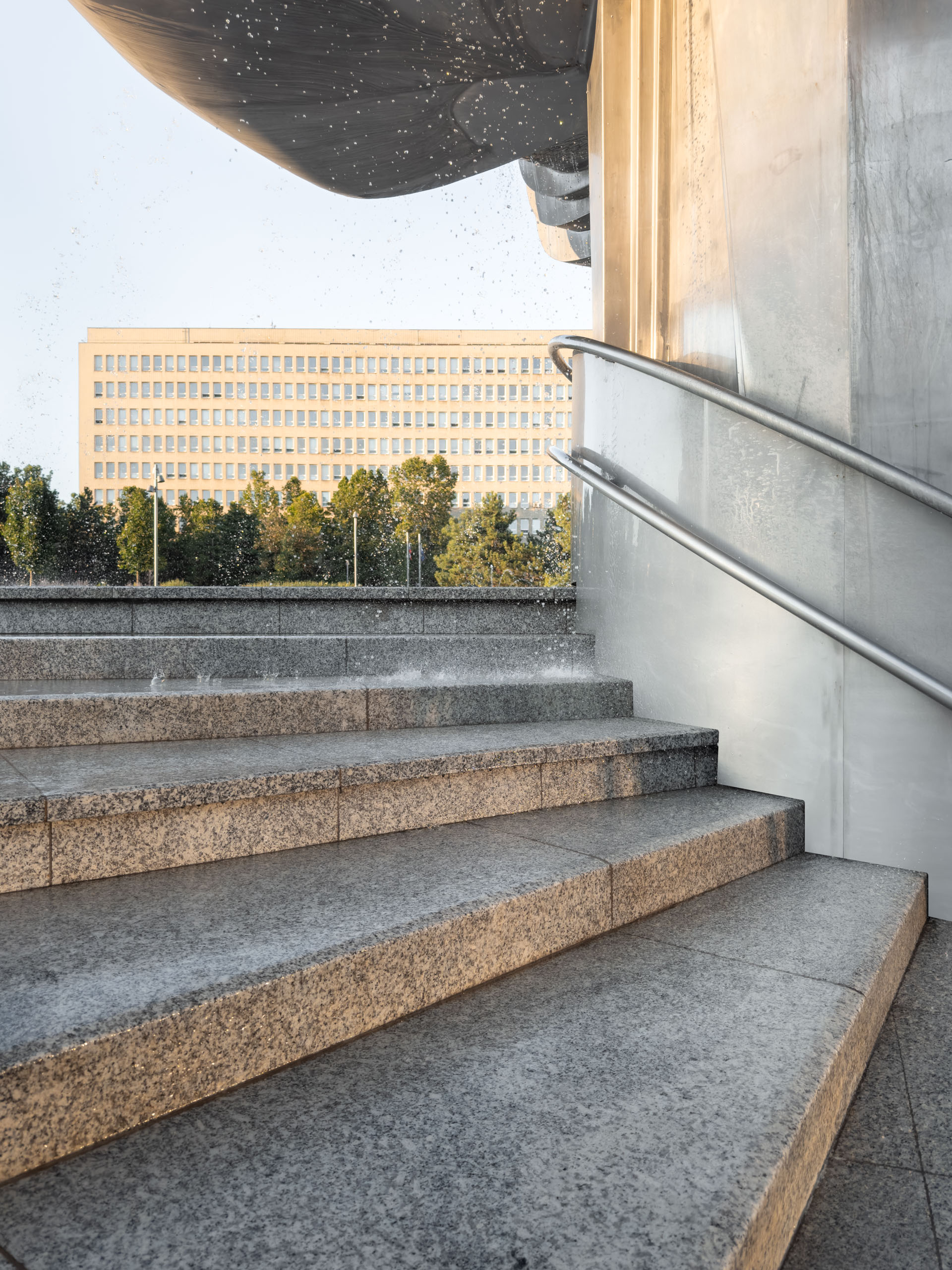
under the statue
-
evening
-
original state, cca 1980
-
floorplan
-
fountain floorplan
-
fountain section
-
public gathering scheme
First Phase of the Revitalisation of Freedom Square in Bratislava
2021 Architects, LABAK. Bratislava, Slovakia
-
Name of work in English
First Phase of the Revitalisation of Freedom Square in Bratislava
-
Name of work in original language
Prva fáza revitalizácie Námestia slobody v Bratislave
Prize year
EUmies Awards 2026
-
Work Location
Bratislava, Slovakia
-
Studio
2021 Architects, LABAK
EUmies Awards 2026 Nominees




Decades of poor maintenance and decay, nor the image of a representative place of communist power, should be a reason to start from scratch. A new good and lively public space can be achieved by reclaiming and updating the old one.
Collaborators
Collaborator (office): Stanislav Režný; Collaborator (office): Boris Belan; Structure: Vladimír Kohút; Structure: Vladimír Priechodský; Structure: Jozef Kvasniak; Collaborator (office): Jozef Drobec; Collaborator (office): Branislav Páva; Collaborator (office): Jana Hozzová; Collaborator (office): Karol Zeman; Collaborator (office): Juraj Hariš; Collaborator (office): Pavol Jadroň; Collaborator (office): Marek Magyar; Collaborator (office): Ivana Maleš; Lighting: Jerguš Ježo; Lighting: Pavol Lesňák; Lighting: Juraj Nyulassy; Lighting: Laura Murguia; Lighting: Lenka Balážová; Collaborator (office): Pavol Sabol; Collaborator (office): Ján Kubovčák; Collaborator (office): Silvia Hícová; Collaborator (office): Mária Székyová; Collaborator (office): Marek Gešnábel; Collaborator (office): Ján Kišeľa; Construction management: Jozef Nemec; Construction management: Tomáš Sekerec; Construction management: Natália Puschmannová; Construction management: Jozef Tóth; Construction management: Miroslav Fučík
Program
Urban planning
-
Labels
Public Space
Site area
43700 m²
-
Client
Generálny investor Bratislavy, Hlavné mesto Slovenskej republiky Bratislava
Cost
110 €/m²
Despite being renamed Freedom Square since 1991, it was still colloquially called Gottko. Unlike the former sculpture of communist president Clement Gottwald, the idea of freedom was difficult to grasp and ephemeral. If the square was to become a true Freedom Square, it had to be translated into a physical space. To allow anyone to do anything here, as long as they did not thereby restrict another. We therefore proposed many small adjustmensts, amongst the others making the fountain accessible and debarring a number of raised beds - living areas.
We needed to find a way to eliminate the level differences between the pools of fountain. The walls between them as well as the perimeter wall were removed. The bottom of the pools was aligned to the surrounding terrain so that it is accessible for all. The height differences between the pools, which were more than 60 centimetres, were reduced. Steps were added around the body of the fountain. The water quality reaches swimming pool standard thanks to automated purification technology. Water level does not even reach up to the ankles, adults can refresh themselves without getting all wet and children wanting a stronger experience can run right in front of the jets. The walls around some of the raised lawns have been replaced by a gradual ramp rideable even with a stroller. The space is intended to be used for gatherings ranging in scale from individual picnics to public gatherings.
A new unique "exterior terrazzo" was created in the area around the fountain. The original granite paving was cracked, basalt used on the inside of the fountiain was slippery and dangerous to walk on. Both stones were therefore recycled as an aggregate for the concrete. The fountain works with only a tenth of its original water volume thanks to its more efficient operation. In future, as much rainwater as possible could be retained in the square - in the fist phase of the revitalisation, the lower part of the square was prepared for rainwater collection boxes. The square was once illuminated by lamps made up of triple sodium discs. Later they were replaced by a single sphere, which shone unnecessarily towards sky and blinded pedestrians at the same time. Today‘s solution is loosely based on the former. The principle of the trinity has remained, but these are directional luminairesthat illuminate the space more efficiently and minimise light smog.