-

Top
-
Northwest
-
North
-
West
-
South
-
Southeast
-
Plan
-
Section
-
Elevations
Farma toMy – Training Home and Social Farm
Arche. Wólka Konopna, Poland
-
Name of work in English
Farma toMy – Training Home and Social Farm
-
Name of work in original language
Farma toMy - Dom treningowy i gospodarstwo społeczne
Prize year
EUmies Awards 2026
-
Work Location
Wólka Konopna, Poland
-
Studio
Arche
EUmies Awards 2026 Nominees


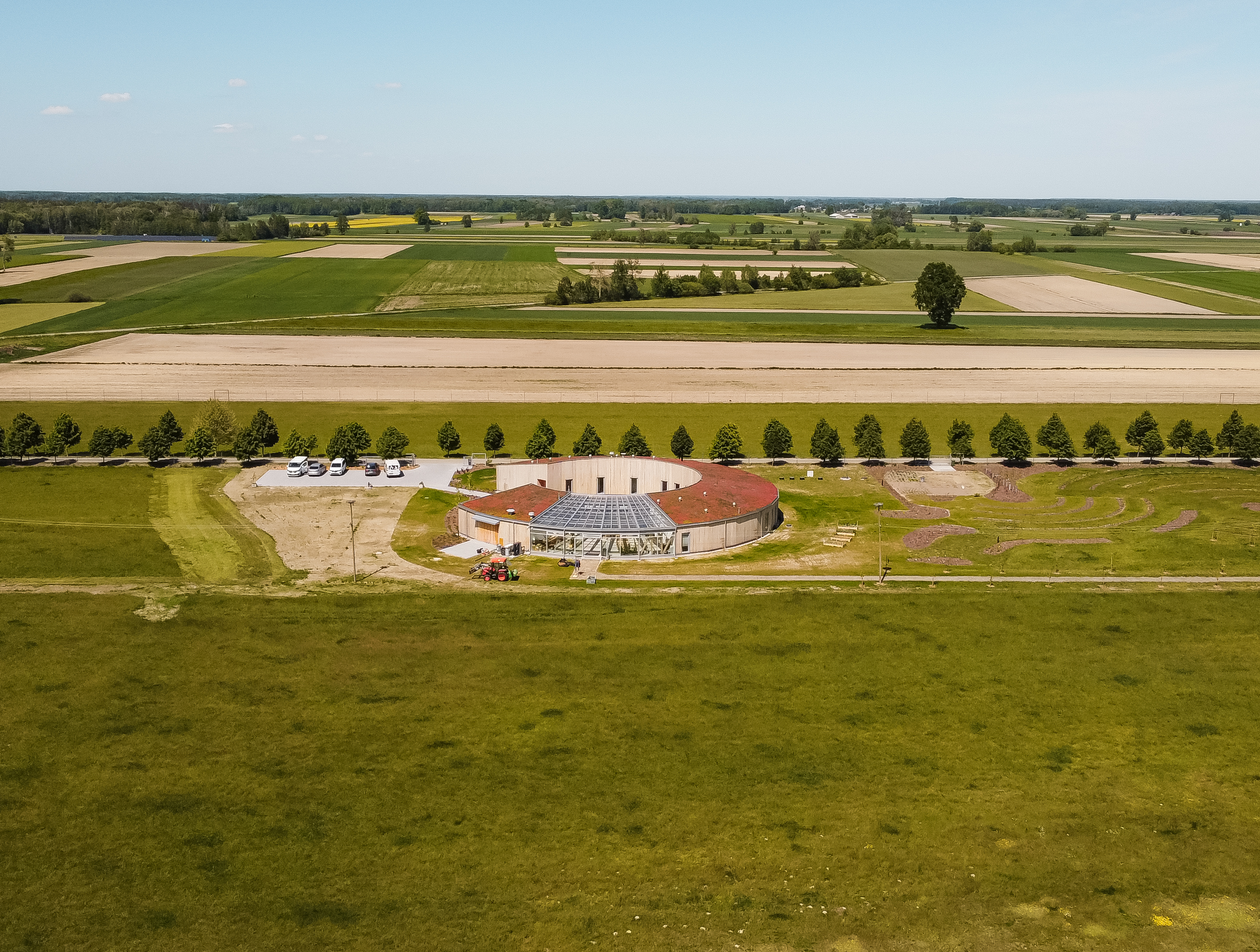
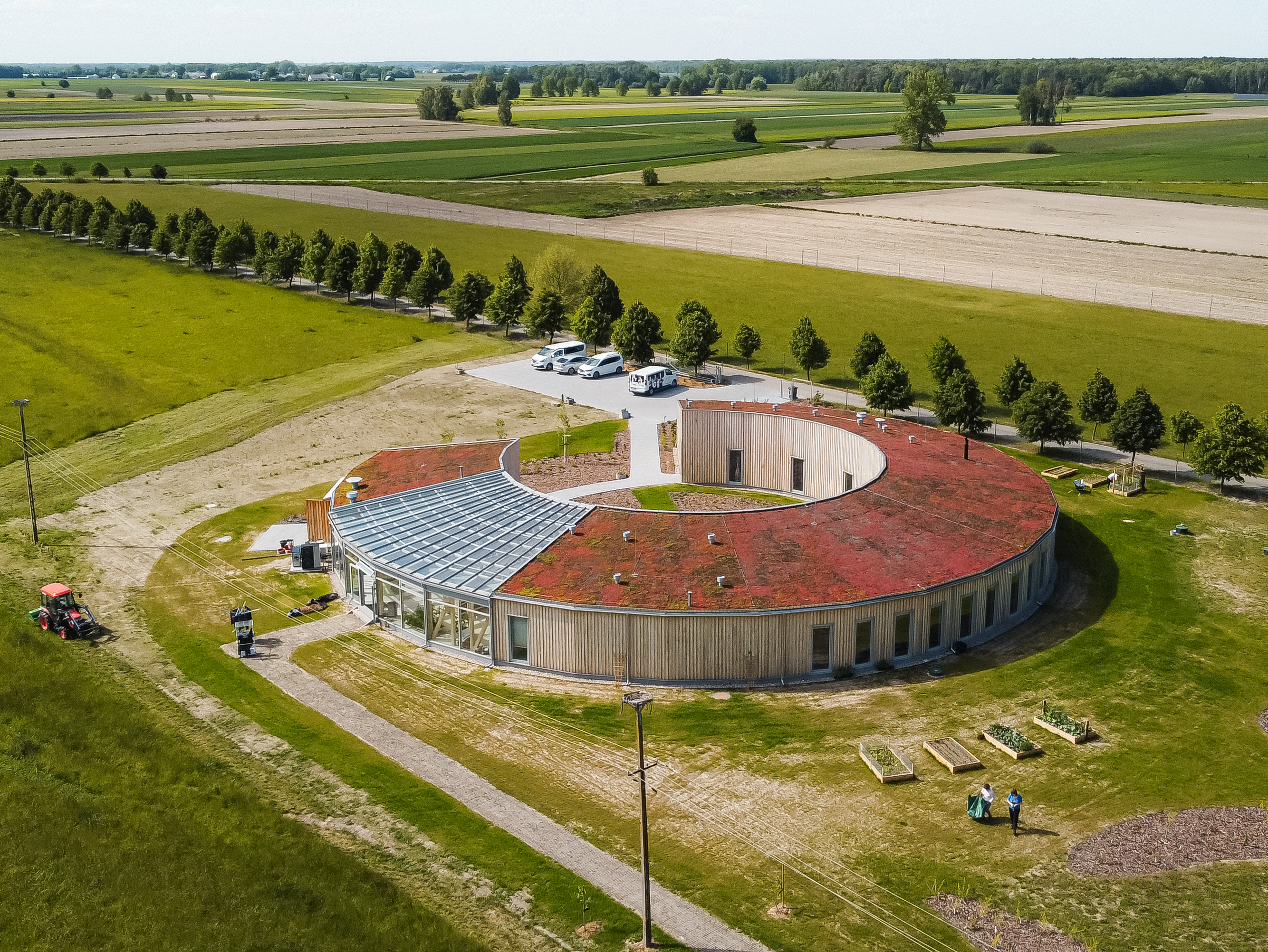


toMy Farm is a social and ecological farm that empowers people with disabilities through work, training, and community living. Built from timber in a circular, energy-efficient form, it reflects the cyclical nature of life and agriculture, merging tradition with sustainability and inclusion.
Collaborators
Structure: Radosław Lorens - Konsystem; Construction management: Dariusz Żochowski - Arche
Program
Social welfare
-
Labels
Community
Site area
18210 m²
-
Client
Fundacja Leny Grochowskiej
Total gross floor
742 m²
Cost
1428 €/m²
toMy Farm is a circular, low-tech social farm located in Wólka Konopna near Siedlce, created for the Lena Grochowska Foundation. It combines agriculture, therapy, and vocational training, providing housing and work opportunities for people with disabilities. Built primarily from locally sourced timber, with a green roof and renewable energy systems, the project reinterprets the traditional Polish farmstead as a sustainable, inclusive model of rural community life deeply connected to its landscape.
toMy Farm addresses the social exclusion of people with disabilities and the disappearance of traditional rural structures in eastern Poland. The Lena Grochowska Foundation sought to create a place combining work, therapy, and independent living — a supportive yet self-sufficient community. The design team responded with a circular, low-tech structure symbolising the cycle of life and agriculture. Its single-storey, wooden form integrates all functions — farming, workshops, kitchen, and housing — around a shared courtyard that fosters community and equality. Built with local materials and simple technologies, the project minimises environmental impact while remaining affordable and replicable. Renewable energy, rainwater reuse, and a green roof support sustainability. The architectural strategy reinterprets the rural farmstead into a contemporary, inclusive habitat — rooted in context, open to nature, and accessible to all.
The building is a single-storey circular structure of about 40 m in diameter, made of prefabricated timber frames with radial trusses bolted to ring beams. It stands on strip foundations and is covered with a green roof inclined at 9°, improving insulation and rainwater retention. Facades are finished with vertical pine boards, recalling the disappearing wooden architecture of the region. Following the 4R strategy—reduce, reuse, recycle, rethink—the project minimises material use and energy demand through prefabrication and exposed structural finishes. Sustainable systems include a rainwater tank, on-site sewage treatment, photovoltaic panels, a heat pump, and passive shading. The low-tech design reduces costs, energy consumption, and maintenance needs. Routine upkeep includes inspecting timber joints, cleaning the green roof and PV systems, and preserving wooden elements with natural oils, ensuring long-term durability and self-sufficiency.