-

European Hansemuseum
-
Gabled façade featuring ornamental design
-
Exterior view
-
Exterior view of the Castle Friary
-
Archaeological dig included into the exhibition
-
Site Plan
-
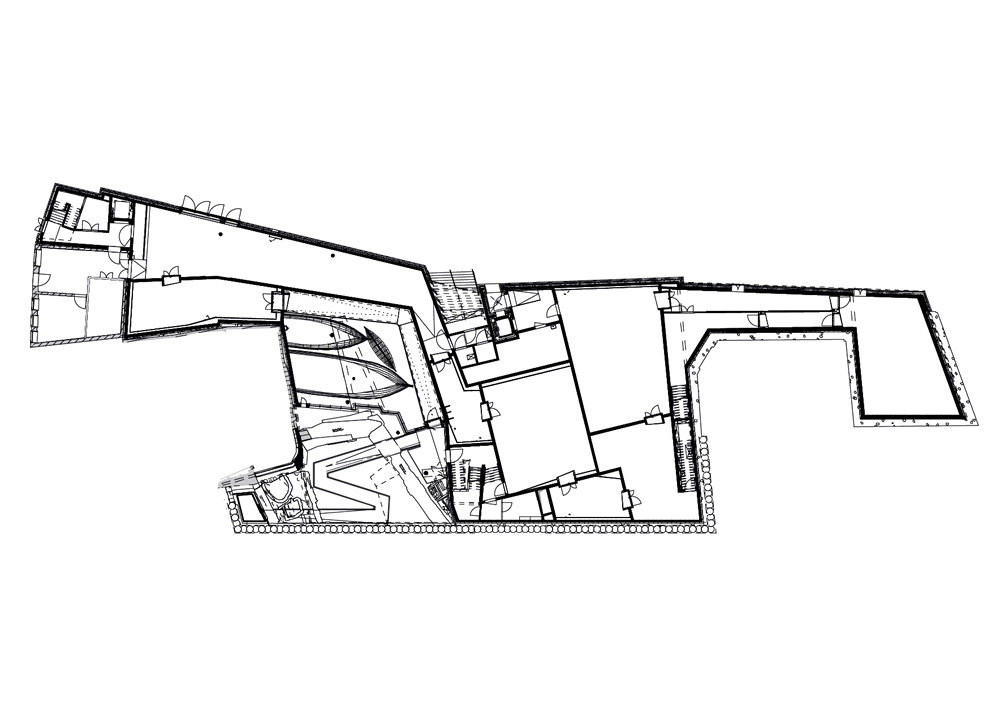
Floor Plan: New Museum Building (Ground Floor)
-
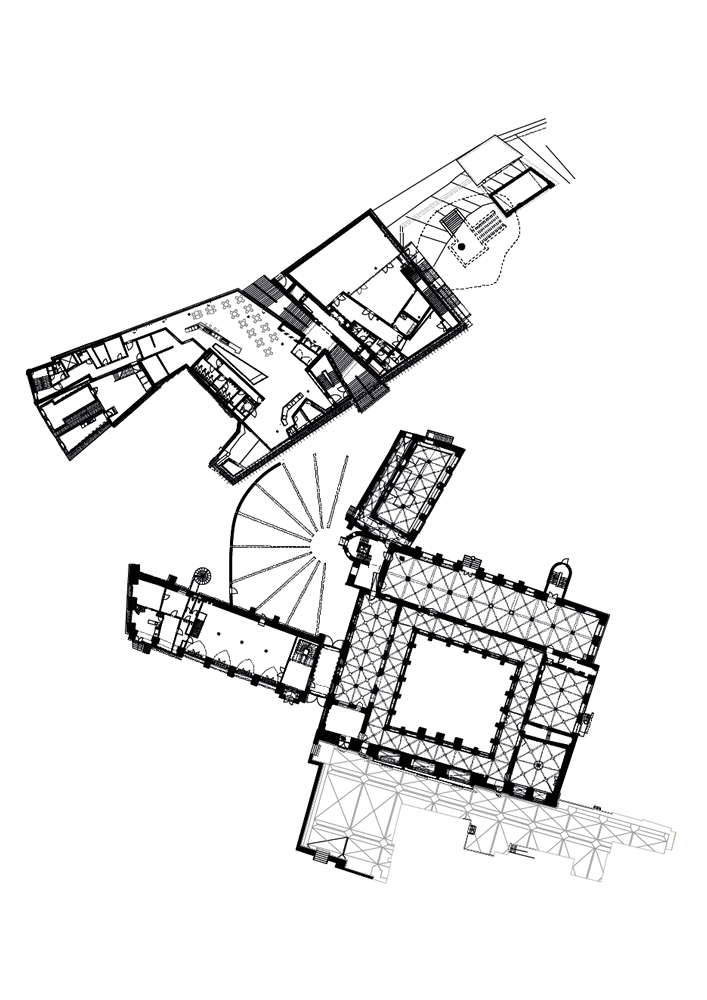
Floor Plan: New Museum Building (1st floor) and Castle Friary (Ground floor)
-
Section: New Museum Building
-
Section: New Museum Building
-
European Hansemuseum
Studio Andreas Heller GmbH Architects & Designers. Lübeck, Germany
-
Name of work in English
European Hansemuseum
-
Name of work in original language
Europäisches Hansemuseum
Prize year
EUmies Awards 2017
-
Work Location
Lübeck, Germany
-
Studio
Studio Andreas Heller GmbH Architects & Designers
EUmies Awards 2017 Shortlisted




The European Hansemuseum is the largest museum in Europe dedicated to the history of the Hanse. It is situated in the north of Lübeck's old town. The museum includes a new building, the historic monument Lübeck Castle Friary and grounds open to the public.
Collaborators
Project management: Stefan Gürtzgen; Others: Prof. Dr. Rolf Hammel-Kiesow (Scientific Director); Structural engineering: Kröger & Steinchen Beratende Ingenieure; Building technology: Schlüter + Thomsen; Fire consulting: HAHN Consult; Lighting: Peter Andres Beratende Ingenieure für Lichtplanung, Studio Andreas Heller GmbH Architects & Designers; Landscape architect: WES GmbH LandschaftsArchitektur; Project architect: Christian Mundt; Construction manager: Peter Klann; Architect: Lüder Meyer, Alexander Hugo, Stephan Meyerhoff, Sabine Steinmetz, Melanie Becker, Nele Bendschneider, Katja Prasser, Birgit Entzeroth-Nagler, Corinna Hinck, Sonja Templin, Wenjing Xu, Taavi Polme; Interiors: Ulf Klüsener, Alke Thamsen, Margarethe Mielentz, Markus Sommer, Julia Beck, Alexander Kruse, Johannes von Müller, André Stock, Raquel Gomez Vives, Hila Limar, Nora Potente; Graphic design: Jutta Strauß, Chad Danford, Alexandra Schäfer, Janna Nikoleit, Katharina Schätzle, Dirk Kühne, Salome Rammler, Carmen Vierbacher, Anastasia Andreeva, Congsu He; Collaborator (office): Marina Eismann, Philipp Bürger, Tatjana Dübbel, Franziska Evers, Hauke Abeling; Building physics: Transsolar; Landscape architect: Studio Andreas Heller GmbH Architects & Designers
Program
Culture
-
Labels
Heritage · Museum
Site area
7.405 m²
-
Client
Europäisches Hansemuseum Lübeck gGmbH
Total gross floor
3.842 m²
Completion
2015
The architecture of the new museum building blends a finely crafted brick texture with elegant modernist lines to form a link between the past and the present. In its monolithic character the new building evokes the medieval city wall that once ran along the foot of the Castle Hill. The texture of the façade emphasises this association by means of jagged, variegated and irregularly laid masonry. The interactions between the main building materials – bricks, bronze and exposed concrete – create an architectural narrative. In the side street leading up the Castle Hill the museum building references a typical front-gabled Lübeck townhouse. The façade features an extensive ornamental design based on the quatrefoil, one of the most striking motifs of brick Gothic architecture.
The museum complex extends from the top of the former Castle Hill on which the Castle Friary stands down to the street An der Untertrave and covers 7,405 square metres. The new building sits snugly against the Castle Hill. An open staircase in the centre links the historic docks with the old town in a sweeping gesture. It forms the entrance point for the new museum building and also leads up to the Castle Friary and the grounds above the new building. Alternating open and enclosed areas on various levels create an intriguing sequence of external spaces for people to explore, to sit and to enjoy. Public terraces offer a panoramic view of the former port and extensive texts are provided to explain the history of the various courtyards.
Characteristic materials are bricks, exposed concrete and architectural bronze. The new building is a reinforced concrete construction. The European Hansemuseum is also a “green museum”. Environment considerations played an important role in the construction of the new museum building. The design of the new museum building has been optimised for its intended use. Windows and doors have only been planned where they are sensible and necessary to reduce energy loss to a minimum. Glass façades and glazed elements make use of triple-glazing for thermal insulation. The façade of the new building is clad with a facing of hard-fired bricks made of loam – a sustainable building material from the region. The roof areas of the European Hansemuseum are mostly green roofs. Furthermore, geothermal, or ground source energy, is used for the building's air conditioning and heating system.