Escadinhas Footpaths
Paulo Moreira Architectures, Verkron. Matosinhos, Portugal
-
Name of work in English
Escadinhas Footpaths
-
Name of work in original language
Caminho das Escadinhas
Prize year
EUmies Awards 2024
-
Work Location
Matosinhos, Portugal
-
Studio
Paulo Moreira Architectures, Verkron
EUmies Awards 2024 Shortlisted


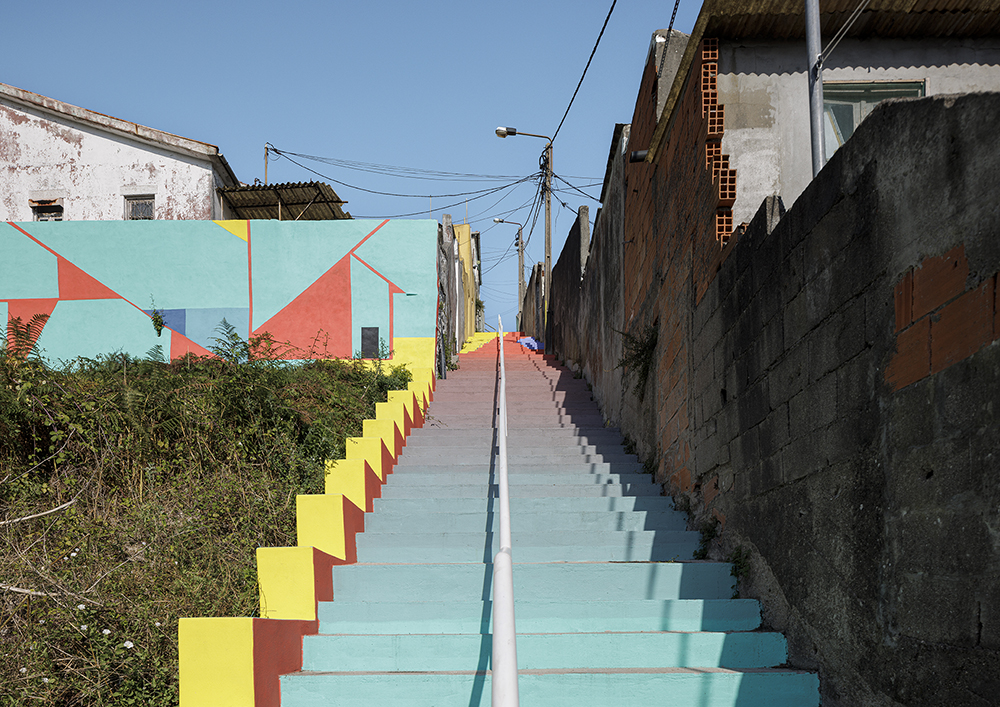


This project links architecture, art and the natural world. It is a network of pedestrian footpaths linking the hilly neighbourhood of Monte Xisto to the River Leça, in Matosinhos. The initiative demonstrates the added value that low-budget projects can bring to neglected urban spaces in our cities.
Collaborators
Architect: Carlos Gomes; Architect: Joyceline Teixeira; Project management: Raquel Pais; Collaborator (office) : Oona Philomena Wächter; Collaborator (office) : Oscar Larfeuille; Collaborator (office) : Sami Sahli; Collaborator (office) : Sofia Paganelli; Construction: José Silva; Construction: Fábio Silva; Art: Verkron
Program
Landscape
-
Labels
Land art · Regeneration
Site area
600 m²
-
Client
Bairros Saudáveis
Total gross floor
1100 m²
Completion
2022
Cost
83.33 €/m²
The public space and urban rehabilitation project brought together a multidisciplinary team of architects, artists, local builders and stakeholders. The steps leading to Rua das Escadinhas, an unusual urban device connecting the upper and lower levels of the western hill of Monte Xisto, were rehabilitated. Following the path that links the foot of the steps to the River Leça, an old ruin was rebuilt and transformed into a seating area surrounded by nature. The project, developed in the framework of Bairros Saudáveis initiative, was designed by paulo moreira architectures, with Verkron collective, and executed by local builders. The final result lends an artistic dimension to the project that enhances its appeal.
The project aims to ‘stitch together’ the uneven topography of Monte Xisto, which is poorly connected to the surrounding area. Despite its geographical proximity to the River Leça valley and the centre of the parish, the neighbourhood is isolated by the lack of access. Through a comparatively modest investment in a context of social and territorial exclusion, the project aimed to improve the neighbourhood’s access to the surrounding natural environment. In the first phase of the building work, the steps leading to Rua das Escadinhas, an unusual urban device connecting the upper and lower levels of the western hill of Monte Xisto, were rehabilitated. Following the path that links the foot of the steps to the River Leça, an old ruin was rebuilt and transformed into a seating area surrounded by nature. The meticulous rehabilitation of the site, which included adding benches in every ‘room’, has encouraged people to spend time there and transformed it into a place for socialising.
Lasting a year, the construction was executed by local builders, residents of the neighbourhood. The steps and handrail were repaired and a new boundary between the public steps and the private land adjoining them was created in the form of benches, allowing the stairs to be used as a resting place. Cleaning the area of the old ruins was a huge challenge. The sheer amount of rubbish, debris and vegetation that had accumulated for more than forty years made it impassable and unusable by local people. The cleaning operation extended beyond the building: the river banks were also cleaned up and the natural landscape was enhanced. Once the rubbish and debris had been removed, small-scale interventions restored the site’s original character, undoing the precarious interventions carried out over the years.