-

photo 01
-
photo 02
-
photo 03
-
photo 04
-
photo 05
-
photo 06
-
concept diagram
-
site plan
-
floor plans
-
sections a
-
detail
Double Villa Bukovac
njiric+ arhitekti. Zagreb, Croatia
-
Name of work in English
Double Villa Bukovac
-
Work Location
Zagreb, Croatia
-
Studio
njiric+ arhitekti
Nominees


The project is determined by the need to create an affordable habitat for two generations of the architect's family. Restricted budget resulted in a highly condensed scheme of two tiny houses packed tightly, but keeping the villa-like qualities and generational autonomy. Living apart together (LAT)
Collaborators
Building physics: Mateo Biluš - AKFZ studio; Structure: Hrvoje Malčić - M Plan; Installations: Mladen Stošić - ELEKTROPLAN; Installations: Slavko Šimunović - HIT-projekt; Collaborator (office): Ana Miše; Collaborator (office): Noel Bucul; Collaborator (office): Marko Gusić; Collaborator (office): Domagoj Mlinarić; Collaborator (office): Irma Šmuc; Collaborator (office): Ljiljana Besednik; Collaborator (office): Mirna Udovičić
Program
Single house
-
Labels
Semidetached · Prototype · Family
Site area
1200 m²
-
Client
Hrvoje Njiric, Niko Njiric
Total gross floor
360 m²
Cost
1900 €/m²
The concept is a direct response and critique of the General Urban Development Plan of the City of Zagreb. The lots occupation intentionally diverts from conventional planning guidelines regarding building density, land utilization, building height and parking requirements. Rather than conforming to these norms, the project embraces a vision of re-imagining the green foothills of Zagreb for a lower-density residential typology—favoring smaller volumes, lower structures, a gentler footprint and larger plots. In this way the house becomes a case study for a new type of urban decency.
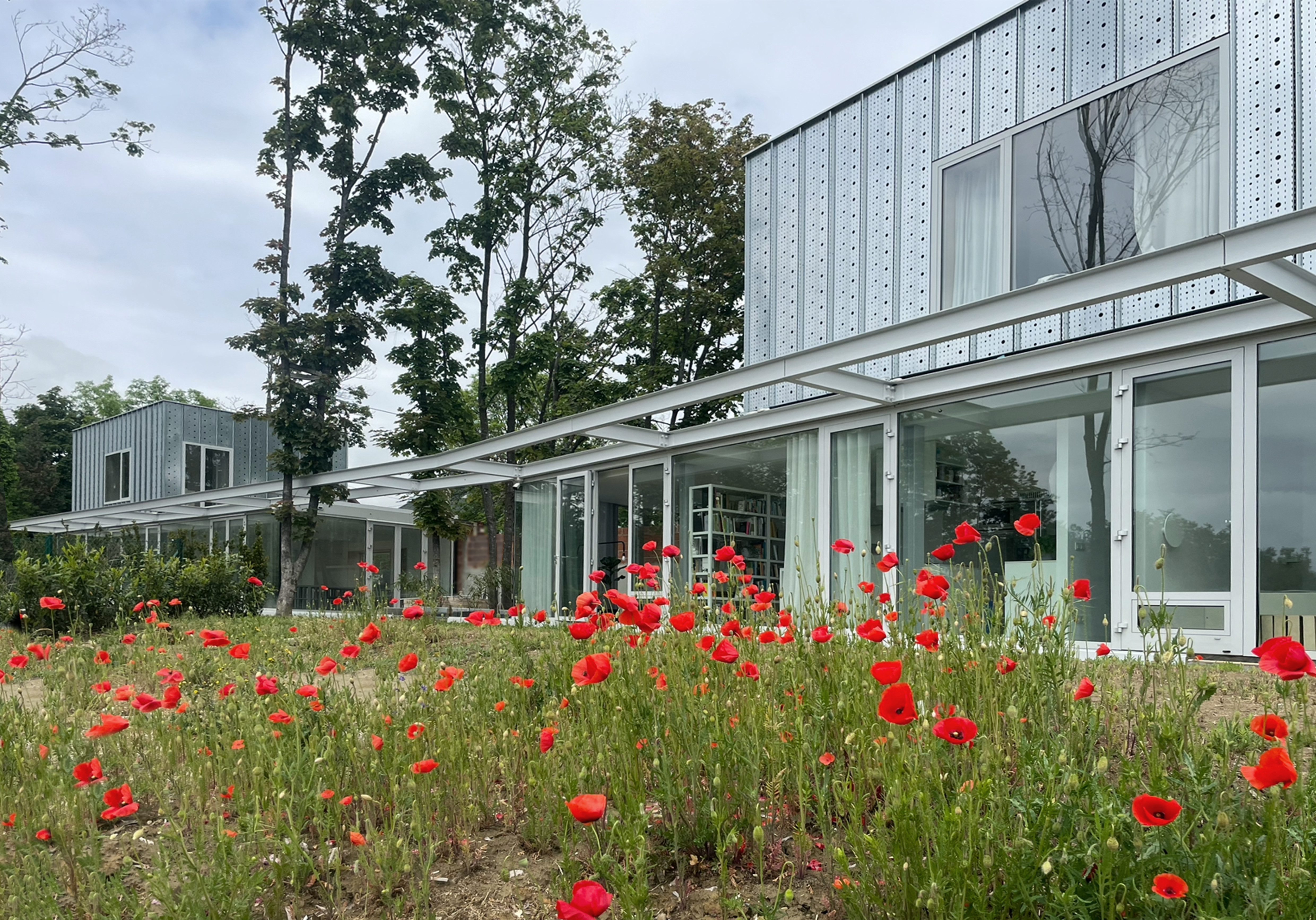
Downscaling and Typological Shift Instead of maximizing the permitted Gross Built Area (GBA) of 600 m² per lot, each of the two residential units contains just 180 m² of living space for each family. In the opposition to the typical vertical distribution of residents by floors – commonly used for multi generational housing in Croatia, this project establishes a horizontal arrangement of dwellings across two adjacent lots. The houses are positioned side by side rather than stacked, with an atrium between them, acting as a potential integration zone for both families. How effectively this shared space will be used/negotiated remains to be seen - a sociological experiment. A Dual Character The northeast façade, facing the street, remains largely closed – shielding the interior from noise, wind, unwanted views and ensuring privacy. In contrast, the southwest side of the house opens fully toward the garden, embracing greenery, sunlight and offers panoramic city views.
The construction is conceived as a standard concrete/masonry system of vertical slabs, concrete ceilings, steel columns and pergolas. The façades are defined by their contrasting material expressions: the ground floor, in contact with terrain, adopts an earthy, robust presence - constructed with brick to express weight and permanence. In contrast, the upper floor, in dialogue with the sky, is lighter, more transparent and reflective. It features unconventional materials such as repurposed galvanized cable trays, which lend the façade a subtle, ephemeral quality, poetic in the same time. Energy Efficiency and Sustainability The house functions as a solar pavilion closed to the north, open to the south, with minimal energy demands in winter. In summer, the heat protection is achieved by shading from precisely positioned trees, by four green roofs as a buffer layer, with passive shading systems - retractable horizontal awnings and by solar chimneys in a double-height entrance lobby.