-

Facade Restoration & Rooftop Extension
-
Facade Restoration
-
Entrance Hall
-
Aperture configurations for community room at ground floor
-
Stairwell Details
-
Communal Kitchen
-
Location Plan & Site Plan
-
Ground Floor Plan
-
Typical Floor Plan & Third Floor Plan
-
Sectional Perspective XX
-
Section YY
-
Exploded Isometric
Dar Tereża
Local Office for Architecture. Bormla, Malta
-
Name of work in English
Dar Tereża
Prize year
EUmies Awards 2026
-
Work Location
Bormla, Malta
-
Studio
Local Office for Architecture
EUmies Awards 2026 Nominees

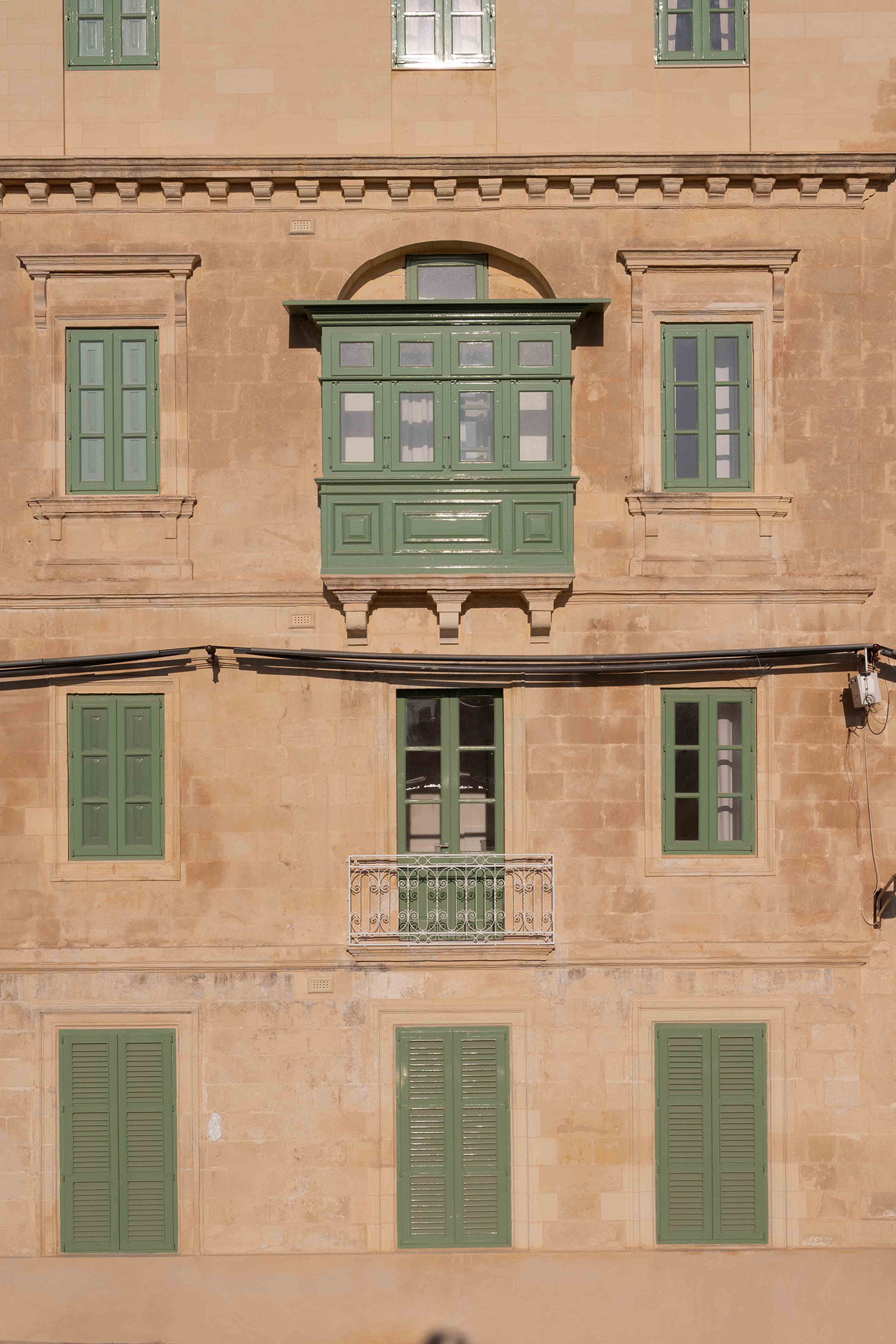


Dar Tereża is a community-based residential project in Bormla, Malta, designed by LOCAL OFFICE for Architecture for the Richmond Foundation. Conceived to support women experiencing mental health challenges and their children, the project transforms two early 19th-century townhouses into a safe, inclusive, and restorative environment. Through adaptive reuse, the design preserves the layered character of Bormla’s heritage while introducing new spatial possibilities that foster care, autonomy, and community integration.
Developed through a participatory process with future residents, care professionals, and local authorities, the project redefines domestic architecture as a catalyst for recovery and empowerment. The resulting environment avoids institutional typologies in favour of a home-like setting that supports independence and dignity. Its spatial organisation balances communal interaction and personal retreat, while the use of natural light, ventilation, and material texture enhances environmental and emotional comfort.
Dar Tereża exemplifies trauma-informed design and social inclusion through architecture. Achieved under significant budgetary and time constraints, the project demonstrates how modest interventions can deliver transformative social value. It offers a replicable model for community-based care embedded within Malta’s urban and cultural fabric, and a demonstration of how adaptive reuse can sustain both heritage and human wellbeing.
Collaborators
Structure: Bureau 105; M&E: Prof. Ing. A. Sammut; Local Council: Bormla Local Council; Construction management: Attard Bros. & 2 Project
Program
Social welfare
-
Labels
Community · Children & Youth
Site area
104 m²
-
Client
Richmond Foundation
Total gross floor
553 m²
Cost
1084 €/m²
Dar Tereża occupies a prominent corner site in the historic city of Bormla, adapting two early 19th-century townhouses into a supportive residential environment for women experiencing mental health challenges and their children. Commissioned by the Richmond Foundation and supported by the Ministry for Social Accommodation and the Housing Authority, the project was developed through close collaboration between architects, users, and social partners. Set within Bormla’s dense urban fabric of narrow streets and interlocking dwellings, the intervention reinforces the relationship between domestic life and the surrounding community. The existing façades were carefully restored, while a discreet rooftop extension provides additional residential and communal space, integrated seamlessly within the historic composition. Internally, a clear spatial hierarchy offers varying degrees of privacy. Shared areas encourage interaction and collective care, while self-contained family units promote independence and dignity. The arrangement supports recovery by allowing residents to maintain family routines within a secure and non-institutional environment. The architecture is defined by its sensitivity to light, material, and scale. Existing openings were retained to optimise natural light and ventilation without altering the original composition and rhythm of the façades. Restored masonry and new timber elements recall the tactile qualities of Maltese domesticity, while restrained finishes allow the historic fabric to remain legible and central to the experience of the place. By embedding a socially supportive programme within a conserved urban structure, Dar Tereża reconciles heritage with contemporary need. The project exemplifies how adaptive reuse can foster wellbeing and community integration, contributing to the social and cultural revitalisation of Bormla.
Dar Tereża was conceived to address a pressing social need: the lack of secure, dignified housing for women experiencing mental health difficulties who wish to live with their children. Institutional care in Malta often separated families and limited autonomy, while private housing remained inaccessible. Richmond Foundation, supported by the Ministry for Social Accommodation and the Housing Authority, sought an architectural response that would foster safety, independence, and belonging within a community setting. LOCAL OFFICE for Architecture developed a concept rooted in empathy, participation, and contextual awareness. The design process was shaped through workshops with future residents, care staff, and social workers, ensuring that lived experience directly informed the outcome. The home was reimagined not as an institution but as a bridge between care and everyday life - a place where recovery and autonomy coexist. The site in Bormla, assigned through the 2019 Sustainable Communities competition, offered a socially and spatially complex context. Rather than isolating residents, the project embraces the city’s density and vitality, positioning its inhabitants within a living urban fabric that supports inclusion and mutual trust. Guided by trauma-informed design principles, the concept prioritised choice, comfort, and emotional clarity. Spaces balance privacy with opportunities for connection, allowing residents to establish their own rhythms of living. Familiar domestic elements - A shared kitchen, terrace, and communal area - foster informal interaction and collective care. Dar Tereża demonstrates how architecture, when grounded in empathy and participation, can become a social instrument, reactivating heritage, restoring agency, and nurturing recovery through community and daily life.
Dar Tereża’s construction strategy balanced preservation with renewal, ensuring the historic townhouses could serve contemporary social needs without compromising their integrity. The design favoured permanence through compatibility, introducing new materials and techniques that harmonise with the existing structure rather than contrast with it. The limestone fabric of the two buildings was carefully consolidated, with selective rebuilding and concealed steel reinforcement where necessary. Lime-based mortars were used throughout to maintain breathability and ensure the masonry’s long-term health. All original floor levels were retained to preserve spatial rhythm, while a new rooftop extension was added as a receded floor. Its local limestone masonry walls blend with the overall character, providing additional communal and residential space. Externally, façades were fully restored using hydraulic lime pointing. The external dado was finished in macro-porous plaster to enhance moisture performance while preserving the traditional appearance. Timber apertures and traditional Maltese balconies were extensively renewed; most were replaced due to deterioration, crafted to replicate the original profiles and fitted with double glazing to improve thermal and acoustic comfort. Internally, masonry walls were repaired, plastered, and painted to create a calm and durable environment. Lightweight partitions and discreetly integrated services ensure flexibility and ease of maintenance. Patterned cement tiles on the lower floors and concrete flooring in the rooftop extension distinguish old from new while maintaining visual harmony. Sustainability was achieved through passive and active measures: natural ventilation, roof insulation, solar water heating, and mechanical ventilation for air quality. Material choices prioritised longevity, economy, and simple maintenance, ensuring the building remains robust, maintainable, and attuned to wellbeing and social care.