-

Central hall
-
Aerial view
-
Underground extension
-
Exhibition
-
Exhibition
-
Public use
-
Site plan
-
Section Old vs New
-
Level -1
-
Level +0
-
Level +2
-
Scheme
Croatian Natural History Museum
Radionica Arhitekture, Vanja Ilić Arhitektura. Zagreb, Croatia
-
Name of work in English
Croatian Natural History Museum
-
Name of work in original language
Hrvatski prirodoslovni muzej
Prize year
EUmies Awards 2026
-
Work Location
Zagreb, Croatia
-
Studio
Radionica Arhitekture, Vanja Ilić Arhitektura
EUmies Awards 2026 Nominees


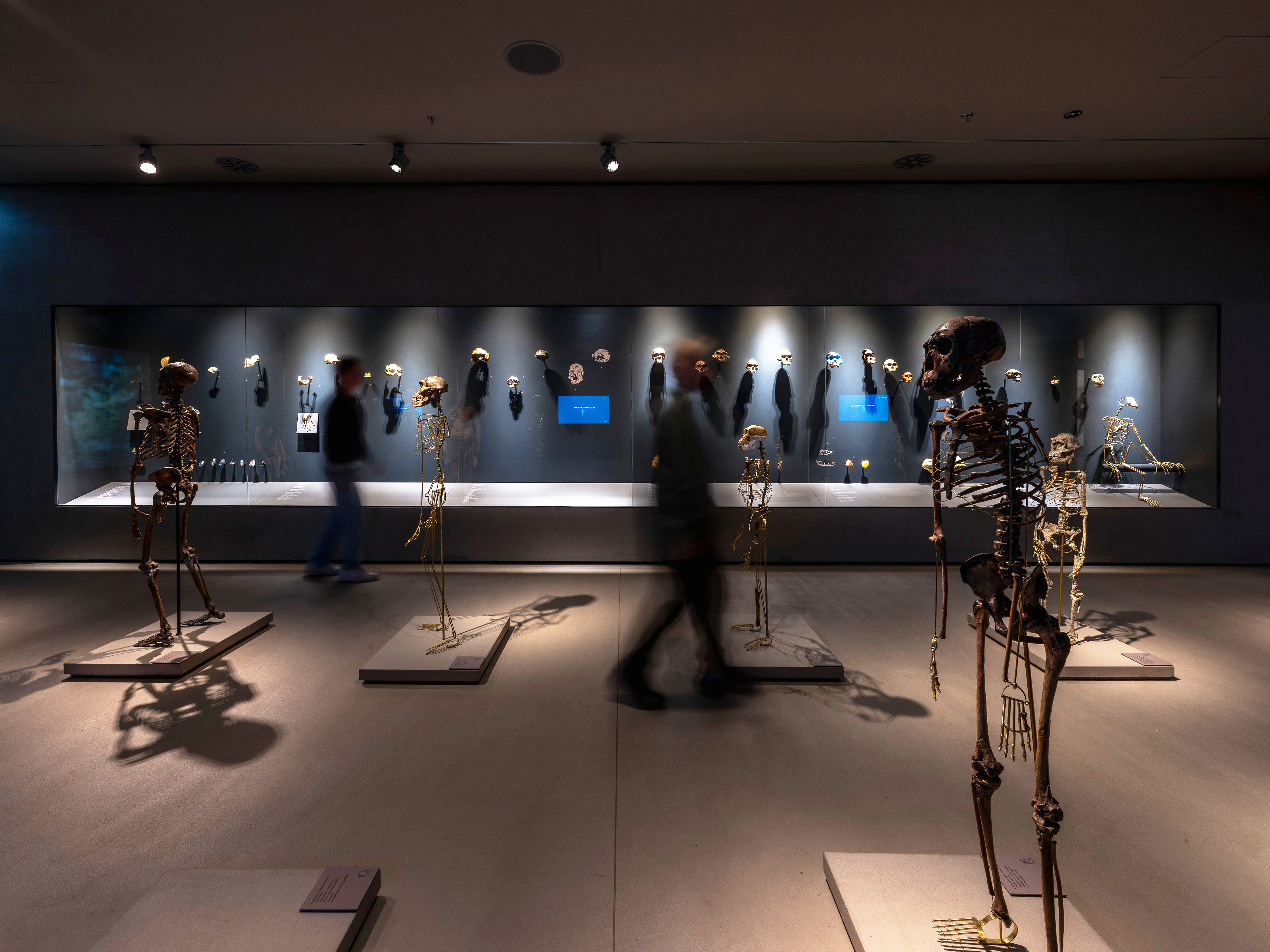


Zagreb's Croatian Natural History Museum (HPM) building, damaged in the 2020 earthquake, underwent extensive reconstruction and expansion. As a registered cultural property, changes were kept minimally visible. Thanks to the expansion, the museum now also serves as a new venue for public events.
Collaborators
Collaborator (office): Antonio Jakubek - Radionica Arhitekture; Collaborator (office): Tena Knežević - Radionica Arhitekture; Collaborator (office): Marin Mišan - Radionica Arhitekture; Collaborator (office): Klara Nikšić - Radionica Arhitekture; Collaborator (office): Jelena Prokop - Radionica Arhitekture; Collaborator (office): Ana Rako - Radionica Arhitekture; Collaborator (office): Ana Ranogajec Knežević - Radionica Arhitekture; Collaborator (office): Dominik Lovrečić - Vanja Ilić Arhitektura; Collaborator (office): Marijana Gradečak - Vanja Ilić Arhitektura; Collaborator (office): Bojan Pepeonik - Vanja Ilić Arhitektura; Collaborator (office): Tena Petrović - Vanja Ilić Arhitektura
Program
Culture
-
Labels
Museum
Site area
1467 m²
-
Client
Croatian Natural History Museum in Zagreb
Total gross floor
5560 m²
Cost
5680 €/m²
HPM is located in the Upper Town, the oldest part of the city of Zagreb. The museum has been in the current building since 1868. After the earthquake, the decision was made to restore and expand the building as much as possible, taking into account its registered cultural property status. The expansion was achieved in three main areas. The atrium was covered and transformed into a hall, the existing small basement was deepened and extended significantly increasing the usable area, and the attic was fully reconstructed to accommodate the offices for the curators and other employees.
Beyond the typical challenges, such as structural and infrastructural improvement and mastering museum's extensive collection, the main task was to create additional exhibition space while respecting the building's historical value and its context. An additional effort was made to introduce public spaces to encourage urban regeneration of the Upper Town by hosting public events outside of museum working hours, thereby increasing public awareness of both the museum and the city's origins. Main spatial gains were achieved by deepening and extending the existing basement, covering the atrium and turning it into a publicly accessible central hall. The only architectural interventions visible from the outside are the hall's glass roof and bridges while the interior hides many secrets. The atrium (used to serve as a parking lot!) is now a "covered square" which, in addition to its primary purpose as the museum's central space, also hosts exhibitions, concerts, and even theatre plays.
The biggest engineering challenge was creating the new exhibition level under the level of the existing foundations, which required driving 840 piles into the ground for support. During construction, the original walls and ceilings proved to have insufficient load-bearing capacity and required strengthening with Fiber-Reinforced Cementitious Matrix and reinforced concrete elements. Additionally, the original wooden beam structures have been replaced with steel ones and all mechanical, electrical and plumbing installations have been renewed as well. Regarding the building's registered cultural property status, constant communication with the appropriate experts was required to ensure its integrity remained intact, despite the design team's desire for greater freedom in resolving certain situations.