-

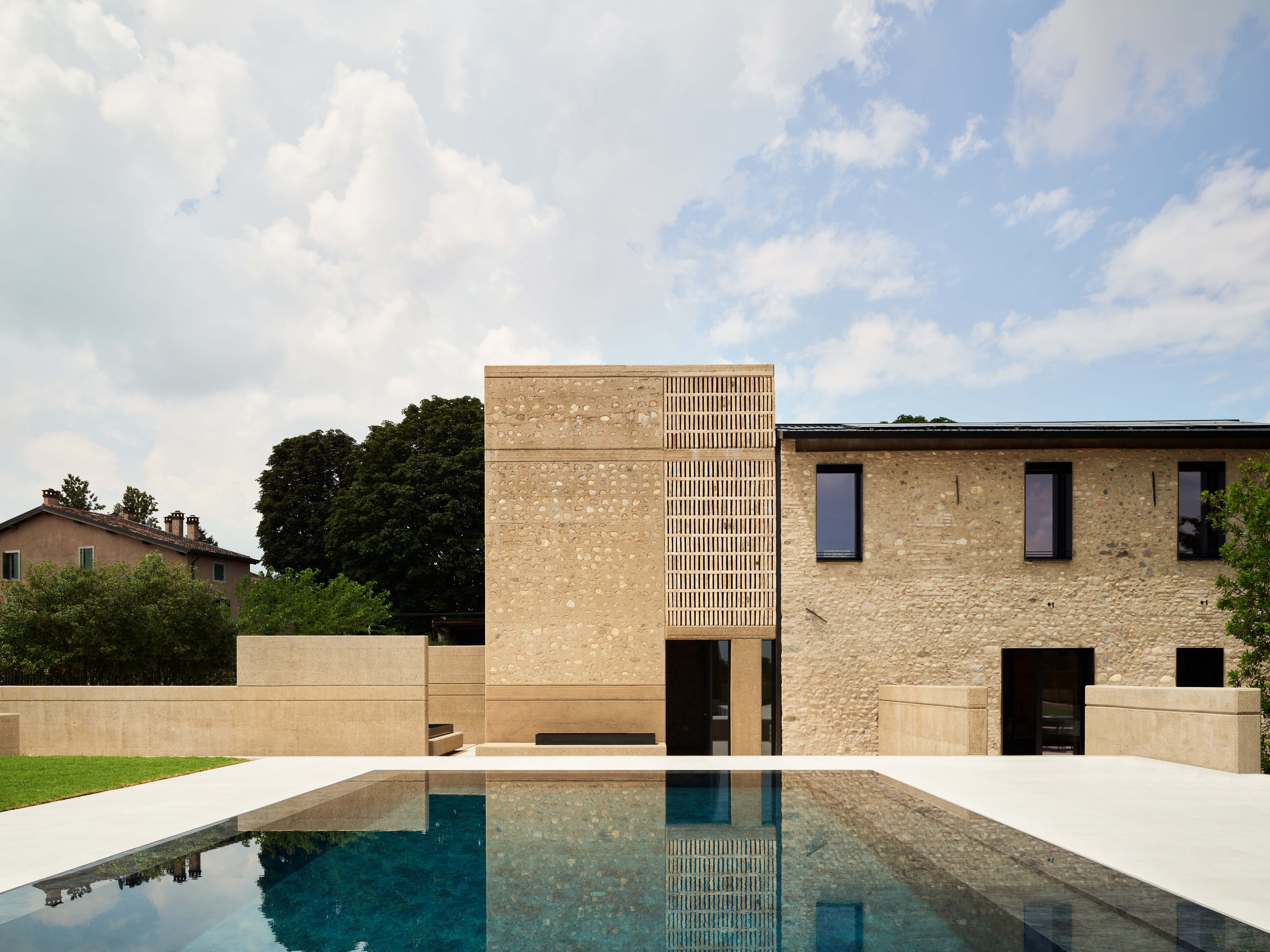
the extension in pigmented concrete and local stone and the renovated cottage seen from the pool
-
the pigmented concrete extension containing the stairs and lift, seen from the entrance
-
detail of the pigmented concrete extension
-
the suspended stone staircase in the extension with the existing boulder as the first step
-
the gap between the floors of the extension and the stone walls of the existing cottage
-
the iron and wood volume that conceals the services and systems for one of the flats
-
axonometric diagram showing the new elements added to the existing buildings
-
abacus of rules for all elements that have been designed and inserted in the existing buildings
-
general plan of the area
-
japanese book containing the project drawings with all the rules that defined the project
-
rule n.10 "the inhabited arch"
-
rule n.1 "the new solid stone staircase"
Corte Renèe
Bricolo Falsarella associati. Castelnuovo del Garda, Italy
-
Name of work in English
Corte Renèe
Prize year
EUmies Awards 2026
-
Work Location
Castelnuovo del Garda, Italy
-
Studio
Bricolo Falsarella associati
EUmies Awards 2026 Nominees


Collaborators
Program
Food & Accommodation
-
Labels
Resort · Sleeping
Site area
2400 m²
-
Client
Paola Recchia
Total gross floor
428 m²
The regeneration of the small historic hamlet has made it possible to reuse the empty volumes of rustic buildings, but above all, it has sought to respond to the needs of a society increasingly alienated from the standardised city by recovering the humanisation intrinsic in the spaces, atmospheres, and material culture still alive and pulsating in the ancient structures. This is how stones, which were once used by the farmers of these fields to build their houses, are mixed with a reinforced concrete and with the local soil to build a small extension in continuity with the landscape.
We often speak of urban regeneration, but no less important is the regeneration of rural sites, which makes it possible to reuse the large quantity of disused rustic buildings that lie “waiting” in our territories, avoiding unsustainable land consumption. The project is based on two actions: the total conservation of the existing building left in its poetic nudity, and the calibrated grafting of new devices allowing the insertion of all the elements that are necessary for the new living conditions (stairs, services, installations, etc.). These elements were designed following 24 rules, then collected in a catalogue of actions. Each rule reinterprets a constituent element of architecture, generating contemporary objects that politely declare themselves in relation to the existing and that have in common with it the clarity of a construction method that we wanted to be material and imperfect.
Not only were the walls of the farm buildings reclaimed, but also many elements we found abandoned on the site, such as wooden doors, large stones from the staircase, and agricultural objects, have taken on new meanings. Everything that has been added stands out gently from the existing structure: the new concrete extension does not touch the stone wall, and the zenithal light bathes the stone, emphasising its beauty. The spaces containing the services are perceived as separate volumes, just as the stone staircase, which appears suspended thanks to rotated tubulars that support the steps with a dry joint. All these elements are in continuity with the existing structure thanks to the use of raw and opaque materials, as the antique ones, and the evidence of the construction method in the object. Also, each new opening is declared. Some windows refer to the irregular holes in the wall present in the structure, further emphasising the passage of time in the existing structure.