-

Street-level view
-
Gallery
-
Main Entrance
-
Patio
-
Lobby
-
Shop
-
Site Plan
-
Ground Floor
-
First Floor
-
South Elevation
-
Section AA’
-
Substrate
Corcet Headquarters
Nuno Melo Sousa. Peñafiel, Portugal
-
Name of work in English
Corcet Headquarters
-
Name of work in original language
Edifício-sede Corcet
Prize year
EUmies Awards 2026
-
Work Location
Peñafiel, Portugal
-
Studio
Nuno Melo Sousa
EUmies Awards 2026 Nominees
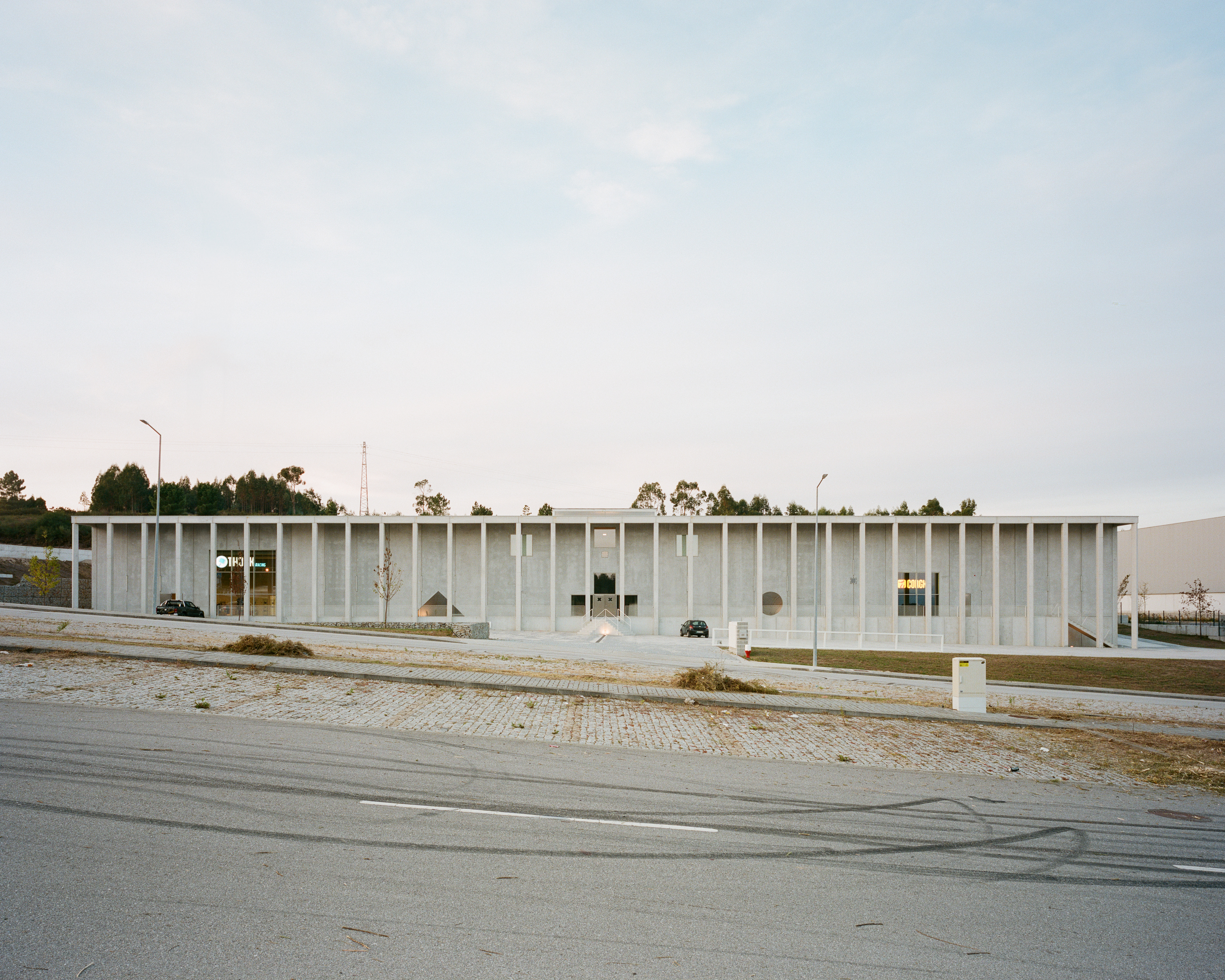
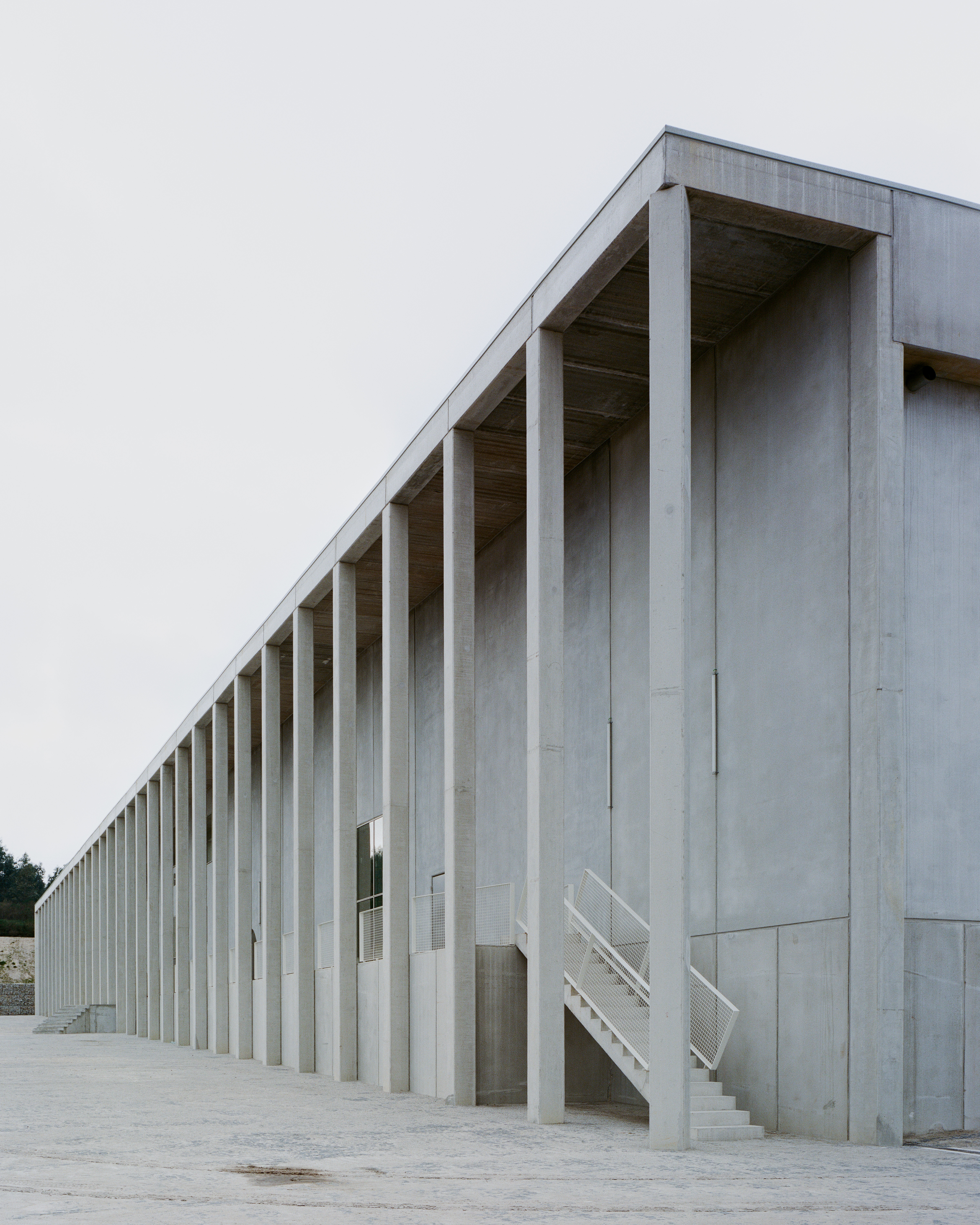




Headquarters for a family business atop a rural hill in Penafiel, Portugal. Prefabricated concrete structure, local granite, and green patios define a functional yet monumental building, blending industrial uses with spatial clarity and contextual integration.
Collaborators
Collaborator (office): Ana Dias; Collaborator (office): Diogo Veiga; Landscape: Paulo Palma; Engineering: Martins da Cruz - Engenheiros Consultores
Program
Industrial
-
Labels
Warehouse · Facilities
Site area
12325 m²
-
Client
Corcet, S.A.
Total gross floor
3650 m²
Cost
900 €/m²
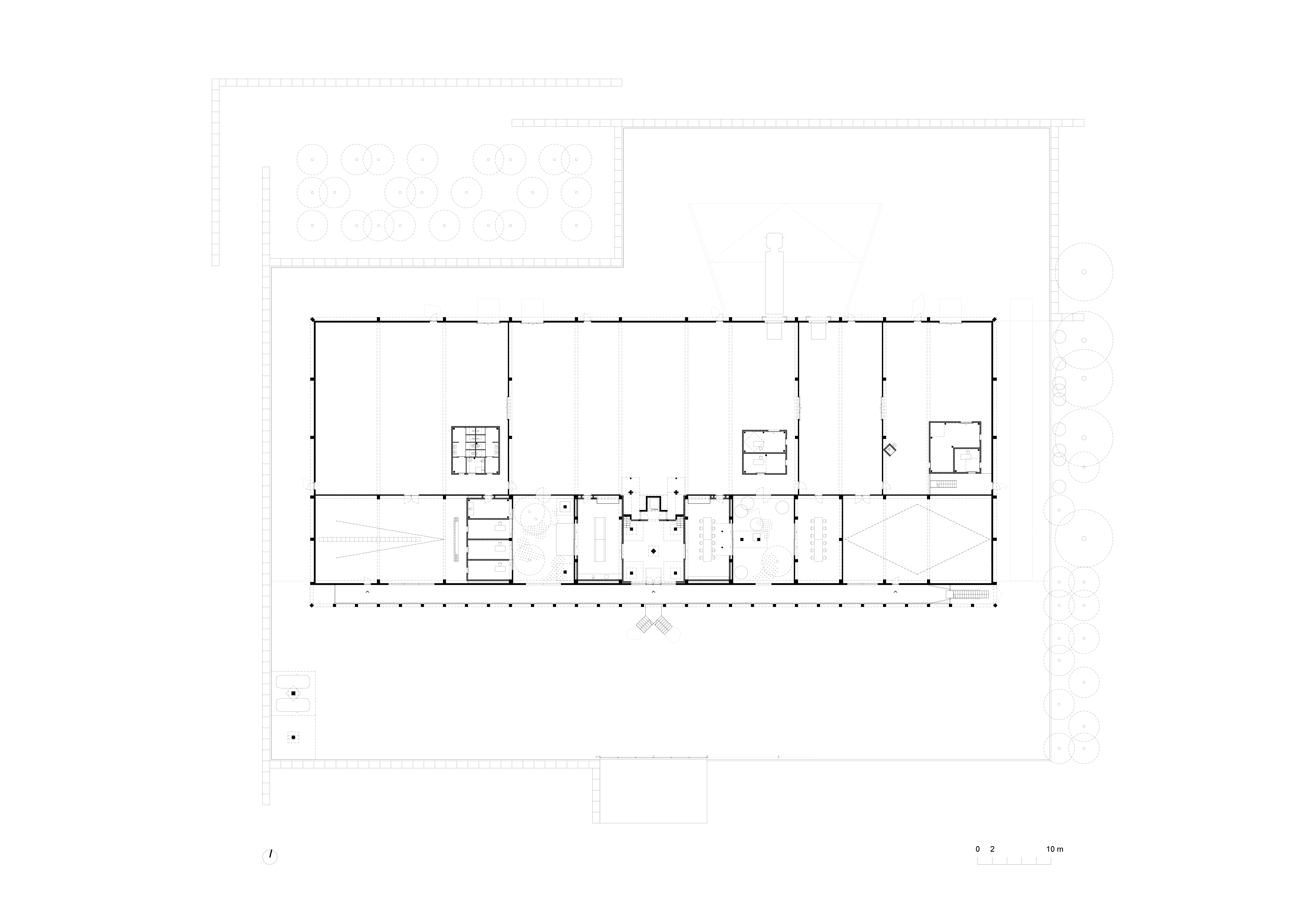
The site is a small acropolis located in a rural area outside the peripheral city of Penafiel, northern Portugal. A complex set of different programs is to be adjusted and articulated by an exterior gallery: - A shop for navigation hardware and software. - Office spaces, cafeteria and lobby. - A Showroom. - A technical assistance area and three storage rooms. - Interior boxes made of white painted concrete block for offices and toilets. Granite pavement and walls - made of local granite - sustain the topography and create a continuous floor to visually detach the building.
The land was carefully shaped with minimal earthworks, aiming to preserve the existing topography. Gabion walls, filled with local stones, support the terrain while also establishing a material dialogue with the cobbled pavement. A 3x3 metre grid organizes the entire spatial structure. This grid is composed of prefabricated elements — columns, beams, and panels — allowing for a construction process that is strategically cleaner, faster, and more precise. The panels, measuring 9 x 3 x 0.24 metres, include 4 cm of thermal insulation. In the office areas, this insulation is reinforced with an additional 10 cm of interior rock wool and exposed concrete block walls. Beyond the thermal mass offered by the concrete panels, the interior cladding enhances thermal comfort in workspaces. Two patios - gardens - oppose the expected impersonal atmosphere. An axial entrance to a lobby with two long stairs and four columns that reach a higher ceiling with a cross circulation on the second level.
The building process is defined by a sustainable approach across all stages — from site modeling to structure, external cladding, interiors, and finishes. This economy of means is based on controlling the quantity of materials used and how they interconnect — aiming to extend their durability and reduce the overall construction timeframe. The prefabricated concrete skeleton is conceived through repetition and modulation. Although based on standardized measurements for cost efficiency, the system was carefully adjusted to the building’s spatial requirements: overhangs, profiles, connections, supports, raw and finished panel faces, alignment of floor joints and expansion joints, closures — all fine-tuned to the specific context. Doing more with less — with no aggression and no noise — is our contribution to the site. All elements seek synthesis and essence, working with the structural and spatial skeleton as the core of the project, perhaps evoking a certain monumentality.