-

Commemorative Value and Life Cycle – Recycling of Architectural Structures
-
The existing structure and it's space defining elements
-
The memory of specific elements of the existing structure
-
The design method
-
The new elements
-
The implementation of the new elements in the existing structure
-
The method of circular design
-
Panel
-
Commemorative Value and Life Cycle
Juliane Geldner. Graz, Austria
-
Name of work in English
Commemorative Value and Life Cycle
-
Name of work in original language
Recycling of Architectural Structures
Prize year
Young Talent 2023
-
Work Location
Graz, Austria
-
Author/s
Juliane Geldner
-
School
Faculty of Architecture - Graz University of Technology.
Graz, Austria
Young Talent 2023 YT Nominees
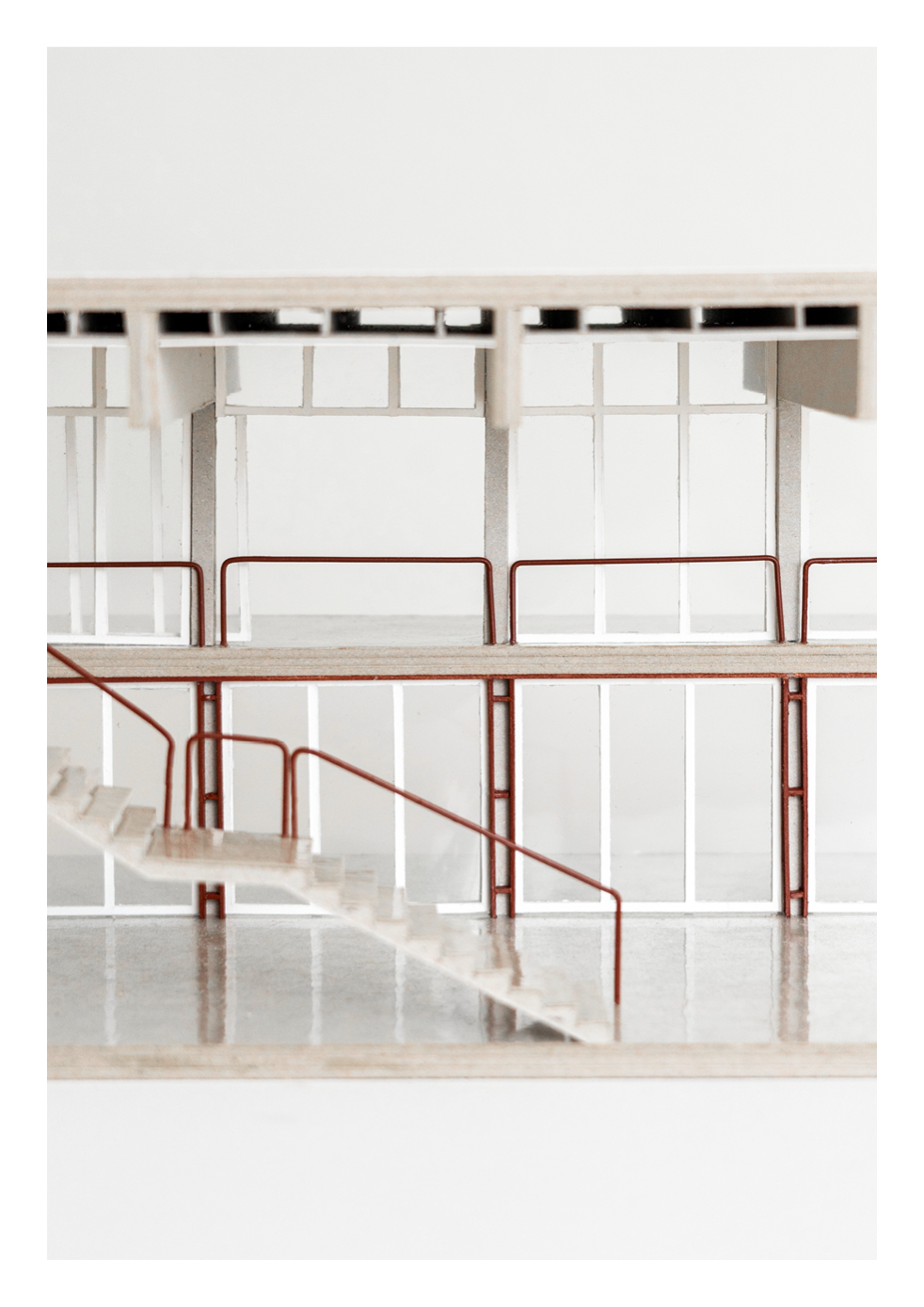


Commemorative Value and Life Cycle
Recycling of Architectural Structures
Program
Mixed use - Cultural & Social
-
Labels
Architecture · Compact
The longevity of buildings is becoming increasingly relevant regarding sustainable architecture. This project investigates the interpretable typological potential of a built structure from the 1970s. A design tool is developed to reuse the structure for multiple purposes while maintaining and working with its embodied knowledge.
The analysis of an existing building structure made of reinforced concrete forms the basis as well as the core of this project. It is investigated how architecture itself, without claiming to be a monument, is in a changeable state, while at the same time, cultural aspects are not lost but are explicitly conveyed. This can be described as recycling of architecture. Regardless of their originally intended purpose, the five different building parts represent five different spatial characters. In the first step of the analysis, the five spatial characters of the components of the existing building and their space-forming structural elements are defined. In addition, the hypothesis is made, that the specific essence of the existing structure, can be found and internalized through hand drawings. During the design phase, for each component, based on the spatial and specific analysis, tools of building elements are developed. These are provided to work on the existing shell structure. These new elements are the embodiment of the memory of the existing structure. They create a connection between the generic (structural building elements) and the specific (existing object). The elaboration of the elements in variants is based on the multi-layered knowledge with which the existing is enriched. During processing the various spatial characters, a whole toolbox of elements emerged. Their juxtaposition shows the possibility of further construction, and at the same time how the building can be altered to different social needs. Future changes would in turn build on this new knowledge. Hence, this developed methodology can be summarized as a manual for a sustainable approach in the design of postwar modernism buildings. It demonstrates the potential of otherwise lost stock, which can serve as a resource: on the one hand, as a temporary storage of building material and, on the other hand, as a source of architectural knowledge. As a result, innovation can arise through the memory of the knowledge embodied in the existing structure and through this renewed interpretation, cultural value continues to exist.