-

front view from the square
-
rear view from the garden
-
open kitchen and living room
-
living room
-
built-in furniture
-
floating bed
-
Site Plan
-
Floor Plan
-
Exploded Honeycombs
-
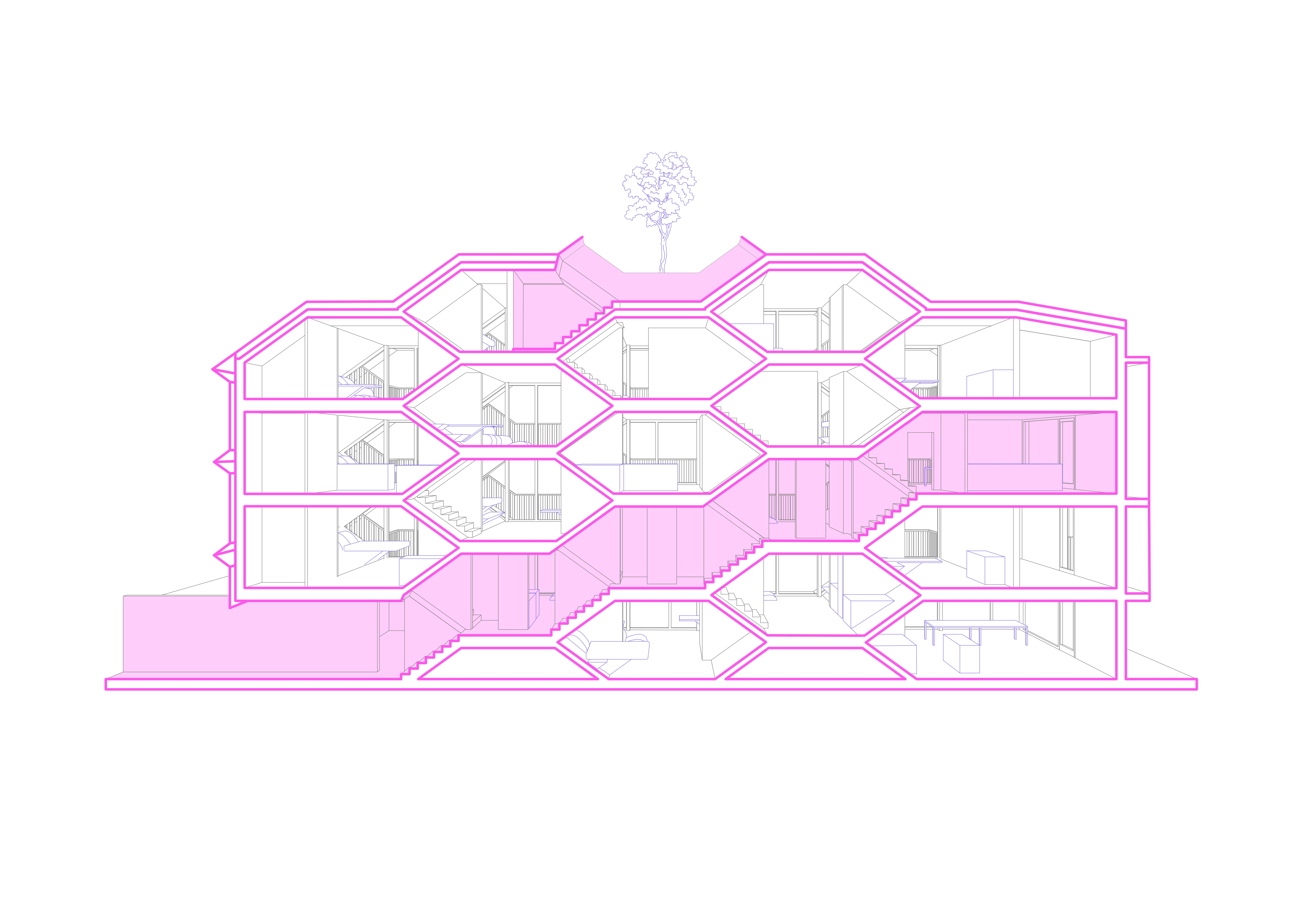
3D Section
-
Isometric Section
Clusterliving Honeycombhouse
Peter Haimerl Architektur. München, Trudering/Riem, Germany
-
Name of work in English
Clusterliving Honeycombhouse
-
Name of work in original language
"Clusterwohnen Wabenhaus"
Prize year
EUmies Awards 2026
-
Work Location
München, Trudering/Riem, Germany
-
Studio
Peter Haimerl Architektur
EUmies Awards 2026 Nominees


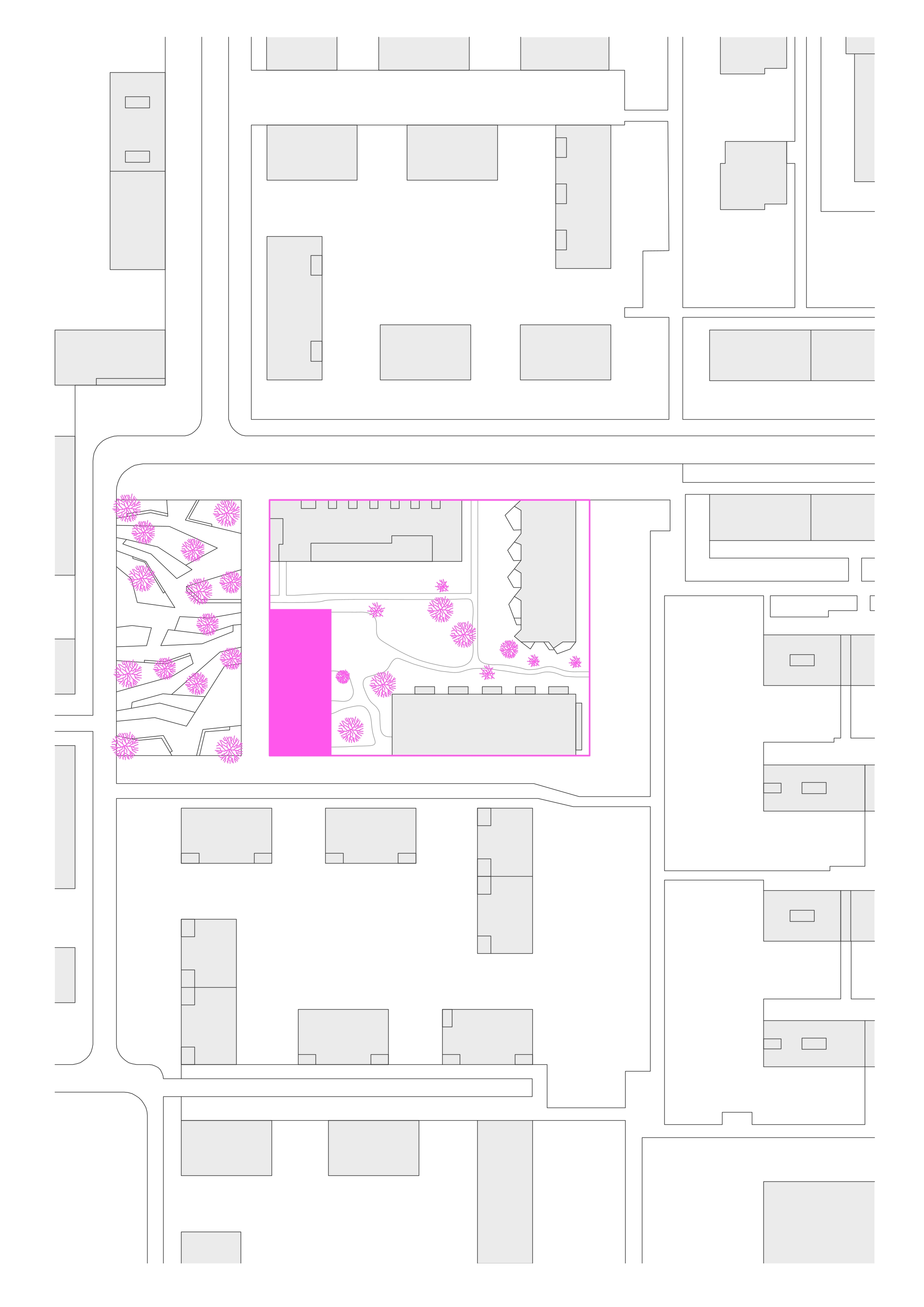

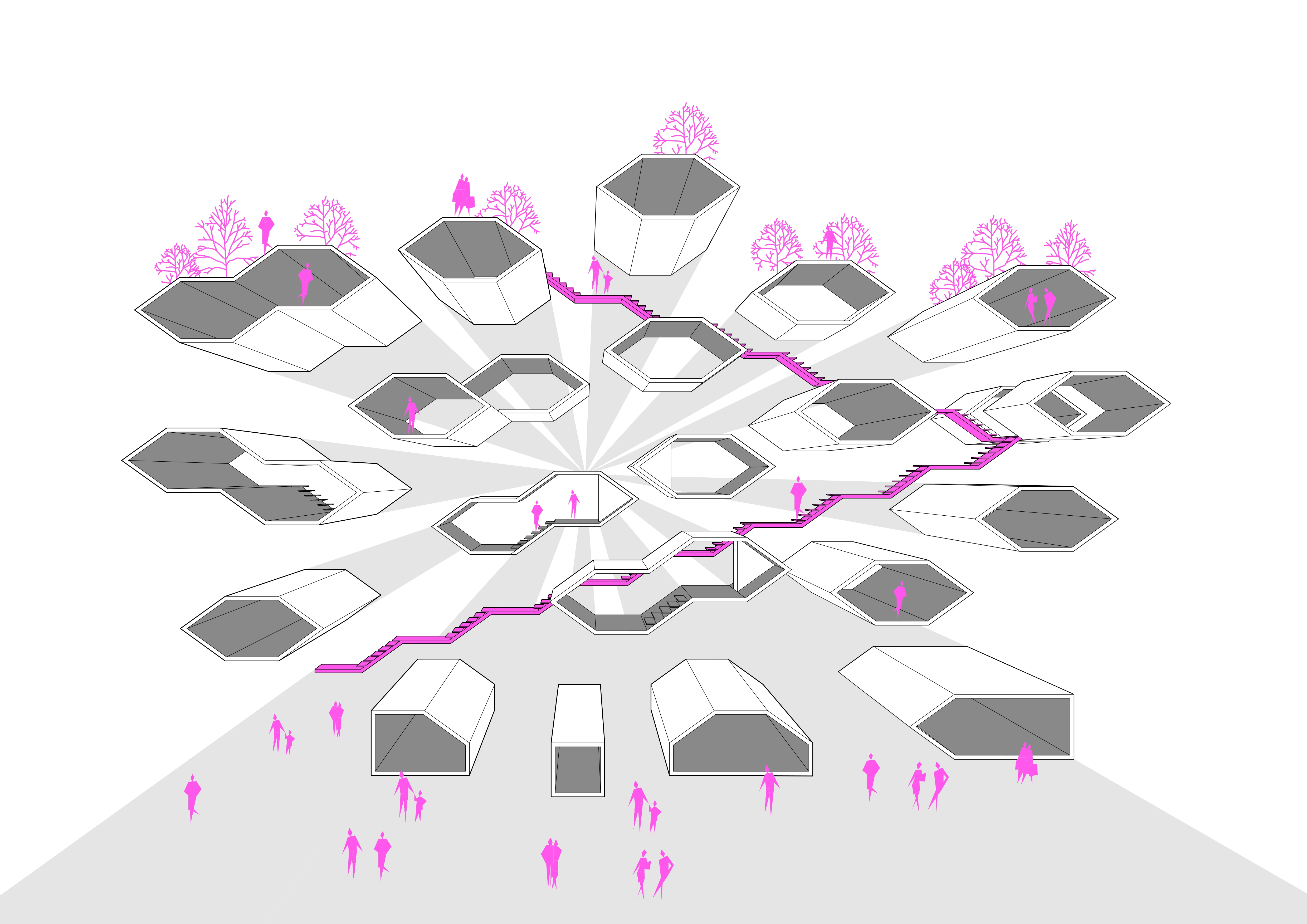

The Honeycomb House combines architectural innovation with social sustainability. Its hexagonal design creates exciting, flexible spaces, breaks away from monotonous building forms, integrates communal areas, and maximizes spatial efficiency—promoting affordable, vibrant, community-oriented living.
Collaborators
Project management: Rainer Hofmann - Hoffmann Architekt; Collaborator (office): Franz Balda - Balda Architekten; Collaborator (office): Ulrich Pape - Peter Haimer . Architektur; Collaborator (office): Tomohide Ichikawa - Peter Haimerl . Architektur
Program
Collective housing
-
Labels
Elderly · Social · Youth · Student
Site area
2162 m²
-
Client
Wogeno München eG
Total gross floor
1333 m²
In the eastern part of Munich, the Messestadt Riem has developed into a district of around 16,000 residents, characterized by uniform buildings with monotonous facades. The Honeycomb House stands out as a bold architectural statement: a dynamic composition of stacked hexagonal cells that interweave private and communal spaces into a vibrant ensemble. Large glass facades and open floor plans create bright, flexible apartments. Communal areas encourage interaction and exchange, promoting democratic living and strengthening the participation of all residents.
The main challenge of the Honeycomb House was to create diverse, bright, and functional living spaces in a densely built urban environment while simultaneously fostering a strong sense of community. The design is based on a hexagonal system, stacked like honeycombs, allowing for flexible layouts ranging from small studios to multi-room apartments. The geometry maximizes daylight and natural ventilation, while built-in furniture and floating beds enhance spatial efficiency. The project was developed in close collaboration with the Wogeno cooperative and future residents, meeting both social and practical needs. Communal spaces, a workshop, and a rooftop terrace support a democratic living model, while the central “Sky Ladder” vertically connects all areas. Implemented as a pilot project, the Honeycomb House demonstrates the innovative potential of the modular “MAMAWABE” honeycomb construction system, enabling housing to be built faster, more cost-effectively, and sustainably.
The Honeycomb House makes unique use of the geometric efficiency of its hexagonal form: slanted walls are actively utilized, creating significantly more usable space within the same volume than in conventional buildings. The design allows for an intelligent spatial layout without a traditional stairwell, as the stairs are integrated into the sloped sides of the hexagons. This significantly reduces material use and construction effort, making the building highly cost-effective. The structural framework of in-situ concrete provides stability and durability, while generous glass facades bring abundant daylight into the living spaces. Wooden floors and windows add warmth, tactile quality, and a pleasant atmosphere. Perforated trapezoidal sheet metal serves as both a facade and a privacy screen for balconies, remaining translucent and conveying a sense of lightness. The overall system combines sustainability, efficient use of space, and resource-conscious construction.