-

View of the arcades on the south facade
-
View from the ramp leading to the reception area of the Heath Centre
-
View from the entrance hall towards the continuous circulation area
-
The interior of a doctor's office on the ground floor
-
View of the main waiting room
-
View of the north facade
-
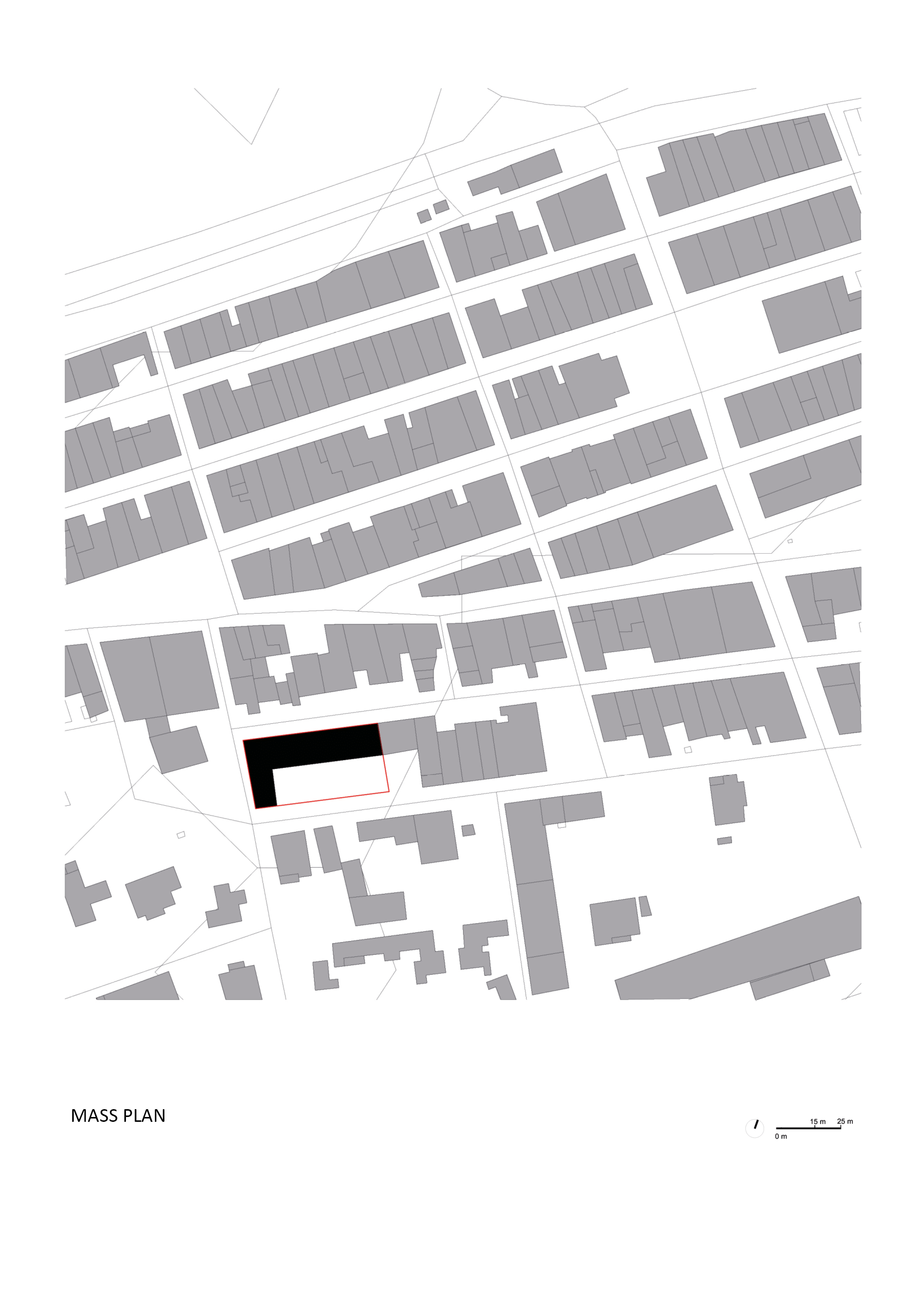
Mass plan
-
Ground floor plan
-
Level 1 plan
-
South facade
-
Section drawing
-
Technical details
Charleval Multidisciplinary Health Centre
Atelier COMBAS. Charleval, France
-
Name of work in English
Charleval Multidisciplinary Health Centre
-
Name of work in original language
Maison de santé pluridisciplinaire de Charleval
Prize year
EUmies Awards 2026
-
Work Location
Charleval, France
-
Studio
Atelier COMBAS
EUmies Awards 2026 Nominees




Territory, building technique, raw material, planning logic, and architectural morphologies converge in the Charleval Multidisciplinary Health Centre, where vernacular heritage meets low-carbon innovation. A contextual, human-scaled landmark crafted through earth, craft, and adaptive design.
Collaborators
Project management: ASCOREAL; Construction management: EDIFYS; Consulting: APAVE; Building physics: FILIATER; Structure: KP2; Structure: 3L; Installations: VERNUCCI; Installations: Société Provençale de Peinture; Installations: ITHAQUE; Installations: COGELEC
Program
Health
-
Labels
Health Centre
Site area
1308 m²
-
Client
Municipality of Charleval-en-Provence
Total gross floor
725 m²
Cost
2669 €/m²
Located in the Durance Valley, on a sloping plot between Rue Sainte-Thérèse and Rue des Aires in Charleval, the health centre extends the urban grid, aligns its north façade and folds in L to frame a south garden, reusing the rubble-stone wall by Rue Mistral. The programme gathers 11 medical and paramedical practices and a multipurpose hall within a modular north-south grid. Rammed-earth facades (called "tapis" in local language) made from site soils, with regional timber and larch joinery, reinterpret local craft and the street's basket-handle arches into precise, durable architecture.
The masterplan reinterprets both the existing urban planning and the local architectural archetypes. On the north side, a series of arches echoes the carriage doors typical of Charleval’s historic buildings. On the south side, these same arches are extended vertically to double height, opening the healthcare center onto the garden and establishing a dialogue with its environmental context. This vernacular logic offers passive climate control: bringing in natural light and warmth with wide windows during winter, reducing summer overheating by the shaded garden and extended roof overhangs, limiting thermal loss with minimized windows on the north side, cross-ventilating with natural system, and protecting from the Mistral wind. Despite the building’s structural rigor, a regular grid of load-bearing walls allows durability through future adaptability and user appropriation. Interior arcades organize waiting areas, while the medical offices are arranged along the southern façade.
The excavated earth—echoing the history of local cellars-turned-quarries—was repurposed into building rammed-earth blocks using a custom-built prototype machine. The resulting raw materiality defines the architectural language of the building, echoing the local technique of tapis, and becomes a manifesto in itself. This approach reflects a multi-layered economy: minimal cutting and waste, reduced material consumption, and a lower carbon footprint. Visible structural anchors on the façade link cypress and Aleppo pine timber elements to the rammed earth structure, reinforcing a short supply chain logic. Through its material choices, the project anchors itself in its territory and activates local social networks and know-how while achieving a low-carbon, circular material strategy. That building conception shifts attention toward what truly matters. By reversing production models, the project places human hands back at the heart of the building process, instead of the industrial product.