-

View of the place 01
-
View of the passage 01
-
View of the place 02
-
View of the gardens 01
-
View of the gardens 02
-
Interior view 01
-
Maison type 01 - coupes
-
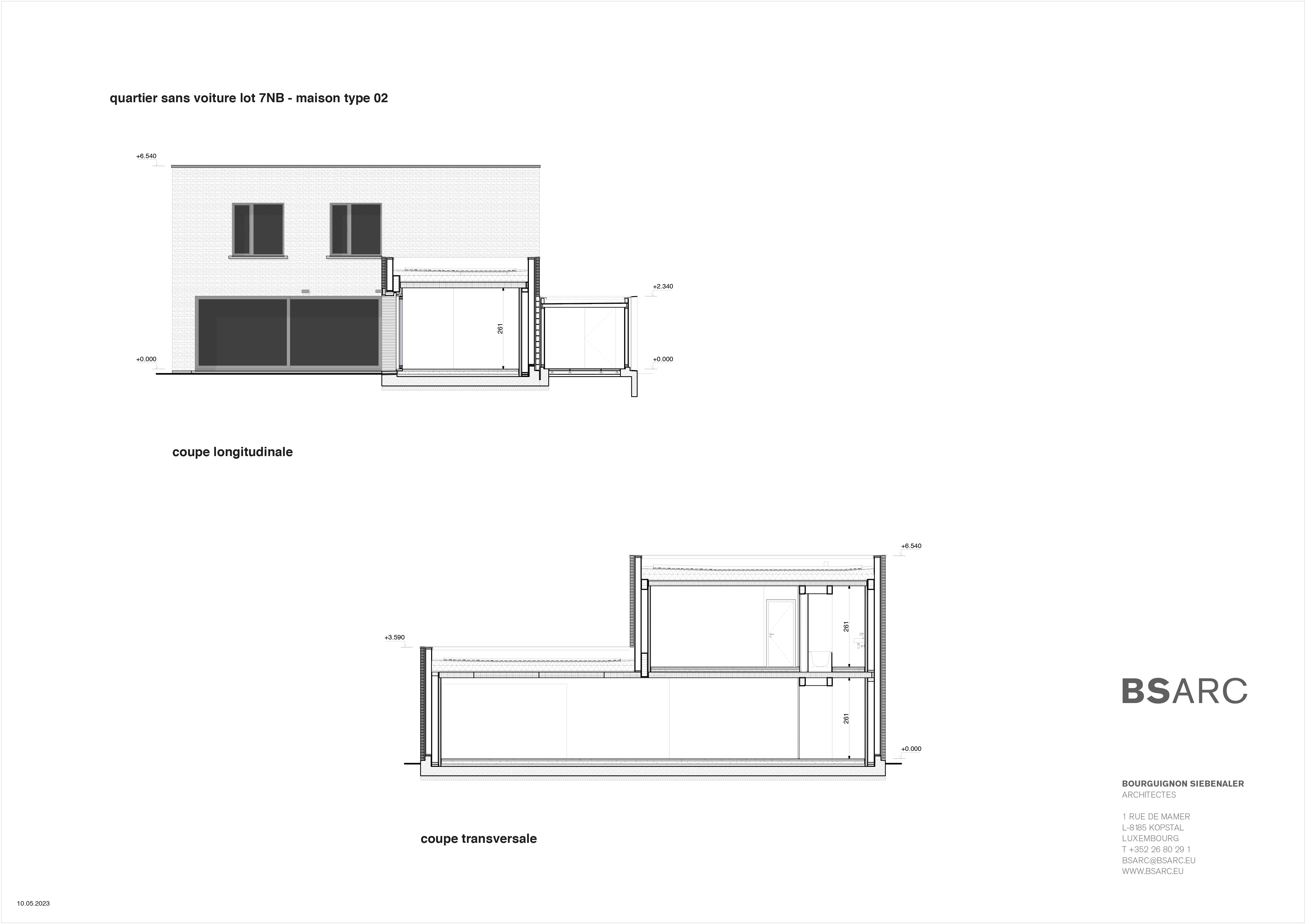
Maison type 02 - coupes
-
Maison type 01 - plans
-
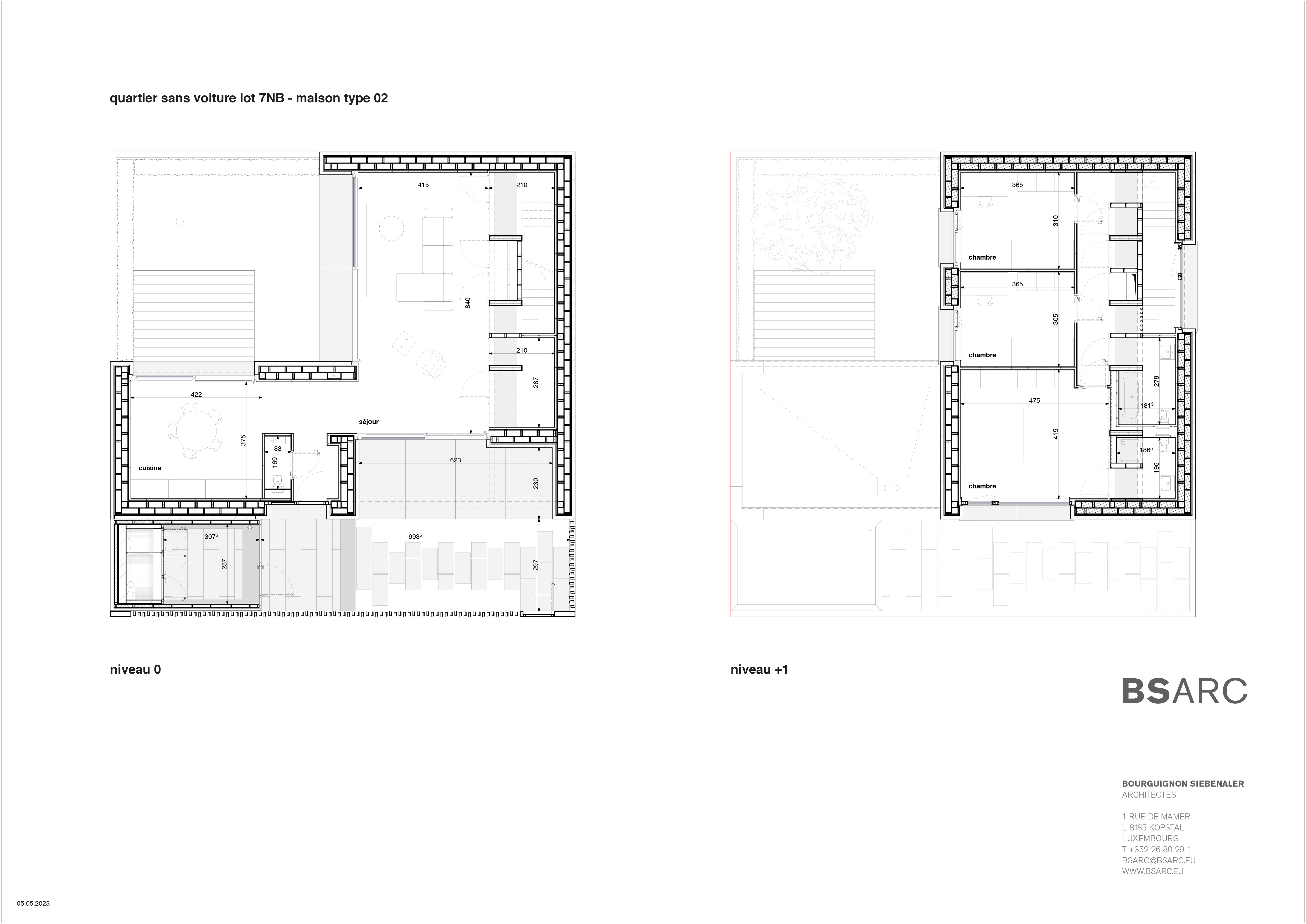
Maison type 02 - plans
Car Free Neighbourhood
BSARC SARL, BOURGUIGNON SIEBENALER ARCHITECTES. Esch-sur-Alzette, Luxembourg
-
Name of work in English
Car Free Neighbourhood
-
Name of work in original language
Quartier sans voiture
Prize year
EUmies Awards 2026
-
Work Location
Esch-sur-Alzette, Luxembourg
-
Studio
BSARC SARL, BOURGUIGNON SIEBENALER ARCHITECTES
EUmies Awards 2026 Nominees


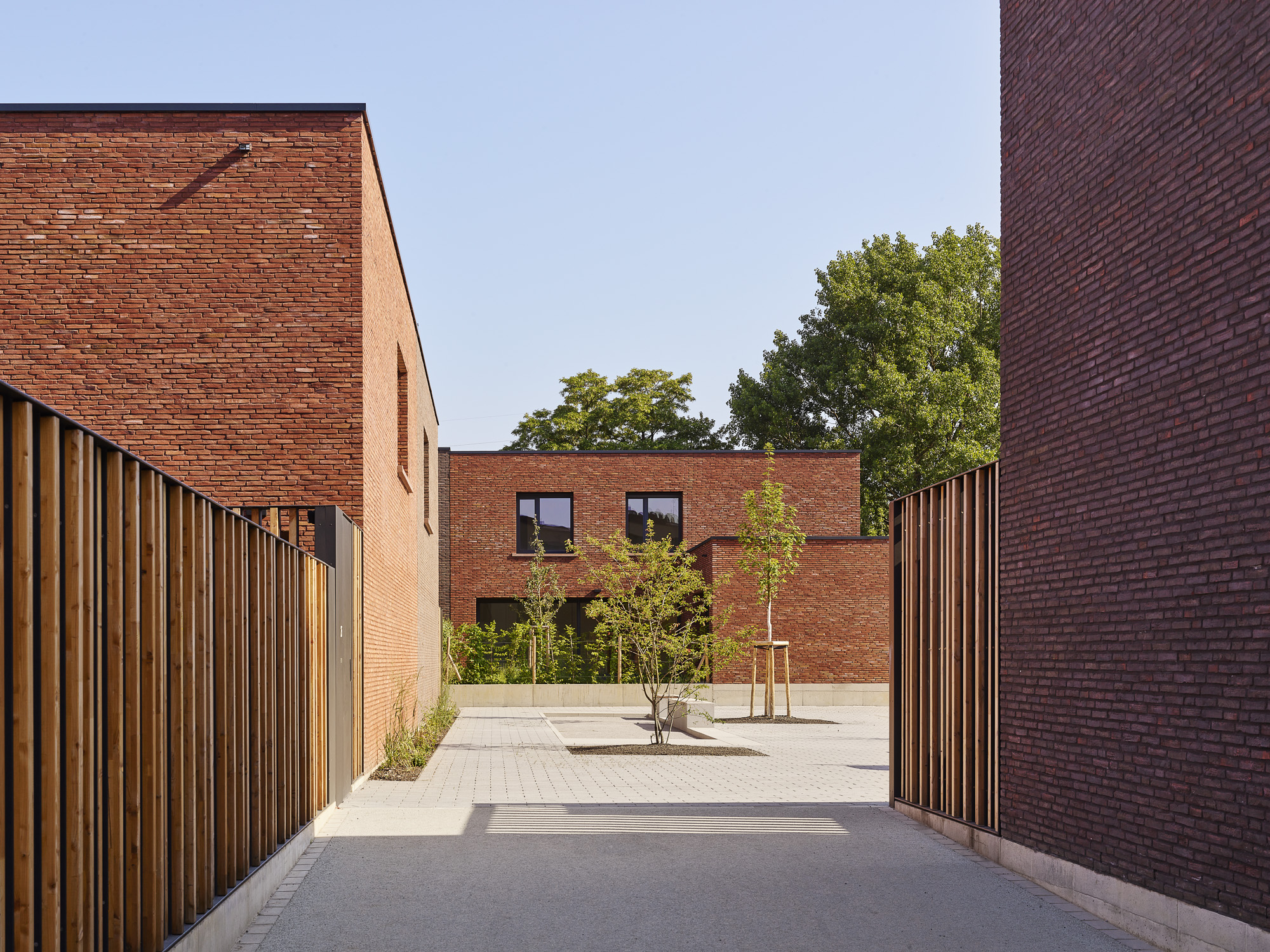

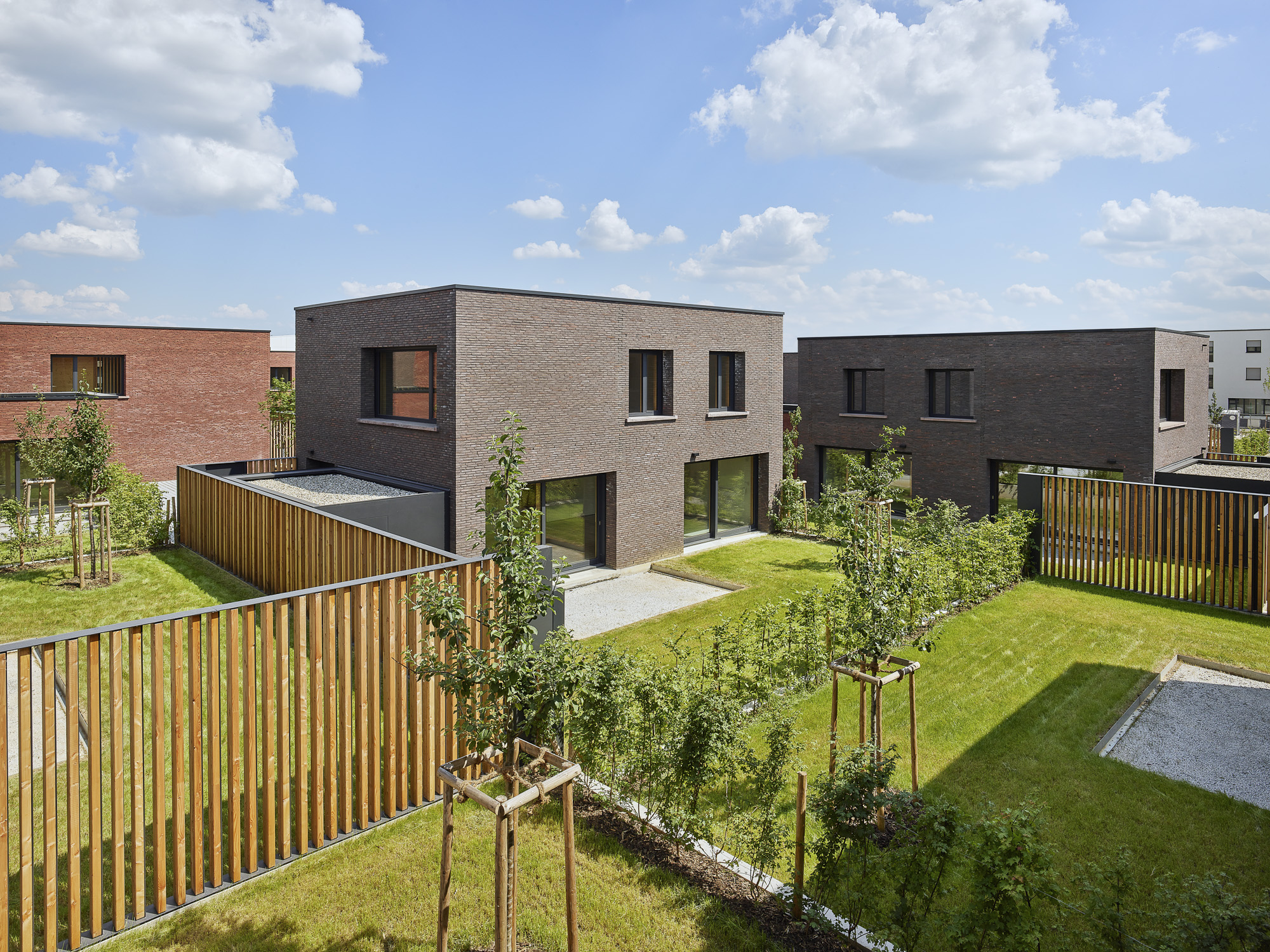



Two house types were developed: one with a garden that spans the width of the plot
along the main façade, and another with an entrance patio and a diagonally opposite rear
garden. Both share the same core elements - a compact main volume, an outbuilding for
garden tools and bicycles, and a 15 meter-long wooden palisade that provides a sense
of privacy. These modules are arranged and rotated according to two principles: the
main volume opens onto the public square to foster a sense of urban density, while the
gardens are oriented toward the south and west for optimal sunlight. The result is a
network of introverted green pockets - private yet visually linked - creating a continuous
inner landscape defined by hedges and fruit trees unique to each plot.
Collaborators
Structure: INCA - Ingénieurs Conseils Associés; Installations: JSE - Jean Schmit Engineering
Program
Single house
-
Labels
Master plan · Family
Site area
10000 m²
-
Client
Ville d'Esch-sur-Alzette
Total gross floor
7243 m²
Cost
3018 €/m²
The Lot 7N project is part of the master plan developed by BGSV for the entire Nonnewisen site in Esch-sur-Alzette. The entire block is designed as a pedestrian-friendly neighborhood, allowing for additional open areas dedicated to green spaces and pedestrian public squares. The creation of a series of squares covered with a homogeneous and continuous vegetative fabric will help reinforce the neighborhood’s overall cohesion. Reducing enclosed areas reserved for roads in favor of open spaces increases opportunities for social interaction and conviviality, linked to the appeal of green spaces. The city of Esch set out to transform a disused 10,000 square-meter site into a car-free neighbourhood of single-family homes. At the heart of the design lies a playful grid logic: a white canvas of 45 squares, each 15 by 15 meters, forming the foundation of a modular urban fabric. Subtractions carve out public squares, while others shift positionlike a sliding puzzle-introducing movement, access, and permeability throughout the site. The project finds its identity not in uniformity but in the layered juxtaposition of simple, functional forms. As in traditional village structures, coherence emerges from variation: volumes shift, rotate, and settle at different levels following gentle ramps, adapting to the natural topography. The ensemble - palisades, brick facades, trellised vines, hedges, and outbuildings-feels both intentional and organically evolved. It creates rhythm, intimacy, and a soft boundary between public and private space. The absence of cars reinforces a slower pace and encourages casual encounters, adding to the neighbourhood’s calm, human-centered atmosphere.
Architecturally, each house offers a gradual transition from public to private. Entering from the square, one passes through a semi-enclosed courtyard that leads to both the main house a nd the outbuilding. Inside, the floorplan distinguishes clearly between service and living areas: storage, bathrooms, stairs, and laundry are grouped along one side, freeing the rest of the home for generous, light-filled living spaces on the ground floor and quiet bedrooms above. Without basements, storage is optimized on both levels. The objectives of a car-free neighborhood fall within the framework of sustainable development, with specific goals including: - Improving quality of life (reducing noise and increasing safety). - Increasing public spaces (reducing road surfaces). - Expanding social interaction areas linked to the attractiveness of green spaces. - Reducing enclosed surfaces. - Ensuring continuity of public/private vegetation, enhancing the neighborhood’s overall cohesion.
A core objective of the project was environmental responsibility. All materials were chosen for their ecological performance and absence of toxic substances. The timber structures remain untreated, insulation is made from recycled cellulose, and all finishes meet strict natural and non-toxic standards. These choices, along with the project's thoughtful integration into its surroundings, earned it the LENOZ certification for sustainable building—recognizing its commitment to material health, comfort, air quality, and site suitability.