-

Café Leo on Leopoldplatz
-
Café Leo Interior
-
Café Leo with Alte Nazarethkirche
-
Café Leo in Winter
-
Café Leo, the new neighborhood meeting place
-
Café Leo closed
-
Café Leo on Leopoldplatz
-
Café Leo during the Day
-
Café Leo at Night
-
Café Leo Section
-
Café Leo Plan
-
Café Leo Siteplan
-
Name of work in English
Café Leo
Prize year
EUmies Awards 2026
-
Work Location
Berlin, Germany
-
Studio
sophie & hans
EUmies Awards 2026 Nominees
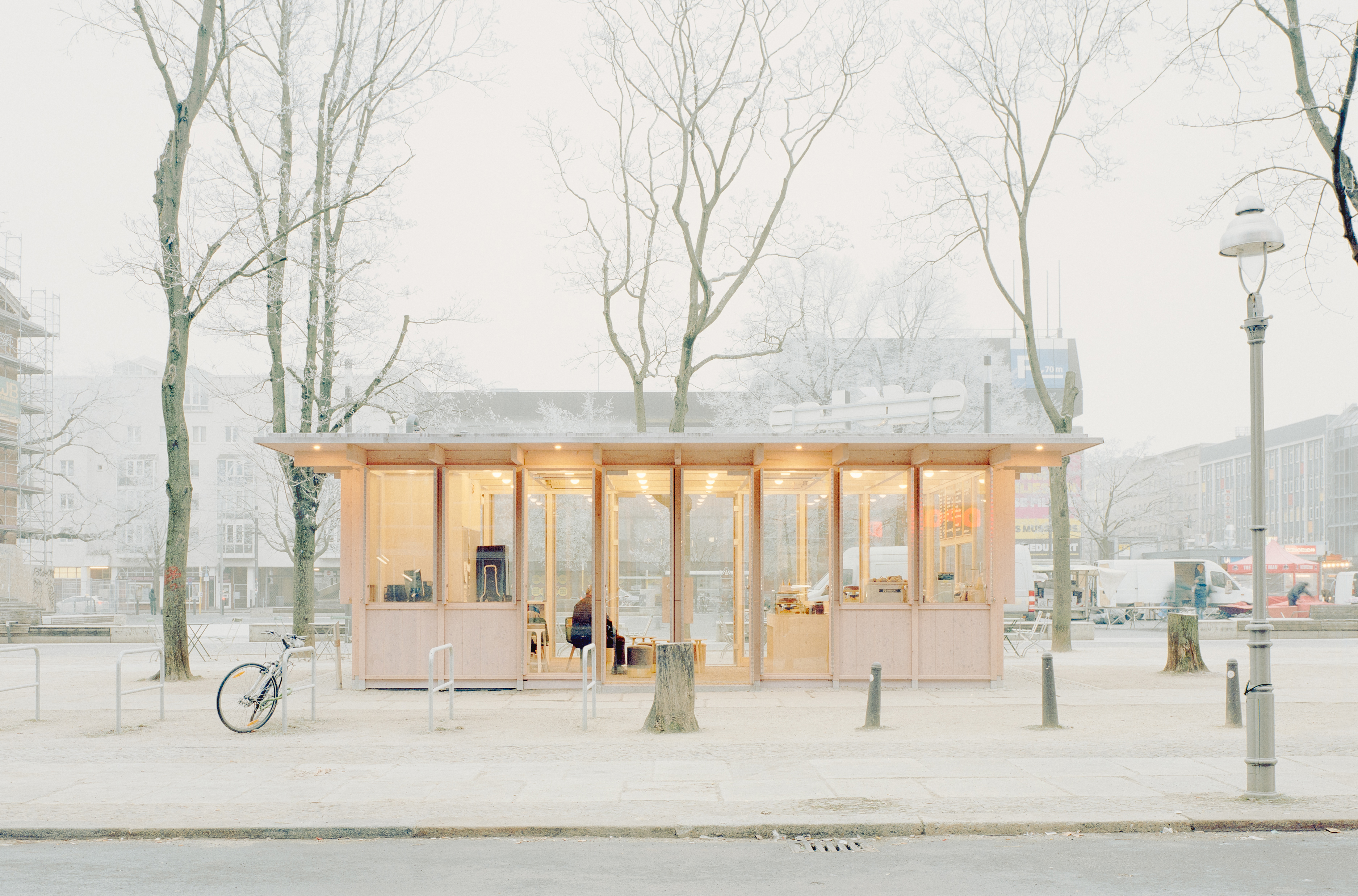
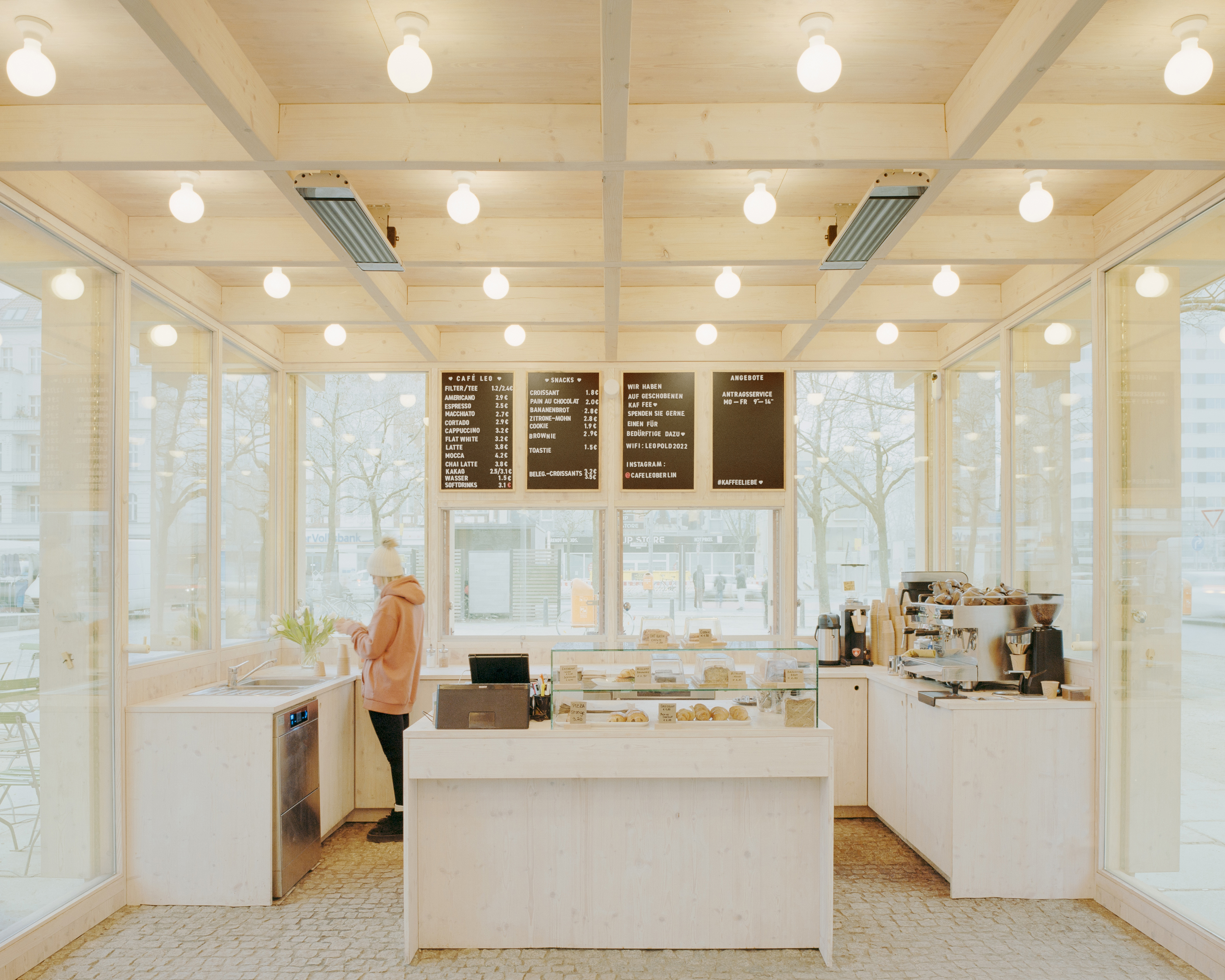


Café Leo by sophie & hans enriches Leopoldplatz in Berlin by serving refreshments and acting as a community-hub with social support and community activities, creating an inclusive space for all residents.
Collaborators
Structure: ZRS Architekten Ingenieure
Program
Food & Accommodation
-
Labels
Café
Site area
9600 m²
-
Client
WendePunkt gGmbH
Total gross floor
40 m²
The pavilion of Café Leo is designed for WendePunkt, a Berlin wide active charity that focuses on social projects with a heavy presence locally. It serves coffee, lunch, and light snacks while functioning as a hub for social work, including multilingual support for immigrants, family assistance, a knitting club, and other community activities. The pavilion’s design features continuous glazing and a light wooden frame made of pale pink-tinted larch, seamlessly blending with the plaza and honoring the nearby listed Schinkel church. The pavilion embodies WendePunkt's commitment to social projects, enriching plaza life by providing an inclusive space for all.
Leopoldplatz is undoubtedly the heart of Wedding, a Berlin working-class district, retaining its status as one of the rougher and less affluent areas of the German capital since its 19th-century construction. The inception of Café Leo dates back to 2009, a response to the escalating issues of drug use, alcoholism, and conflicts in the square. As part of a prevention concept, the local council introduced a food truck to deter socially unacceptable behavior, aiming to increase pedestrian activity and diversify visitors. The goal was never displacement but moderation and integration, bridging users with families and other visitors frequenting the square's markets and fairs. WendePunkt, a Berlin-wide charity, won a bid in 2021 to operate the café. Beyond food, it sought to create a space that catered to a diverse demographic, offering additional services like multilingual support for immigrants, family assistance, and social activities like a knitting club, fostering a sense of inclusivity and community engagement.
The design of the pavilion aims to blend into the plaza. It avoids creating a backside as it opens up with continuous windows in all directions. The structure is simple and straightforward, constructed of light larch wood, tinted slightly pale pink on the outside to pay homage to the red bricks of Schinkel’s church next door. Inside, cobblestone flooring extends seamlessly from the exterior, with handicapped accessible doors. The goal is to build a pavilion that establishes maximum proximity to the square - to breathe in light together with life on the plaza. In the interior, integrated storage below balustrade height gives the cafe ample storage for operational needs. Above, all around glazing allows uninterrupted views from eye level through the pavilion across the entire plaza. Bespoke shutters which are economically produced, are cleverly integrated into the pavilion, for protection against break-ins and vandalism in evenings. The inside also facilitates a small bar and kitchen to prepare hot drinks and serve meals produced off site. The remaining space provides limited seating for guests, but can also be used for the additional services and social activities.