-

The architecture of the building went beyond the building itself, expanding the artistic space to t
-
Since the project is a reconstruction, an important factor was to find a solution to ease the load o
-
The preserved frame of the building received a new glass shell, which provides maximum natural light
-
The site is located in the dense conditions of the historical district of Lviv. The building previou
-
prefab structures with decorative “domino” elements
-
The space center speaks through materials, textures, and architectural li
-
location
-
masterplan
-
section
-
planing solutions
Business-Centre Horizons & Zag-Gallery
AIMM. Львів, Ukraine
-
Name of work in English
Business-Centre Horizons & Zag-Gallery
-
Name of work in original language
Бізнес-центр HORIZONS та Zenyk Art Gallery
Prize year
EUmies Awards 2026
-
Work Location
Львів, Ukraine
-
Studio
AIMM
EUmies Awards 2026 Nominees
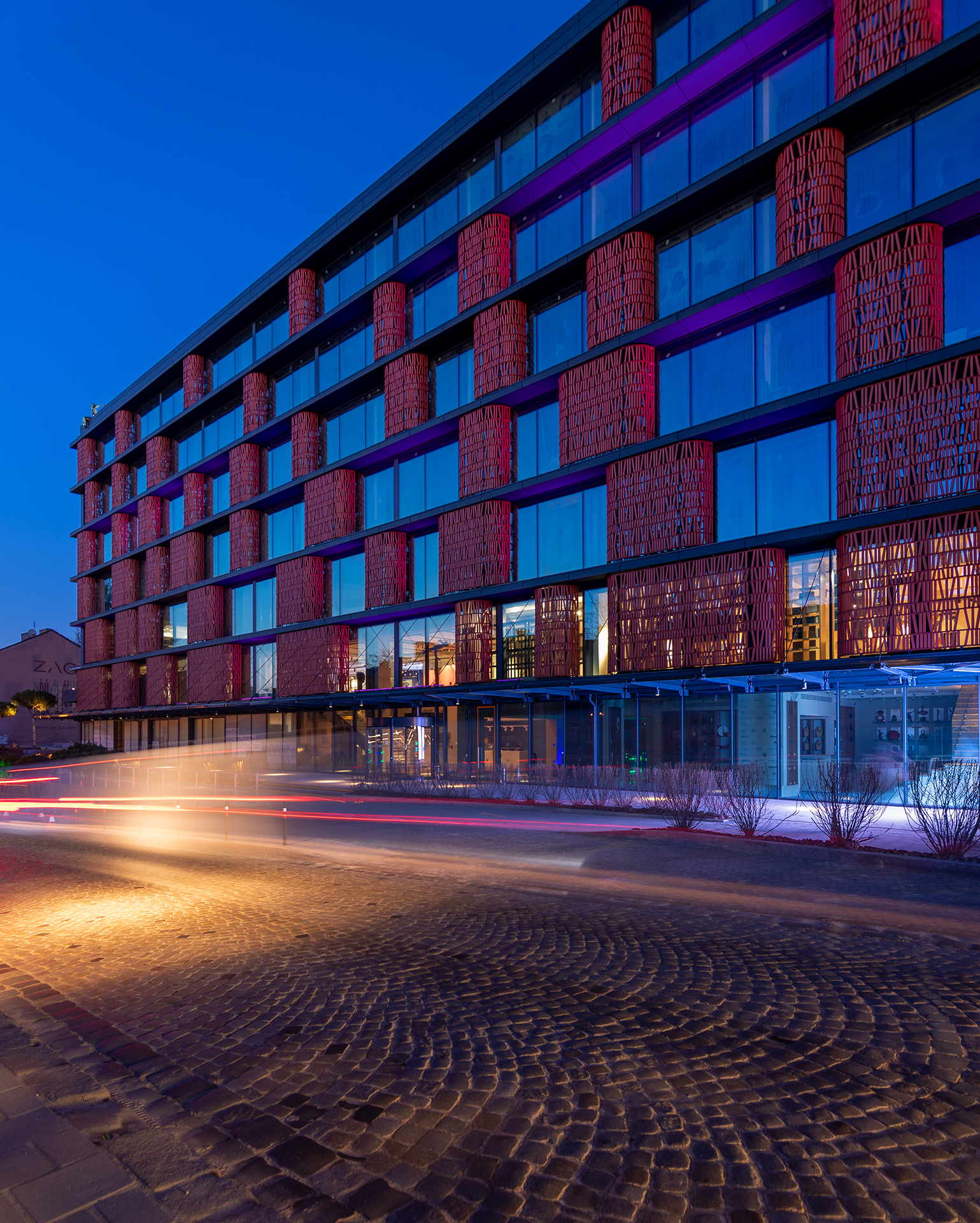


The business center and art-gallery involved transforming the building of the former design institute into a modern public space. The preserved frame of the building received a new glass shell, which provides maximum natural lighting, facade is formed by prefab structures with decorative elements.
Collaborators
Collaborator (office): Oleksandr Mahera - AIMM; Collaborator (office): Serhii Kravchenko - AIMM; Collaborator (office): Oleksii Chubarov - AIMM; Consulting: Andrii Komarov - PlusPix; Gallery interior design: Khrystyna Khobzei - LOOK design; Lighting: Mykola Kabluka - Expolight; Consulting: Vasyl Baloh - Baloh architects
Program
Mixed use - Cultural & Social
-
Labels
Compact · Art Gallery · Congress Centre
Site area
3000 m²
-
Client
NORDIK-BUD
Total gross floor
7000 m²
The site is located in the dense conditions of the historical district of Lviv. The building previously had no access from Shota Rustaveli Street, but due to the fact that the underground floor was dug up and it became open to the street, it was possible to connect two territories that were previously separated by a hill. The task was to create a multifunctional space that would be barrier-free, architecturally expressive and create a new tourist magnet. The architecture of the building went beyond the building itself, expanding the artistic space to the street landscape and rooftop.
During the design and construction, architects and engineers had to solve three key problems. After agreeing and working out 6 reconstruction options, working out the city's requirements with the municipality, the architectural project compiled a final list of restrictions. The first and main problem is the weight of the future facade. Since the project is a reconstruction, an important factor was to find a solution to ease the load on the decorative elements three times as opposed to the ceramic version of the facade. The second challenge was to plan and combine three important functions and competently disperse the flows of people, ensuring international safety standards for art galleries. The third challenge was working with the surroundings and relief, the desire to integrate the building with landscaping and art, expanding the boundaries of design, improving the urban environment, creating new pedestrian communications.
The space of business center speaks through materials and architectural light. The graphic motif of the facade — a rhythmic pattern reminiscent of dominoes or books on shelves — is repeated in the interior: on the marble floor of the lobby and conference hall. The vision of the project’s architecture is a combination of functionality, aesthetics, and social responsibility. The barrier-free space, openness to the city, and the implementation of a bold idea transform this building into a living cultural space. The facade is formed by prefab structures with “domino” elements arranged in a compositional sequence; the lower floors have more densely arranged panels. The dismantled concrete elements of the old building were crushed and reused when creating the landscape. The priority was to use local materials and industries located within 15 km of the facility. For convenient maintenance of the facade, windows-doors for technical supervision and cleaning are located behind the facade panels.