-

Building as a Landscape
-
How unplanned growth affected the city of Addis Ababa
-
Location Map
-
Analysis
-
Solution design
-
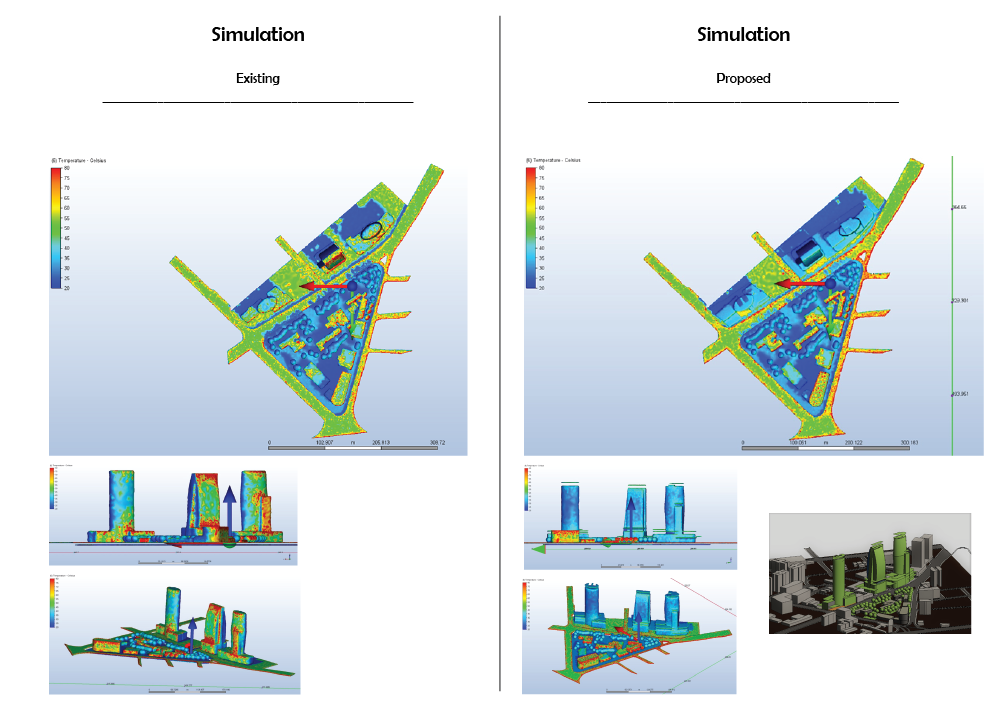
CFD (Computational fluid dynamics) analysis showing the difference
-
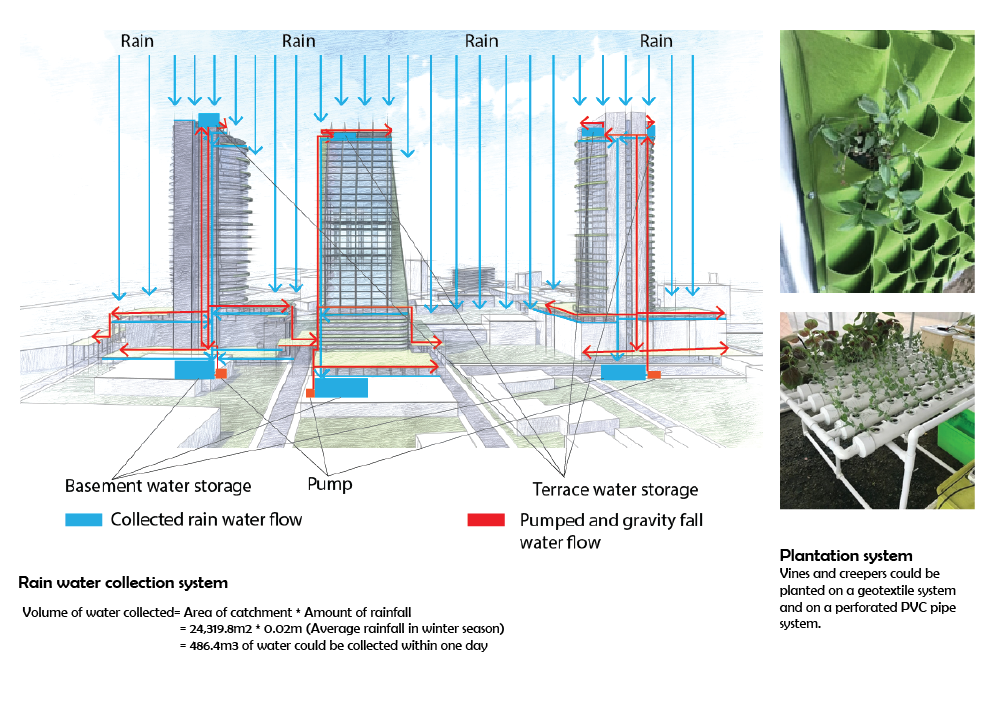
Plantation and irrigating system
-
Building as a Landscape: response to urban heat island summary
-
Building as a Landscape: response to urban heat island
Helen Zeray Weldekidan. Addis Abeba, Ethiopia
-
Name of work in English
Building as a Landscape: response to urban heat island
-
Name of work in original language
Urban heat Island effect comparison in Senga Tera, Addis Ababa
Prize year
Young Talent 2023
-
Work Location
Addis Abeba, Ethiopia
-
Author/s
Helen Zeray Weldekidan
-
School
Ethiopian Institute of Architecture - Addis Ababa University.
Addis Abeba, Ethiopia
Young Talent 2023 YT Open Nominees

Building as a Landscape: response to urban heat island
Urban heat Island effect comparison in Senga Tera, Addis Ababa
Program
Landscape
-
Labels
Structure
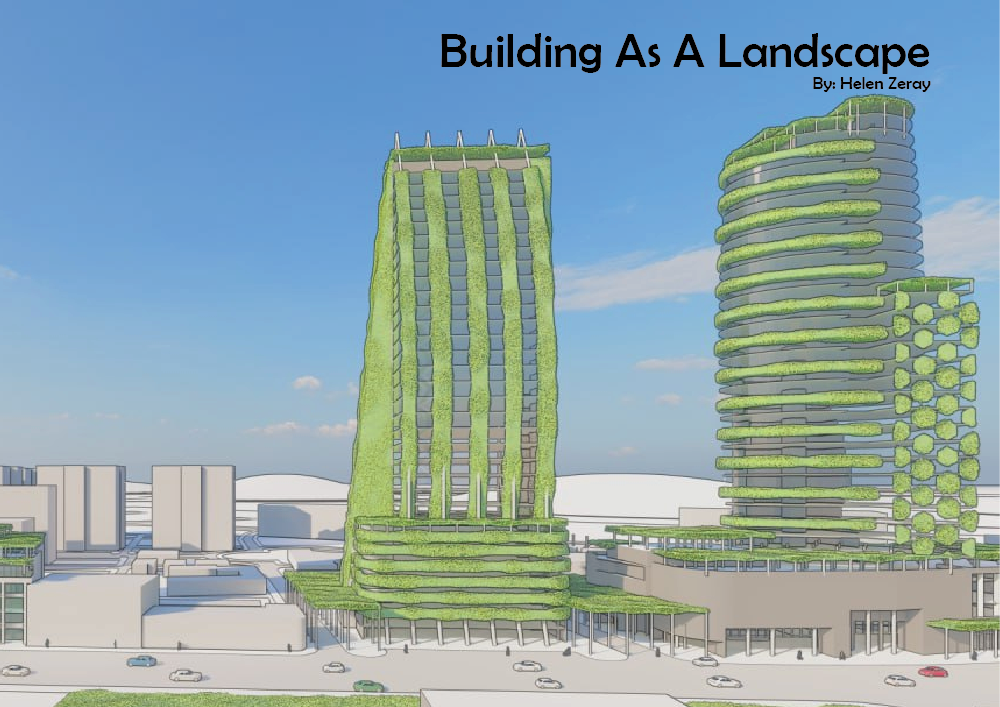
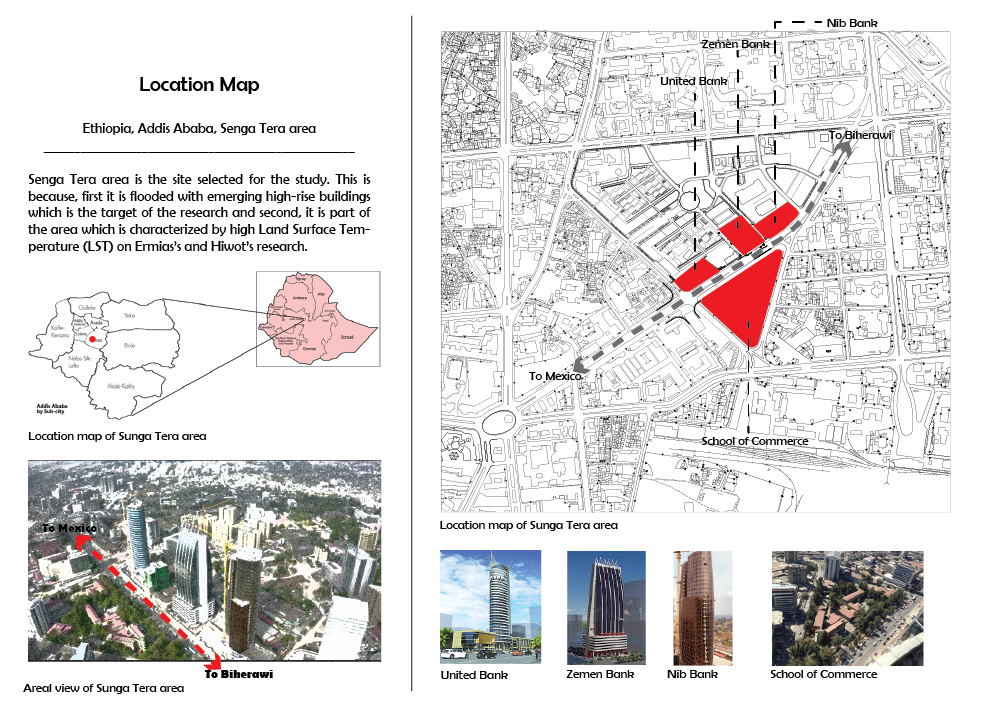
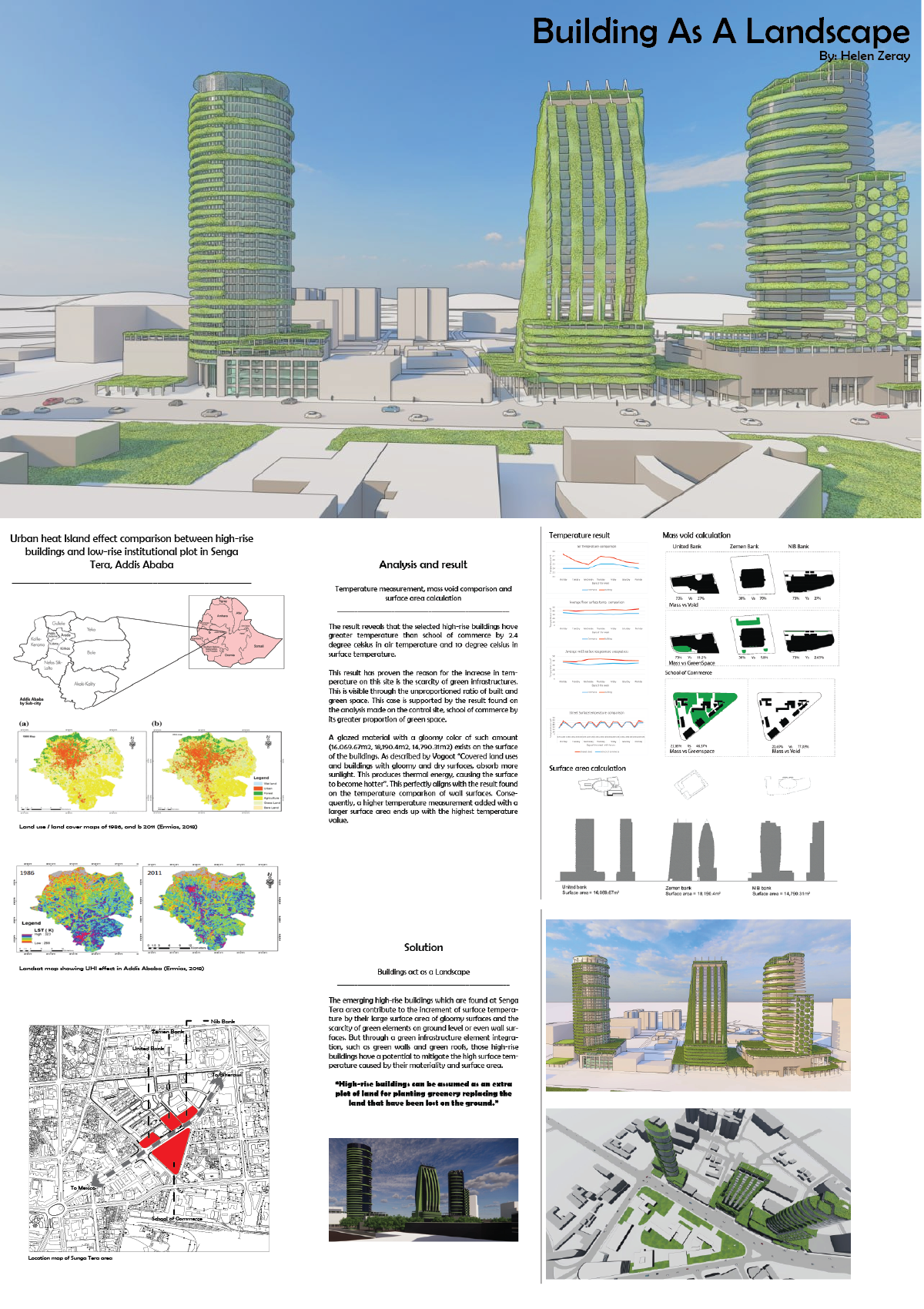
Urbanization has brought a negative impact on the natural setting by shrinking green spaces in cities leading to Urban Heat Island (UHI) effect. The main aim of this project is to investigate UHI effect of high-rise buildings and low-density institutional plot in Senga Tera area, & implement relevant Green Infrastructure elements to reduce the effect.
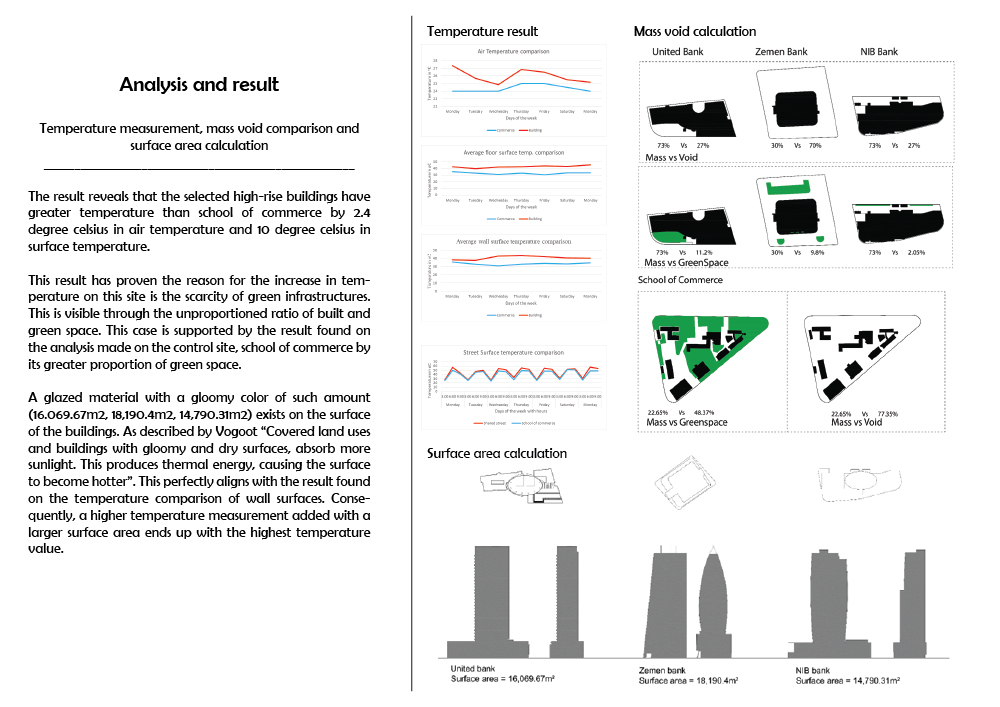
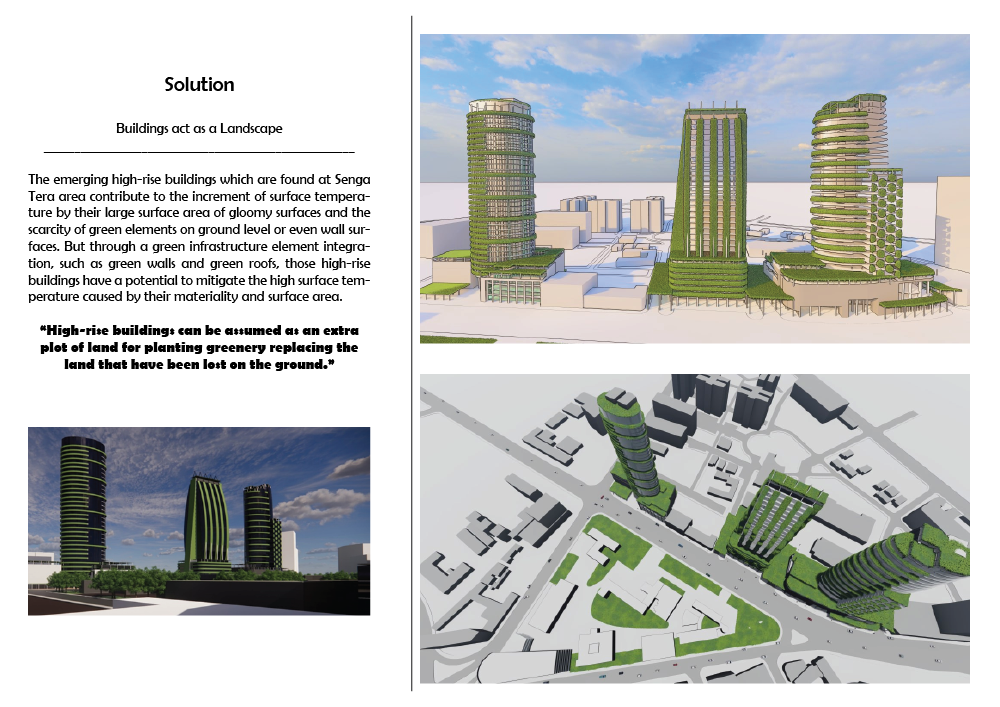
The study applied observation, Temperature measurement, mass void calculation of sites, surface area calculation of buildings and software simulation (CFD) technics. The result revealed that the selected high-rise buildings have greater temperature than school of commerce by 2.4 c in air temperature and 10 c in surface temperature. It has proven that the factors for the increment of temperature to be the lack of vegetation and the gloomy surfaces of the buildings. So, what is the solution? Even if the high-rise buildings are causes of the problem, they also are the potentials. After spending great deal of money, energy and time on their design and construction we can’t decide to destroy them rather make our buildings act as a Landscape will save economy & environment. The surface area of high-rise buildings being larger gives us the opportunity to apply green infrastructures (GI) elements on it. Horizontal (green roof) and vertical (green wall) plantation system are proposed to hold the light weight plantation. Since covering the whole building will be naïve as it hides the existing design, the system was designed by following the existing patterns of the building such as following the sunshades and alternating open glass panels. The plantation system is made out of Perforated PVC pipe which is light weight and plants (Vines and climbers) will be grown in the perforation. This design increases the amount of greenery and acts as a coverage for the gloomy surface. Rain water collection and irrigating system is also part of the proposal to sustain the growth of plants. As a result, a reduction of 10 c to 45 c of Surface temperature was gained from an additional simulation conducted by covering the whole surfaces of the buildings with greenery. Therefore, high-rise buildings can be assumed as an extra plot of land for planting greenery replacing the land that have been lost on the ground. This approach can be replicated throughout the city letting the city to breath with its high-rise Landscapes.