-

façade zoom at the level of the "structural bridge"
-
existing situation, beginning of works
-
steel (existing + new) and timber (new) structure
-
view of one of the patios and interior of appartment
-
aerial view with the canal and city context
-
general view of the tower, mirror façade
-
Urban evolution: opening up the tower base
-
The tower transformation: stripping back to the steel skeleton / adding an extension and new timber
-
Isometric view - type plan
-
Existing and new floors - construction
-
Existing and new type plan + cross sections
-
Plan types
Brunfaut Tower
atelier 229, Dethier Architecture. Molenbeek-Saint-Jean, Belgium
-
Name of work in English
Brunfaut Tower
-
Name of work in original language
Tour Brunfaut
Prize year
EUmies Awards 2026
-
Work Location
Molenbeek-Saint-Jean, Belgium
-
Studio
atelier 229, Dethier Architecture
EUmies Awards 2026 Nominees
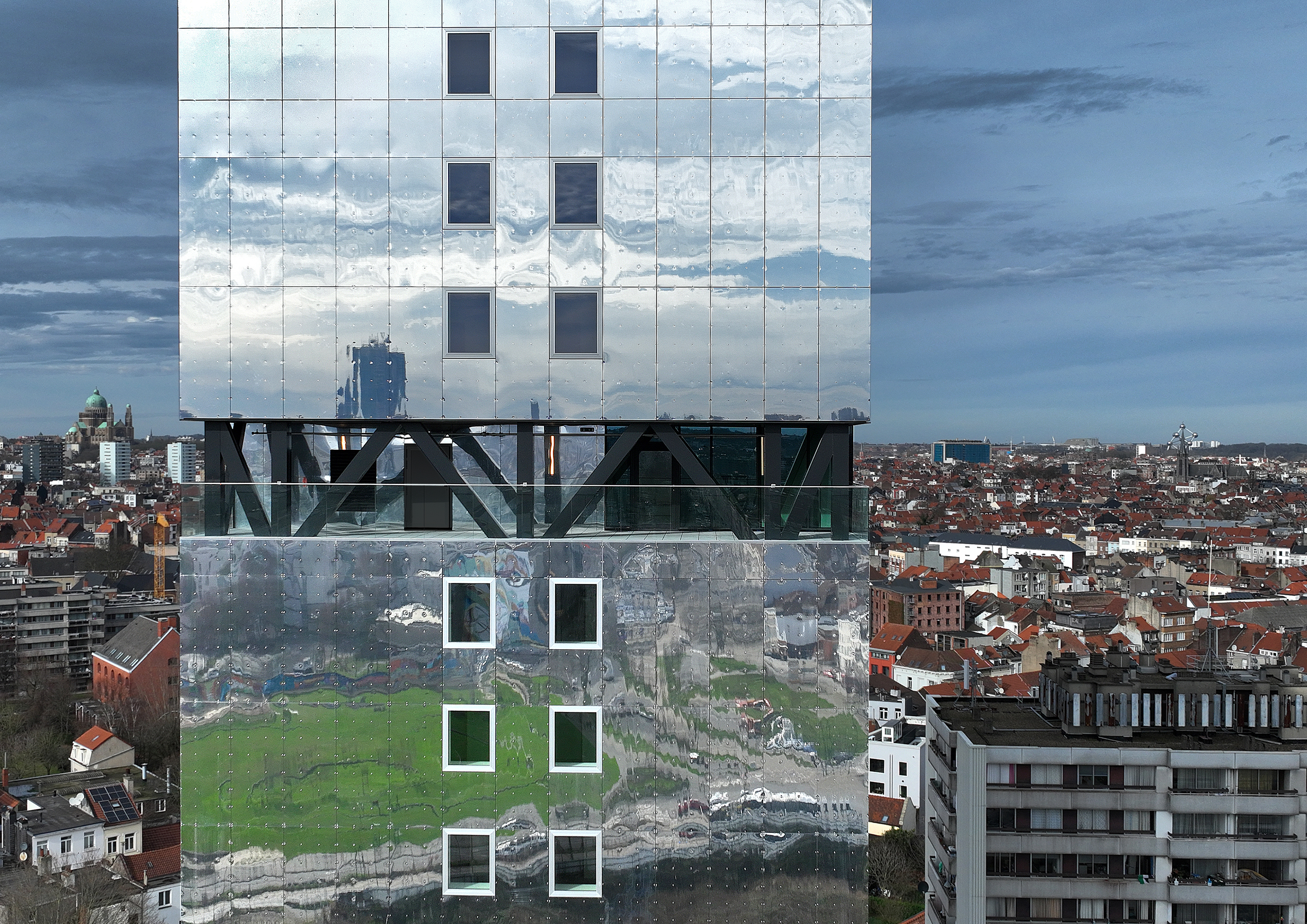


The Brunfaut Tower, reborn from its steel frame, rises through timber construction. Five added levels redefine its silhouette, combining warmth, sustainability, and renewal in a modernist landmark of social housing.
Collaborators
Structure: Ney & Partners; Installations: Arcadis Belgium
Program
Collective housing
-
Labels
Tower · Social
Site area
2894 m²
-
Client
Logement Molenbeekois
Total gross floor
11150 m²
Cost
1910 €/m²
Located in Molenbeek-Saint-Jean, the Brunfaut Tower renovation transforms a 1965 rationalist steel landmark into a sustainable model of social housing. By extending vertically and thickening the plan, the project doubles the surface without occupying more land, integrating new timber construction that enhances comfort, efficiency, and urban life.
In a dense Brussels neighbourhood, the Brunfaut Tower faced structural aging, energy inefficiency, and outdated housing standards. The strategy combined preservation and transformation: keeping the steel frame while expanding vertically through lightweight timber to double the surface area. This avoided densifying the ground level and requalified the urban space, opening it to the community. The renovation diversified apartment types, integrated patios for light and comfort, and created generous shared areas that foster social cohesion. The result strengthens the tower’s identity as a local landmark while improving residents’ quality of life through technical innovation and architectural care.
The renovation preserved the original steel skeleton, reinforced by a bridge structure at level +18 supporting five new timber floors. CLT panels—1,500 m³ in total—provide lightness, acoustic comfort, and fire resistance while leaving warm wooden ceilings visible. Prefabricated timber façades filled with mineral wool ensure insulation, reduce weight, and enable rapid assembly. The new envelope and double-flow ventilation achieve passive performance standards. These sustainable choices limit structural reinforcement, lower costs and emissions, and simplify maintenance through durable, visible, and accessible construction layers.