-

Model
-
1
-
2
-
-
-
-
-
-
Biomimetics in Architecture
Šar?nas Petrauskas. Vilnius, Lithuania
-
Name of work in English
Biomimetics in Architecture
-
Name of work in original language
Vertical Park in London
Prize year
Young Talent 2020
-
Work Location
Vilnius, Lithuania
-
Author/s
Šar?nas Petrauskas
-
School
Faculty of Architecture - Vilnius Gediminas Technical University.
Vilnius, Lithuania
Young Talent 2020 YT Nominees




Biomimetics in Architecture
Vertical Park in London
Program
Sport & Leisure
-
Labels
Nature
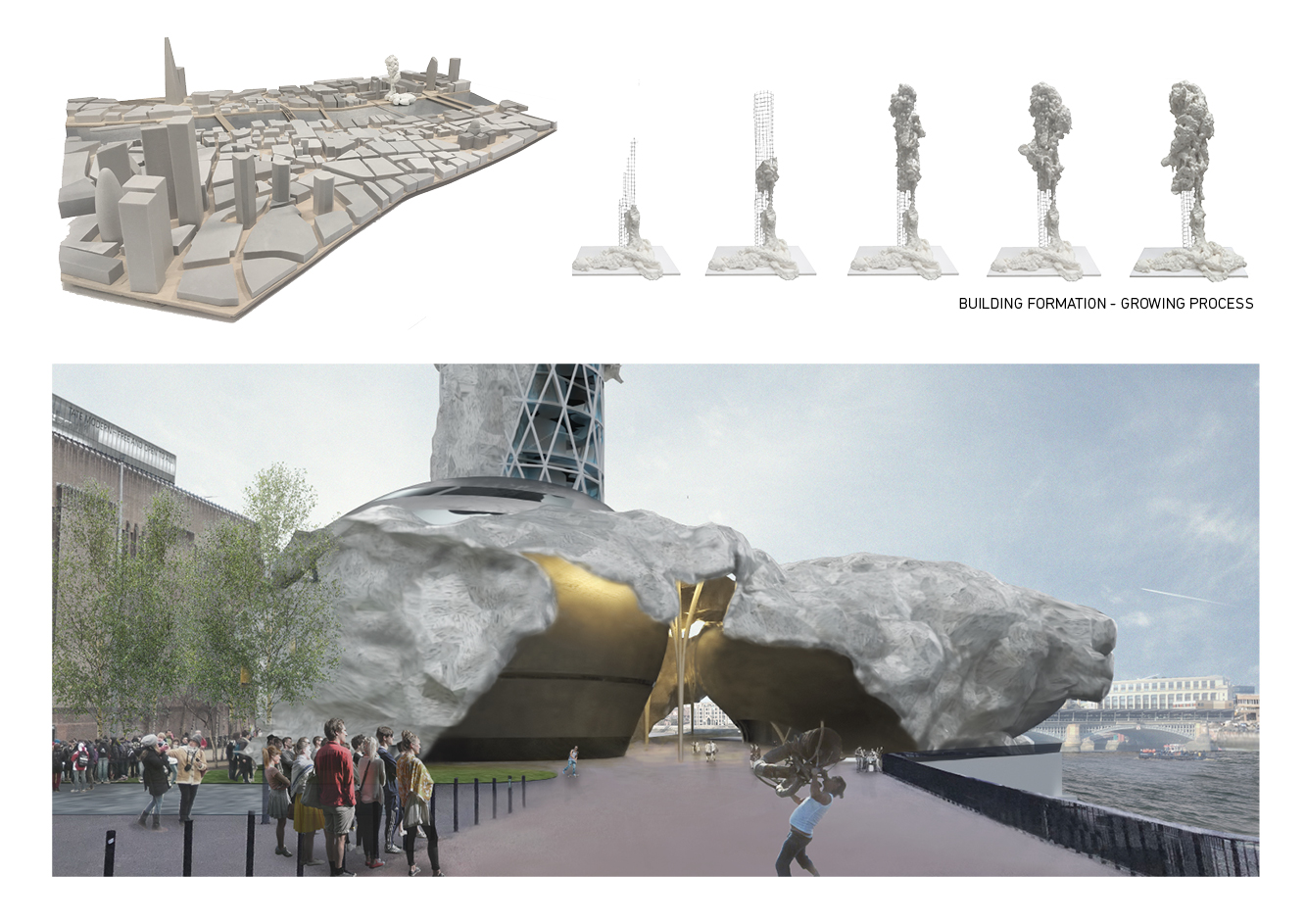
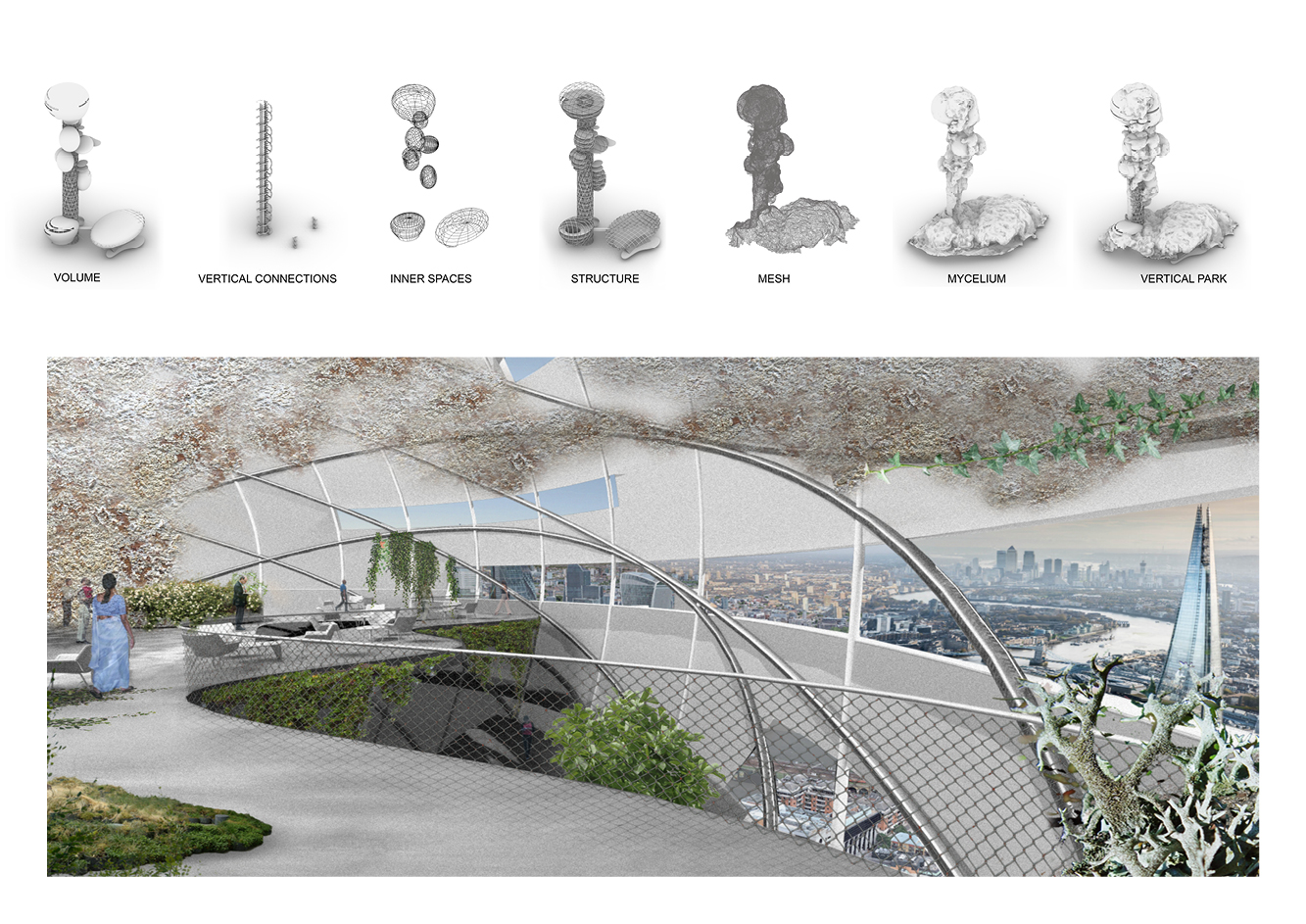
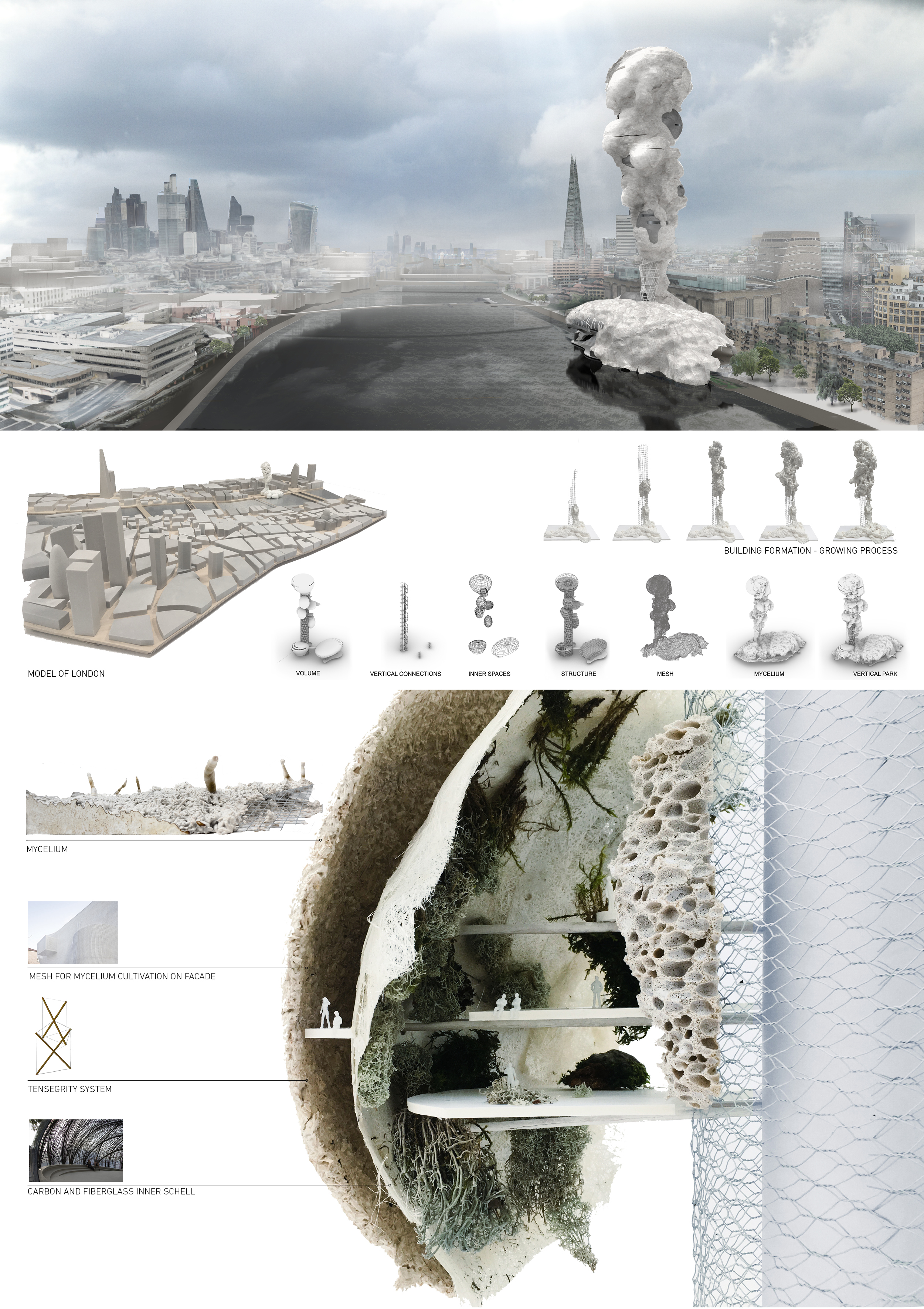
This master thesis examines the lack of biomimetics in architectural problems. The project considers such questions as “Could future buildings be grown like plants, i.e. to be adaptive and change with time?” According to this issue the project is based on incorporating living mycelium biostructures within architecture.
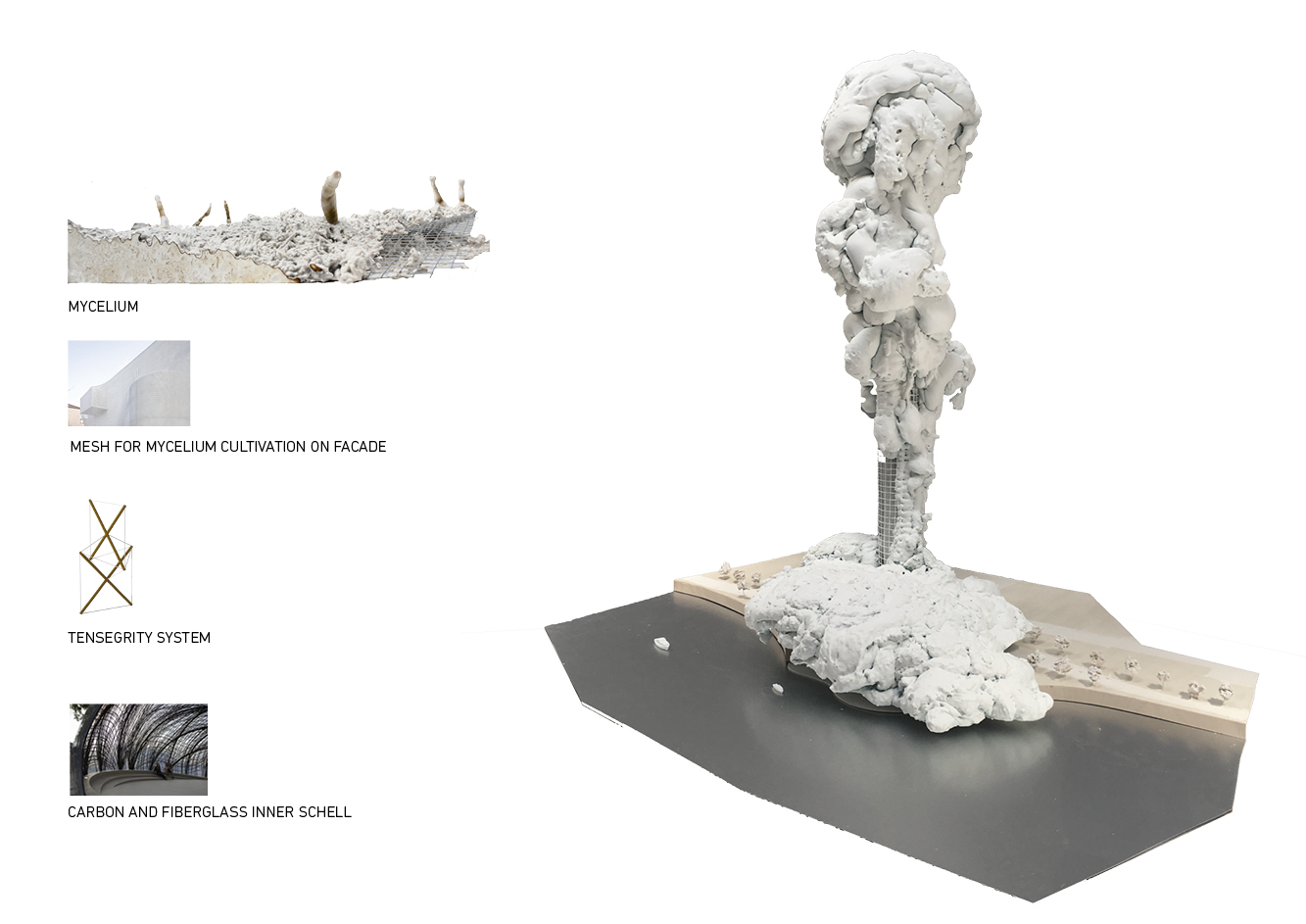
In the process of creative experimentation today, art, science, technology and nature are on an equal footing. To find a sustainable solution for high rise buildings I started observing living organisms. Mycelium was chosen because it is the most common living organism found on earth which is a rarely studied material and not commonly applied in architecture. However, it has great potential solving such question as “could buildings be grown?” Therefore, models were grown from mycelium, along with shaping structures with polyurethane foam, scanning it and creating bio-digital aesthetics architecture. The architectural project design is based on the observation, experimentation and incorporation of living mycelium biostructures. The project design is made as porous spatial structure which works as the vector for mycelium cultivation, thus creating a vertical park that mimics the structure of a living organism. Therefore, the building is grown like a plant. The outer shell of mycelium with roots and spores creates symbiosis with plans inside of the building. It works as an adaptive bio-structure which changes in time. The project aims to restore the relationship between nature and human beings, improve the living environment and ecosystem diversity in the densely urbanized central part of London. This is a recreational and educational building which demonstrates the dialogue between different life forms. There is a cognitive and physical journey, through a living organism in which the visitors of the building are introduced to nature. However, this project is a manifesto drawing attention to the anthropocene, the ecological situation and the consequences of human activity. Overall, biomimetics is used as a creative way to implement mycellium as an element of building aesthetics formation. This project draws attention to the hybrid, human and natural, creative direction as a vision of future architecture.