-

façade
-
building and context
-
entrance
-
building and historical neighbour
-
façade
-
courtyard
-
general plan and axes
-
section
-
ground floor
-
1st floor
-
2nd-3rd floor
-
4th-5th-6th floor
Badhaus - Contrapunct
bergmeisterwolf. Bressanone, Italy
-
Name of work in English
Badhaus - Contrapunct
-
Name of work in original language
badhaus - kontrapunkt
Prize year
EUmies Awards 2026
-
Work Location
Bressanone, Italy
-
Studio
bergmeisterwolf
EUmies Awards 2026 Nominees


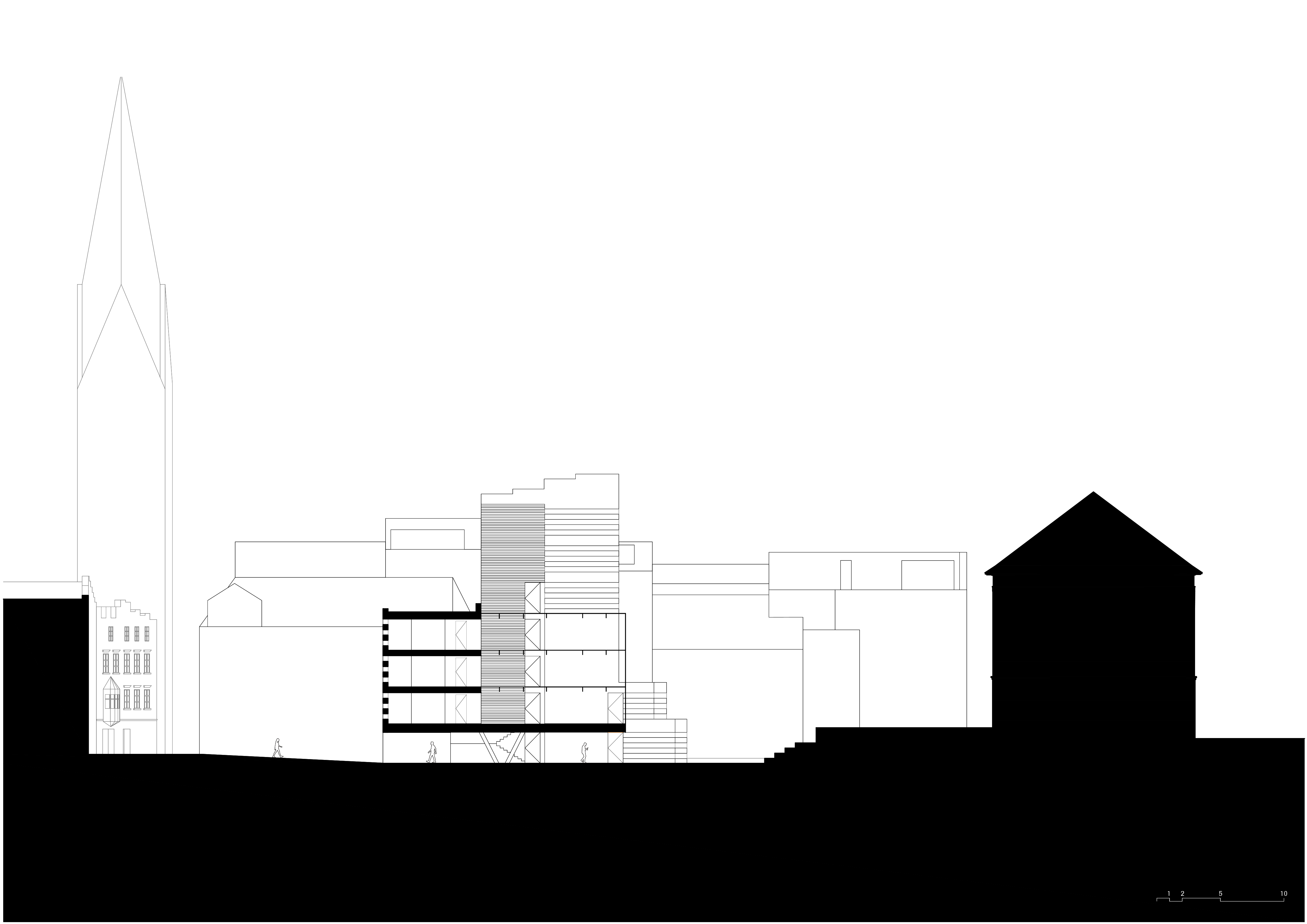


In the heart of Brixen, Badhaus transforms a historic plot into a vibrant urban space. The project weaves contemporary architecture into the existing fabric, opening courtyards, passages, and new axes. Through collaboration, art, and civic vision, Badhaus reconnects city, community, and culture.
Collaborators
Collaborator (office): Alessandra Lione - bergmeisterwolf; Collaborator (office): Alessandro Battistella - bergmeisterwolf; Collaborator (office): Claudio Triassi - bergmeisterwolf; Structure: Stefano Villotti - Exact - Ingenieure; Project management: Wolfgang Obkircher - Geom. Wolfgang Obkircher - Projektmanagement im Bauwesen; Lighting: Hannes Mitlicht - Mitlicht; Fire Safety and Accessibility: Karlheinz Troi - STUDIO TROI & SCHENK; Building physics: Thomas Eichbichler - STUDIO TROI & SCHENK; Installations: Christian Demetz - Studio Thermoplan
Program
Food & Accommodation
-
Labels
Sleeping · Food · Café · Heritage
Site area
670 m²
-
Client
gut wohnen gmbh
Total gross floor
1120 m²
Badhaus is part of the renovation of the historic "Grieser Viertel" district that is transformed from a once-enclosed plot into a porous complex that reconnects architecture, city, and community. The project opens courtyards, passages, and new pedestrian axes, reinterpreting the local urban fabric through spatial continuity and dialogue. Badhaus function is private, it is a hotel, but the ultimate goal is public welfare. Its material language - stone for public areas, clay bricks for the facades, wood for intimate zones, and plaster for abstract volumes - balances historical context and contemporary expression, turning a hidden fragment into a civic space.
Badhaus forms part of a wider urban regeneration strategy aimed at redefining the identity of the historic district Grieser Viertel through the transformation of existing buildings and the introduction of new public and cultural functions: hotels, residences, ateliers, shops, and generous open spaces for citizens and visitors. Conceived as a catalyst within a dense and layered urban fabric, Badhaus rises vertically to free the inner courtyard, converting it into a public square that reconnects the surrounding properties and strengthens the sense of continuity between architecture and city. The project opens new passages and pedestrian axes, promoting permeability, interaction, and collective belonging. Its material palette — stone, clay bricks, copper, wood, and plaster — reflects a dialogue between history and contemporaneity. By reinterpreting the architectural language of the old city, Badhaus redefines the Grieser Viertel’s civic identity and its renewed sense of openness.
Badhaus celebrates craftsmanship and the tactile intelligence of handmade materials, where locally produced clay bricks give rhythm, warmth, and a human scale to the architecture. The structure unfolds in exposed reinforced concrete — a precise, almost silent choice dictated by the proximity to the groundwater and by the need to preserve the building’s height and balance. Concrete becomes both frame and presence, anchoring the project within its dense urban context. The façades alternate stripes of clay bricks, copper, and glass; the interiors are enveloped in wood, while the public courtyard is paved with stone, terrazzo, and reused brick fragments, ensuring a seamless tactile and visual continuity with the surroundings. We are inside a courtyard: it is not about view but intimacy — a retreat, a quiet concentration within the restless city. Filtered light flows through the glass bands, creating a cocoon filled with calm and material energy.