-

Concept
-
Program
-
Situation and section
-
Connection to the context
-
Healing space
-
Light
-
Structure and materiality
-
Architecture of Mind - Panel
-
Architecture of mind
Rok Staudacher. Ljubljana, Slovenia
-
Name of work in English
Architecture of mind
-
Name of work in original language
Conceptual design of the University Psychiatric Clinic Ljubljana - Polje
Prize year
Young Talent 2020
-
Work Location
Ljubljana, Slovenia
-
Author/s
Rok Staudacher
-
School
Faculty of Architecture - University of Ljubljana.
Ljubljana, Slovenia
Young Talent 2020 YT Nominees




Architecture of mind
Conceptual design of the University Psychiatric Clinic Ljubljana - Polje
Program
Health
-
Labels
Health Resort · Health Centre
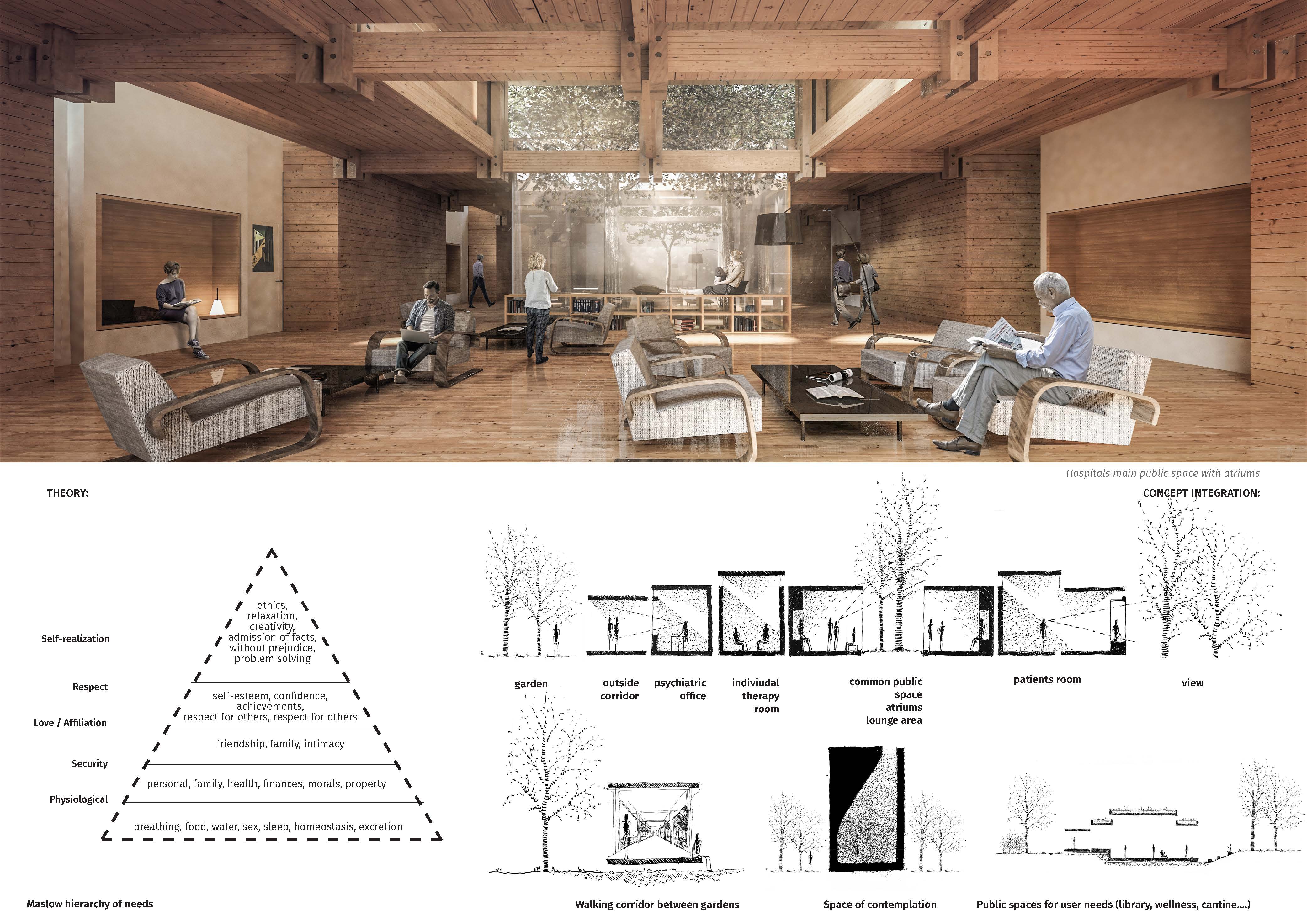
The project deals with insight into the Psychiatric clinic in Ljubljana. Special attention is given to the natural light, material and landscape to establish a dialogue between the body and mind within the space. Architecture should not only respond to the physical needs but also to emotional needs. It seeks to answer the question: Can architecture heal?
Psychiatric hospital is not only a space for medical treatment based on technical guidelines and norms but requires a great deal of sensitivity in its integration into the socio-spatial context. It is necessary to emphasize what seems at times obvious: the experiences of living are the only valid means of evaluating the work of architecture. It has nothing to do with the appearance of a building, but with how it connects to context. At the same time, it must be conceived as an autonomous organism which enables the system to function. Thus, concept is created as a direct consequence of the basic needs of the user. With its careful placement in the natural topography, thoughtful use of materials, structural logic and light it searches for impulses in sensory perception of space and stimulating healing. Therefore, the therapeutic environment is an experiential journey that begins with individual space of contemplation through sensory experience. The hospital is a changing socio-technical unit, geared to a specific goal. It is a living body with patients, staff and technology and it adapts to their requirements and circumstances. Therefore, connections are like streets in the city and the setting of units and programs in nature create a sense of "city in the park". Corridors become a mediator between the interior and exterior and are crucial in creating quality treatment spaces. The introverted ambiences are created by natural materials and light which penetrates the space through different ways. It is essential in treating patients and affecting their well-being. The clarity of the structure is reflected in the fragmented tectonic structural design, resulting from the smallest detail of the woodwork that is connected to the whole. The story of the interweaving of objects with location appears in the motif of the interconnection of woodwork in detail. The buildings eventually acquire a patina and pass into ravages of time. They will slowly become a self-evident part of the environment where they stand, for its only time that connects the architecture to the surroundings in a definitive and inseparable way.