-

Case studies of cooperative architecture.
-
Case studies of cooperative architecture.
-
Case studies of cooperative architecture.
-
Earth blocks stacked and compressed using tension straps.
-
Laminated timber beams interlocking the earthen walls.
-
A 20-meter-long table serving as the scientific core of the exhibition.
-
Plan of the case study area.
-
Transversal sections of the case study area.
-
Longitudinal section of the case study area.
-
Axonometric view of the case study area.
-
Axonometric view of the case study area.
-
Axonometric view of the exhibition’s two floors.
Architecture is Cooperation - A Circular Exhibition Design
Josep Ferrando Architecture. Madrid, Spain
-
Name of work in English
Architecture is Cooperation - A Circular Exhibition Design
-
Name of work in original language
Arquitectura es cooperación: un diseño de exposición circular
Prize year
EUmies Awards 2026
-
Work Location
Madrid, Spain
-
Studio
Josep Ferrando Architecture
EUmies Awards 2026 Nominees
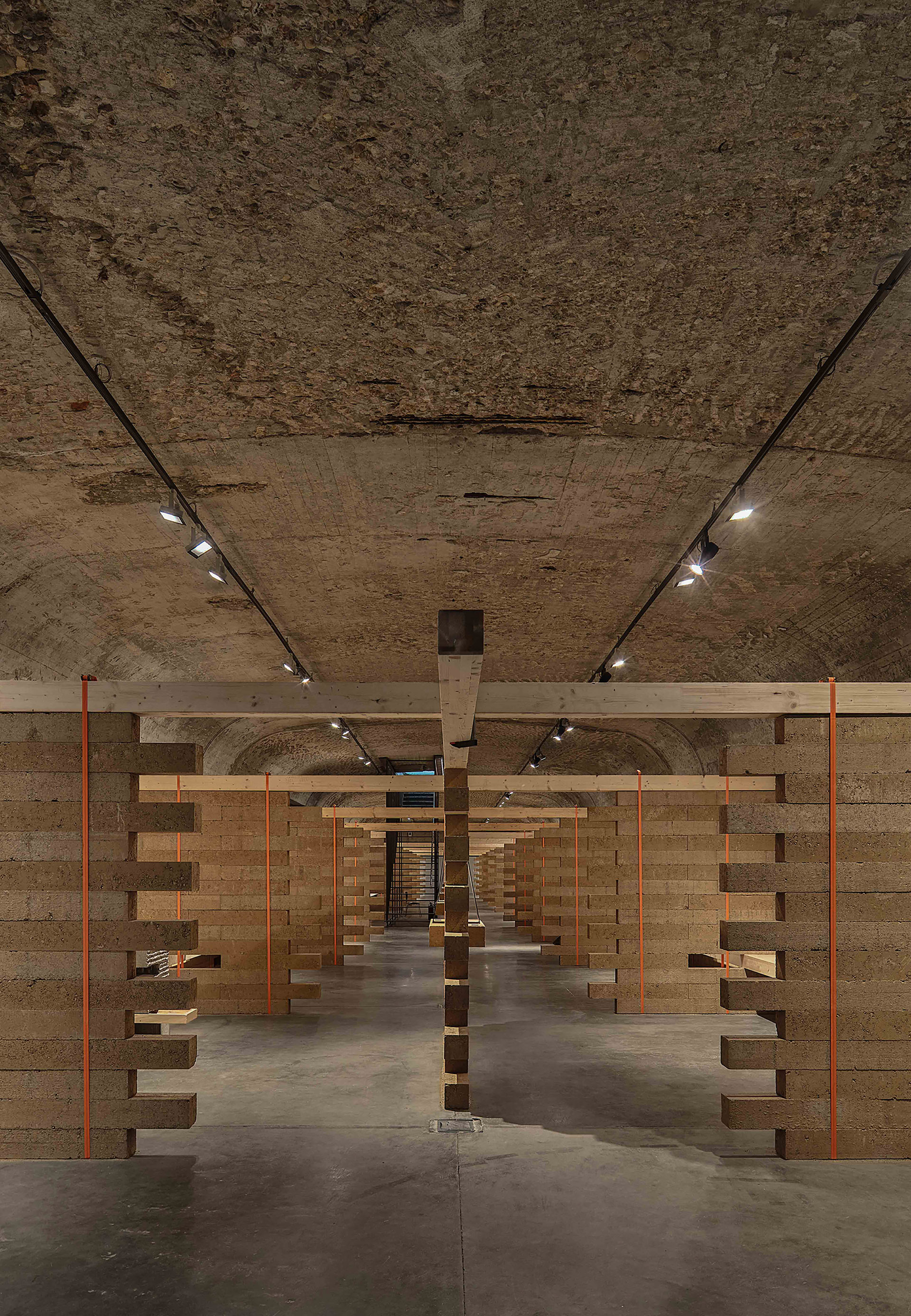

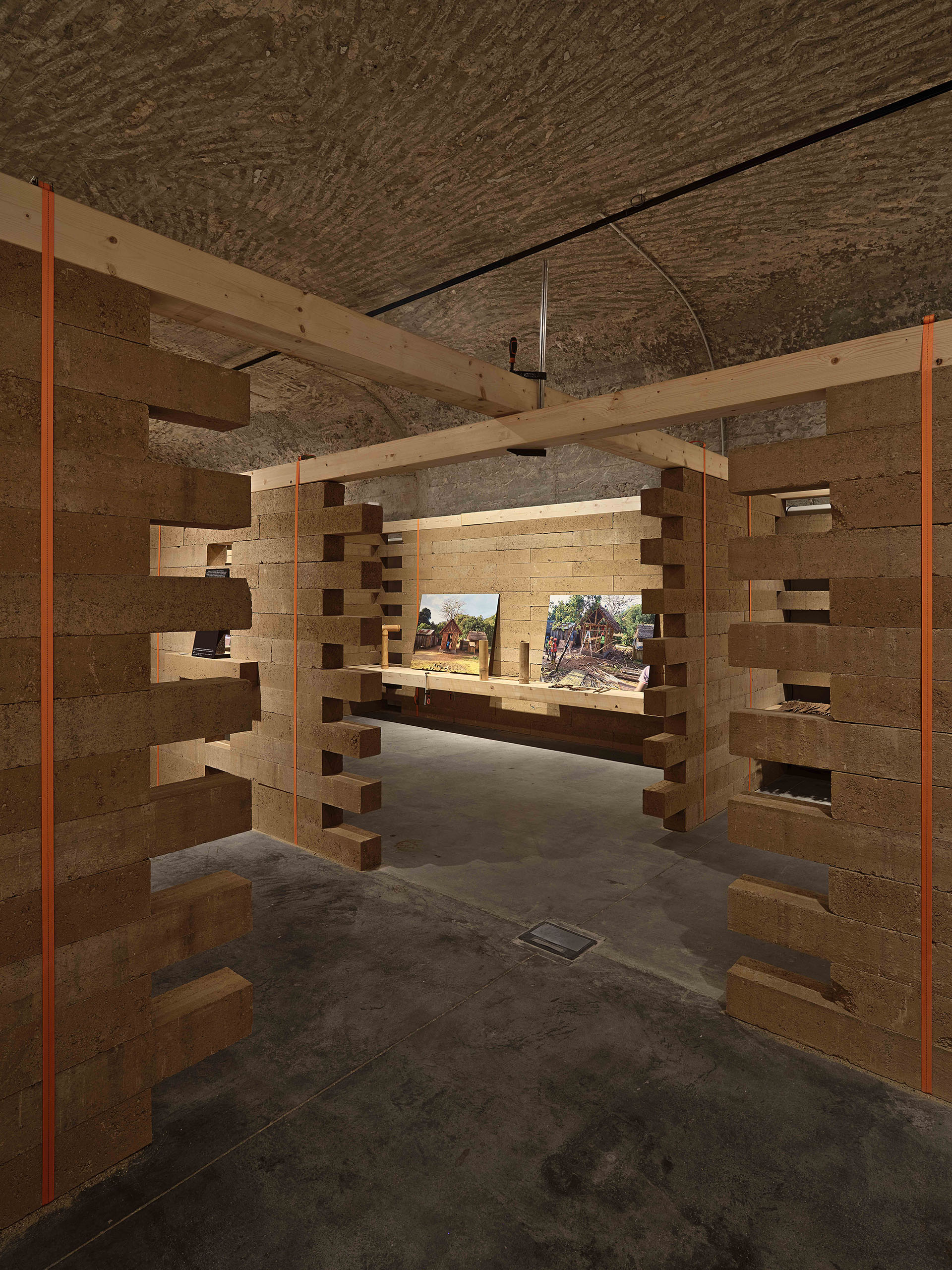


A proposal that combines research and exposition at La Casa de la Arquitectura that frames cooperation as a way of building. A reversible landscape of rammed earth and laminated timber is assembled for disassembly, turning the show into both a spatial narrative and a manifesto for circular practice.
Collaborators
Scientific committee: Verónica Sánchez Carrera; Scientific committee: Gonzalo Sánchez-Terán; Graphic design: Táctico (Antonio Giráldez, Pablo Ibáñez) + Carlo Udina; Collaborator (office): Karine Bagdasaryan; Collaborator (office): Giulio Giannico; Collaborator (office): Fran García; Construction management: ESGROUP
Program
Ephemeral
-
Labels
Installation
Site area
900 m²
-
Client
Ministerio de Vivienda y Agenda Urbana
Total gross floor
900 m²
Set in La Arquería, “Arquitectura es cooperación” assembles projects and narratives of social and international cooperation. The exposition sets at two floors, welcomed by the scientific part that sets on a twenty-meter-long wooden table with infographics on both sides. The underground level shows the rooms or the caves of the case studies selected from South America, Africa, Europe and Asia. The form of the installation negotiates the vaulted gallery with modular earth-and-wood elements, creating thresholds, pauses, and showcases while aligning form, content, and circularity.
The concept was to materialize cooperation as process rather than image inside a protected, linear space. The strategy is a low tech kit of parts that accepts constraints as design drivers: weight and gravity for stability, lightness and repetition for speed, reversibility for flexibility and reuse. Visitors do not only look at cooperation, they walk through it, measuring cadence, density and silence. The exposition is built on a simple premise: to work with the place, not against it. Earth and wood take center stage—not just as materials, but as part of the narrative. Designed to be disassembled and reused, the structure avoids permanent fixings, embracing dry construction, compression, and visible tension. More than an exhibition, it’s a material statement on how to build consciously, temporarily, and with respect for context.
The system couples dry stacked one-meter-long compressed earth blocks with thirteen-meter-long glulam beams to form bays, thresholds, benches and vitrines. Joints are dry, fixings are reversible, and the envelope remains untouched. Earthen mass tempers acoustics and microclimate while timber delivers span with low embodied energy. Components are dimensioned for standard transport and easy relaying, reducing waste and cost. After closing, the set can be redeployed, letting the material budget live a second life rather than becoming exhibition cost.