-

Street-facing facade
-
Rear facade
-
Structural square
-
Entry to the living room (4th floor)
-
Bedroom corridor (1st and 2nd floor)
-
Column/Cabinet
-
Ground Floor Plan
-
First and Second Floor Plan
-
Third Floor Plan
-
Fourth Floor Plan
-
Longitudinal Section
Apartment Building on Rua Roberto Ivens
ursa. Matosinhos, Portugal
-
Name of work in English
Apartment Building on Rua Roberto Ivens
-
Name of work in original language
Edifício de Habitação na Rua Roberto Ivens
Prize year
EUmies Awards 2026
-
Work Location
Matosinhos, Portugal
-
Studio
ursa
EUmies Awards 2026 Nominees
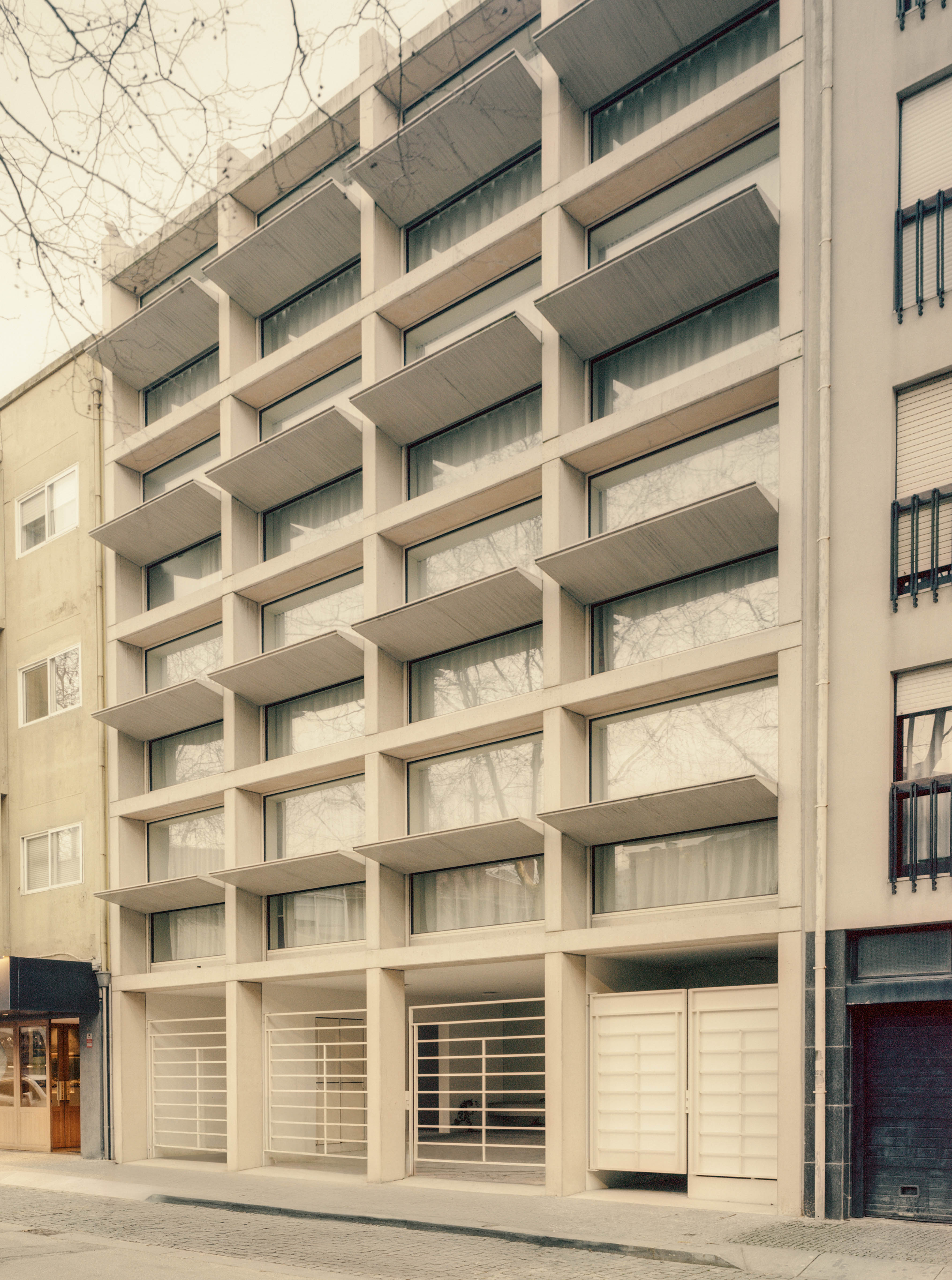
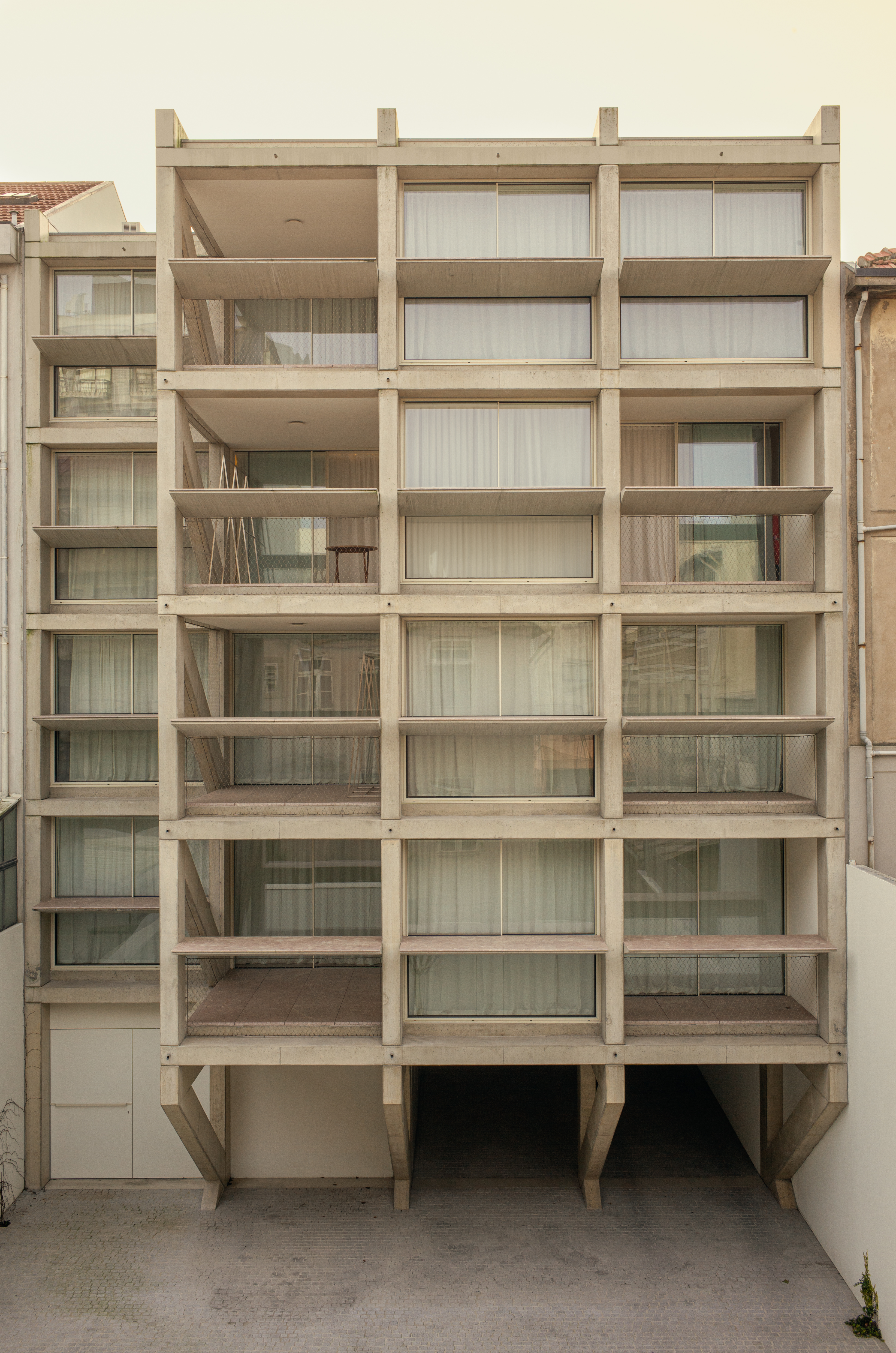
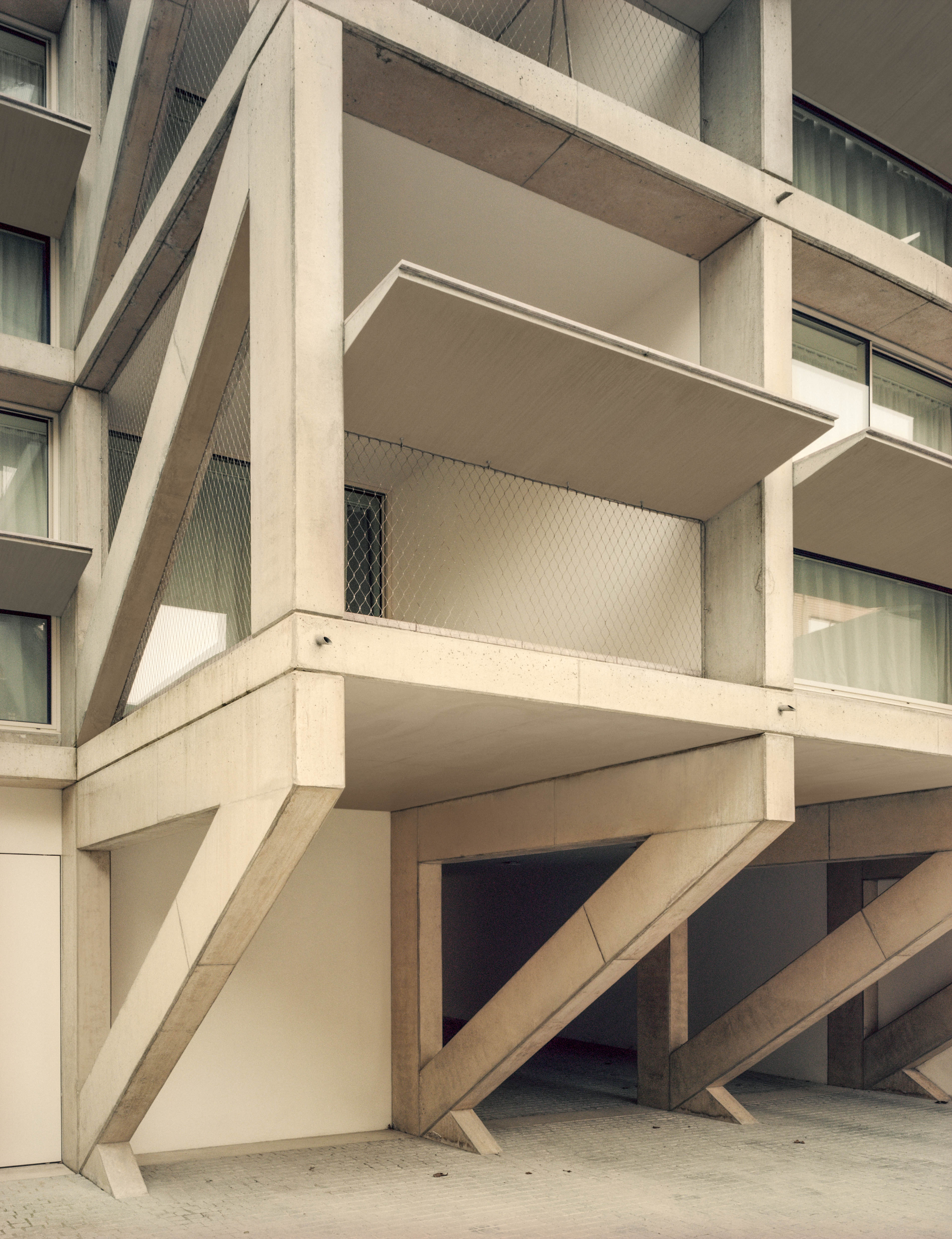


The apartment building on Rua Roberto Ivens in Matosinhos results from a cooperative initiative by four families who jointly acquired a plot to construct their homes: two three-bedroom units, one two-bedroom, and one one-bedroom apartment, all vertically stacked with similar floor areas.
Collaborators
Collaborator (office): Paulo Pires Teixeira; Structure: Iperforma; Hydraulics: Iperforma; HVAC: Auditene; Electrical and Telecommunications: Auditene; Fire Safety and Accessibility: Exactusensu; Construction management: Matriz
Program
Collective housing
-
Labels
Infill · Elderly · Youth
Site area
386 m²
-
Client
RI727
Total gross floor
1080 m²
Cost
2000 €/m²
Aside from orientation and urban alignments, the project draws little from its surroundings, which reflect the material and architectural heterogeneity resulting from five decades of rapid, unregulated growth. In terms of orientation, the plot’s east-facing rear and west-facing street front led to placing bedrooms toward the quieter courtyard, benefiting from morning light, and living areas toward the street, enjoying afternoon light. As for the alignments, the key constraint was the uneven plot depth — 15m on one side, 19m on the other — defined by the rear façade of the adjacent buildings.
From a structural standpoint, the building is conceived as a four-partite portico with a span of about 3 meters. This allowed modulation of the bedrooms on the rear façade and resolved misalignments with neighboring buildings. Hierarchically, social areas were prioritized over private ones. For this, the floor plans were designed from back to front: master bedrooms parallel to the façade with minimal depth; staircase and elevator shaft at minimum legal widths; service bathrooms at practical minimum widths; and living rooms with maximum depth. This resulted in generous living rooms of approximately 11 by 5 meters, facing the treetops of Rua Roberto Ivens’s plane trees, combining living, dining, and kitchen areas. To preserve the integrity of these spaces while opening them to the exterior, a façade system was designed in which a sash window slides below the parapet, transforming the living rooms into balconies — since balconies are, after all, no more than "fully opened living rooms".
The building uses as many natural and as few synthetic materials as possible, adopting durable solutions requiring minimal maintenance (e.g. exposed concrete façades and stone pavements). Every decision regarding materials and construction was guided by 3 questions: 1.How much does it cost? —Construction cost was €2000/m², average for mid-range housing in Portugal. 2.Who benefits from the act of consumption? —Materials are mostly extracted or manufactured within 350km (concrete—9km, steel—20km, brick—90km, cement—200km, sand—30km, plaster—180km, stone—320km, tiles—340km, aluminum—4km,glass—110km), promoting the local economy and transparent supply chains. —Construction techniques rely on local skilled labor, strengthening building culture and encouraging knowledge transmission. 3.What is the environmental impact? —Preference for natural, locally sourced materials with low maintenance aims to achieve a building with a reduced carbon footprint throughout its construction and life cycle.