-

ANTI-RUIN
-
Model_A
-
Model_B
-
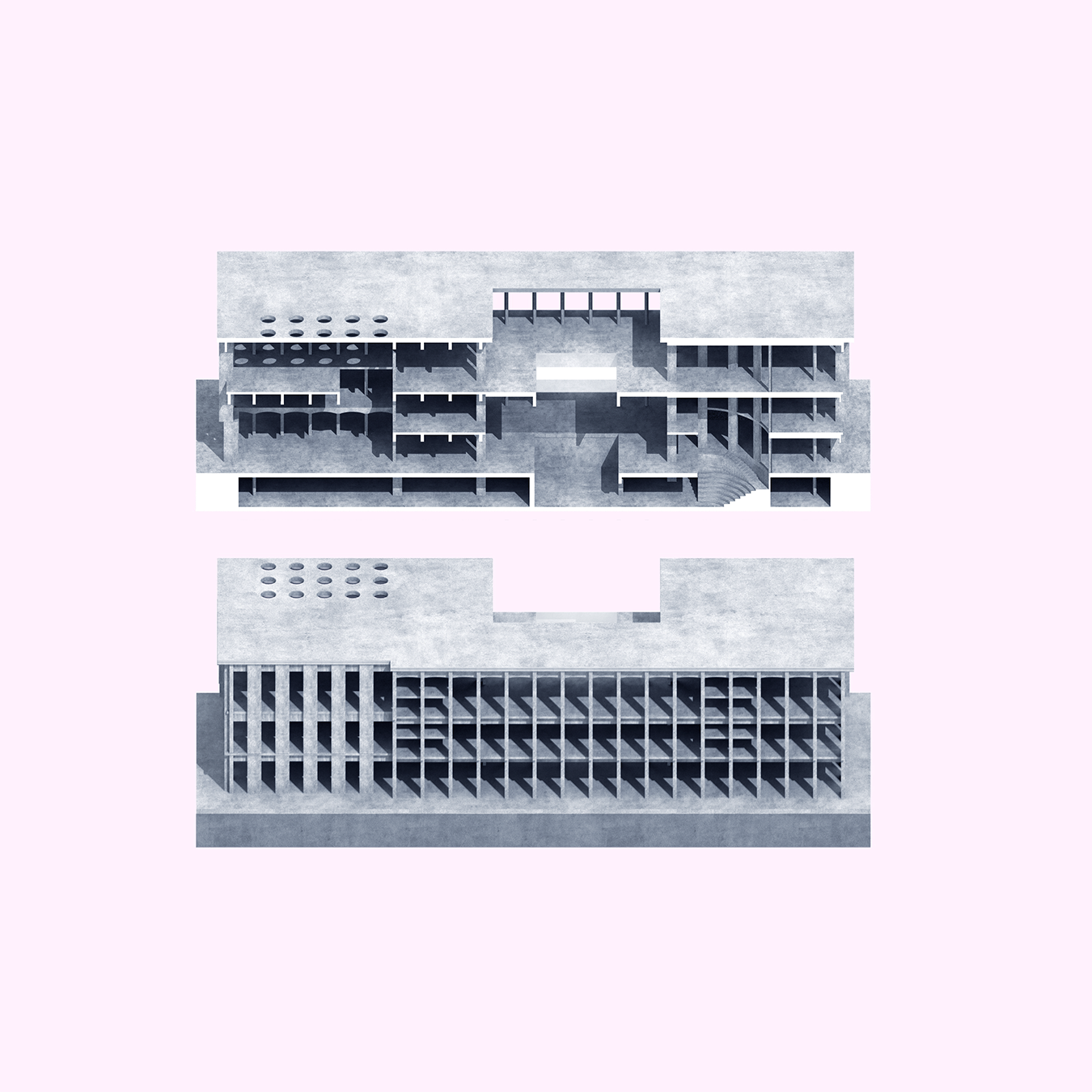
Axo_Facade
-
Axo_Section
-
Plan_Phase 2_Nyhavna Primary School
-
Section_Phase 2_Nyhavna Primary School
-
Anti-Ruin_Andreas Rindal
-
-
Name of work in English
Anti-Ruin
-
Name of work in original language
Time as architectural method
Prize year
Young Talent 2023
-
Work Location
Trondheim, Norway
-
Author/s
Andreas Rindal
-
School
Faculty of Architecture and Design - Norwegian University of Science and Technology.
Trondheim, Norway
Young Talent 2023 YT Nominees




Anti-Ruin
Time as architectural method
Program
Mixed use - Commercial & Offices
-
Labels
Compact · Research · Factory · Office · Visitors Centre
Why do some buildings stand the test of time, while others fade? A work of architecture can be seen as an interweaving of layers with different lifespans. The project discusses how these layers can be assembled into a work of architecture that is both specific and general, both grand and modest.
Together with the supervisor a framework was created that added uncertainty in the design phase to test the structure's elasticity, flexibility and viability. I knew I would be assigned a new function for the structure after PHASE 1, but I did not know what it would be. The idea was to adapt the approach of Stewart Brand, and make a project with the intention that rather than finishing, we are only able to start buildings. The project consists of three phases: YEAR 2022 PHASE 1: Nyhavna Ocean Centre YEAR 2100 PHASE 2: Nyhavna Primary School YEAR 2500 PHASE X: Trondheim Water Service PHASE 1 The first design phase was about designing a building that solves a functional problem. However, the architectural difference between, for instance, meeting rooms and teaching rooms is minimal. Therefore, I rather focused on the clearest archetypes: The amphitheater, the pool and the workshop, and tied them together with serving spaces and abstract program. The architecture is created with focus on the longest-lasting layers: Site and Structure. The structure define space, mark transitions and guide circulation. Large parts of the building are elastic and rational, while some rooms have more character. PHASE 2 The strategy for the transformation was to develop the three main rooms, amphitheater, pool and workshop, further. Longitudinally the plan has the characteristics of a basilica with a central nave and two aisles. The towers divide the plan into three sections in the other direction. The nine zones create different areas for different use. PHASE X This is an investigation of the essence of the building, by addition and subtraction. What character could the additions have, and how much could be taken away or added before the building lost its essence and became something else? From this investigation I conclude that the building is about clear axis and transitions around three focal points. The axis are defined by stringent rows of load-bearing elements. This constitutes a strong framework for the preservation of character and spatial qualities when the building is to live on in a world of change.