-

aerial view
-
new façade
-
entrance
-
interior circulation
-
classroom
-
schoolyard
-
section
-
first floor
-
second floor
-
ground floor
Anne Frank Middle School Renovation
MARS architectes. Antony, France
-
Name of work in English
Anne Frank Middle School Renovation
-
Name of work in original language
Réhabilitation du collège Anne Frank
Prize year
EUmies Awards 2026
-
Work Location
Antony, France
-
Studio
MARS architectes
EUmies Awards 2026 Nominees


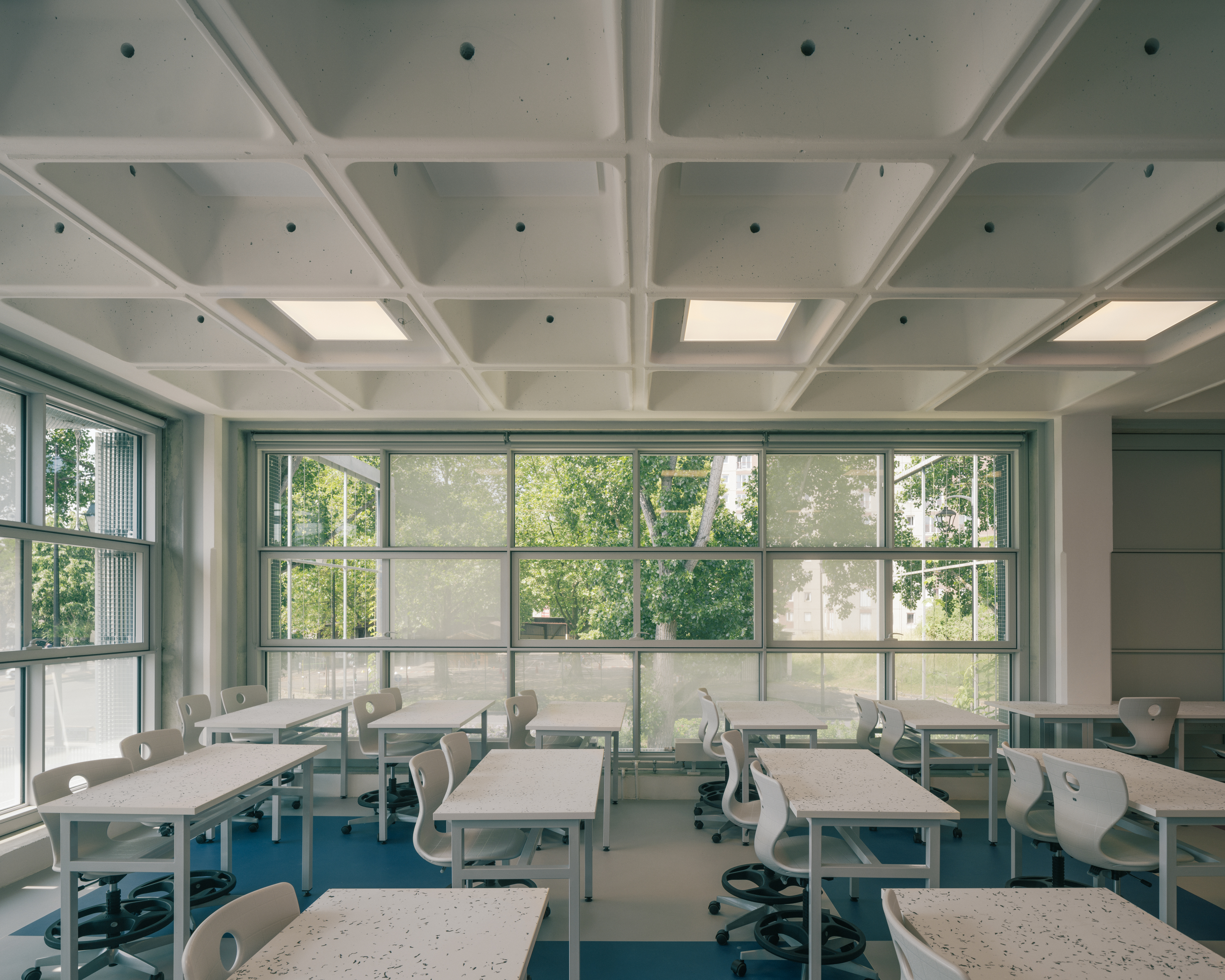
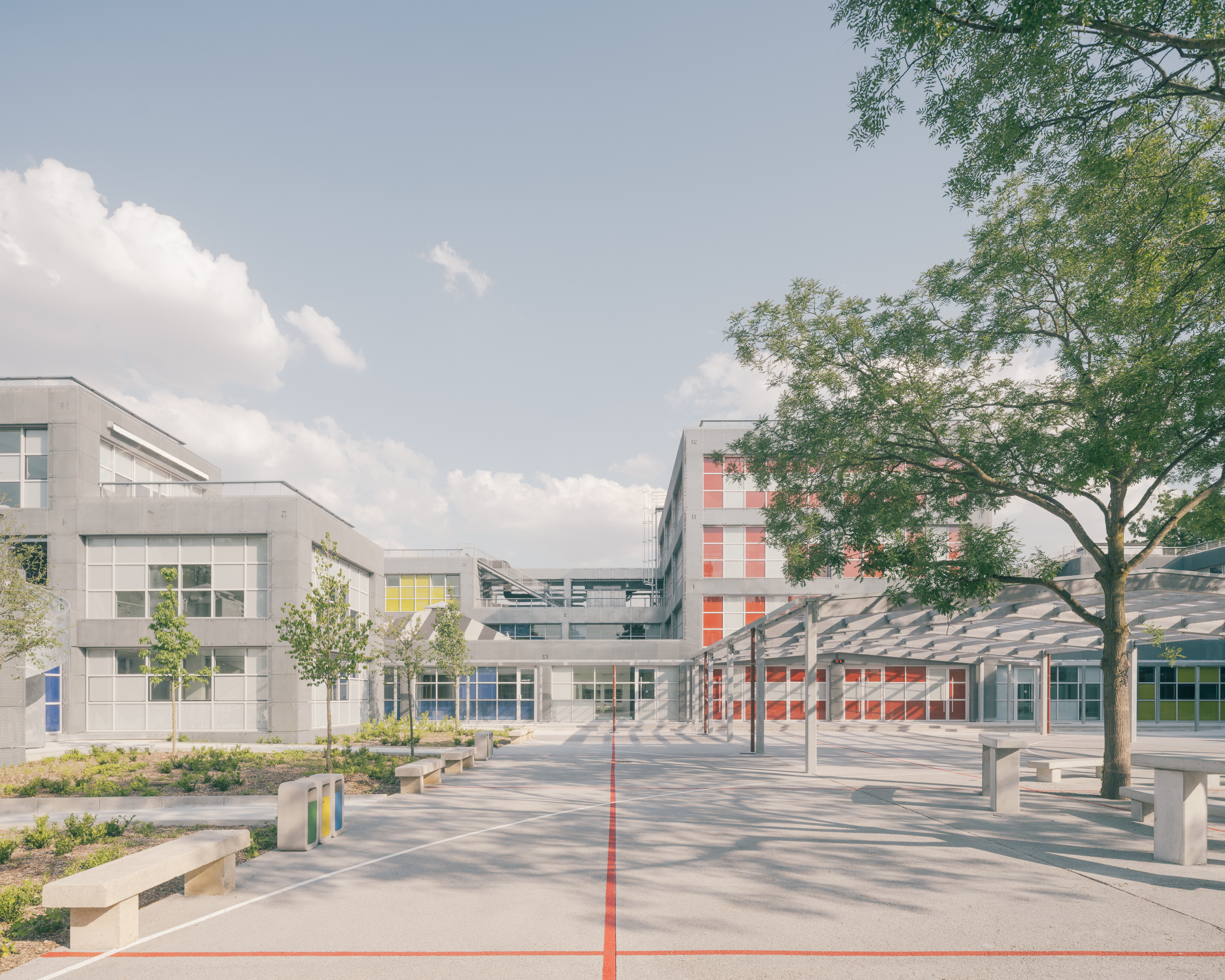

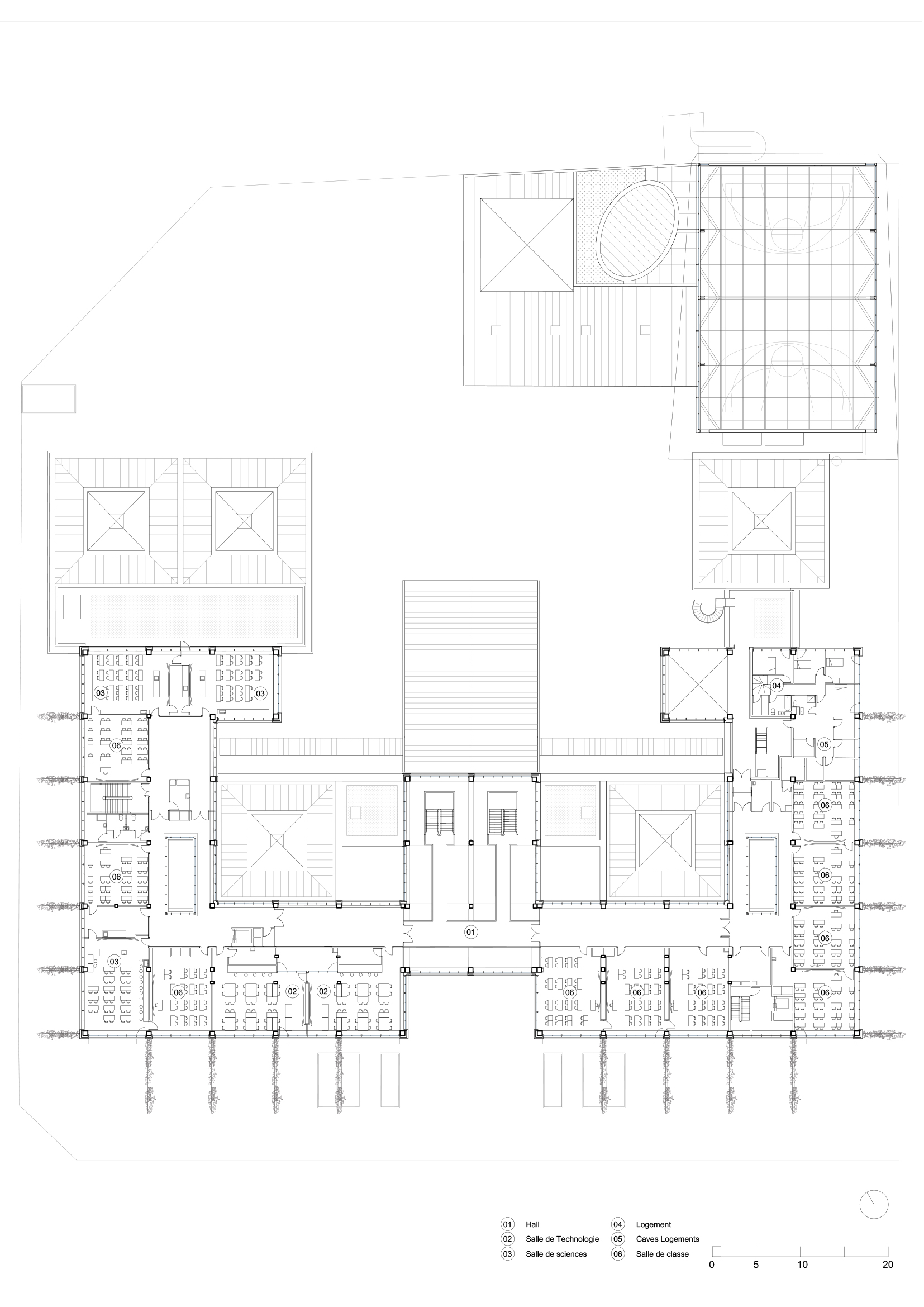
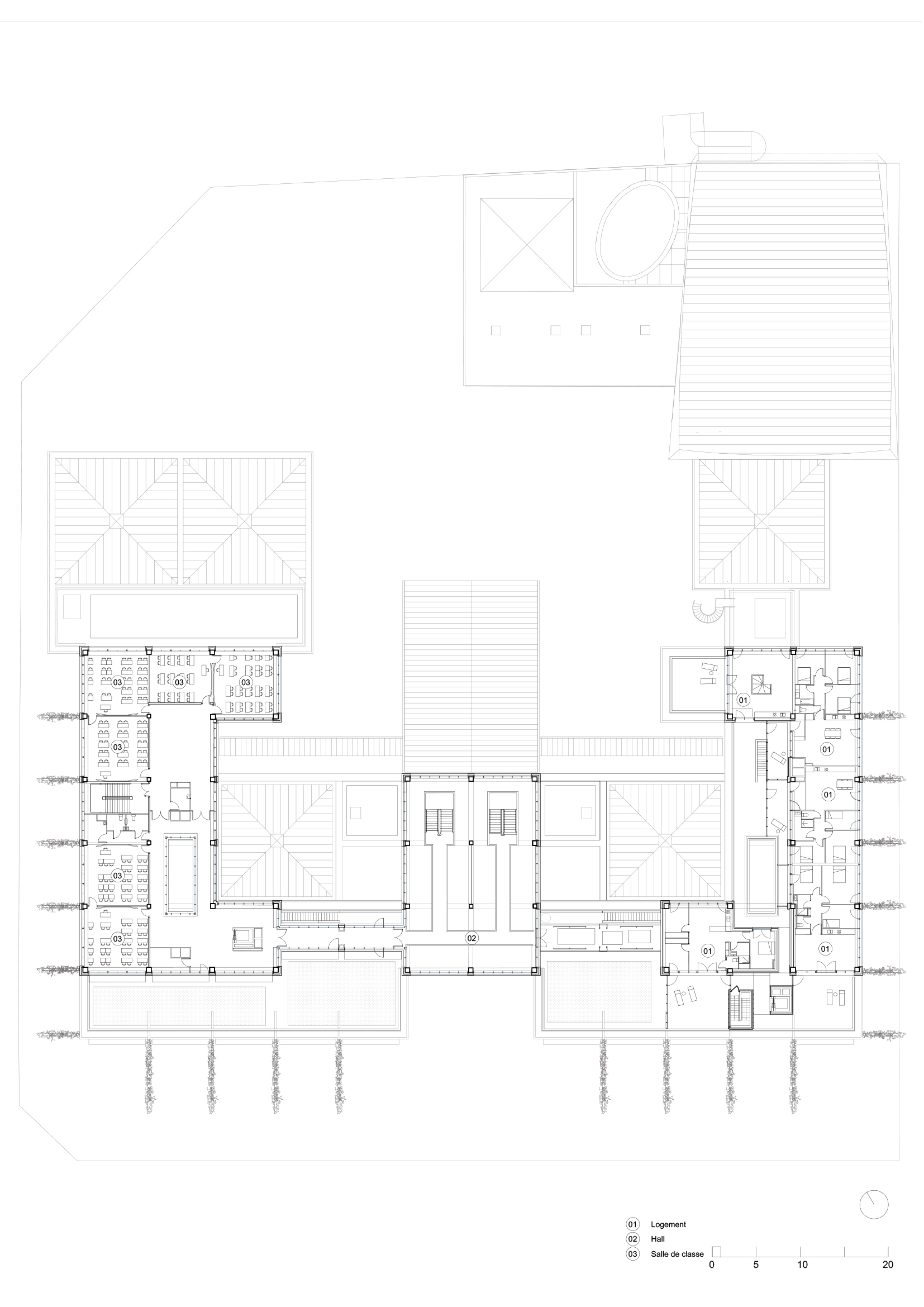

Renovation of the Anne Frank secondary school, an emblematic building that challenged the standardized approach to school construction in the 1980s. The project improves energy performance by 37% and reactivates the critical dimension, adapting it to today’s standards of comfort and sustainability.
Collaborators
Collaborator (office): Stéphane Bauche; Facade: RFR; Structure: Batiserf; Building physics: BET Choulet; Cooking Equipment: OMNIS; Economist: BMF; Signage: Travaux pratiques; Landscape: Bassinet Turquin; General contractor: Bouygues Batiments IDF; facade company - cladding: Jean Rossi; facade company - exterior joinery: Kapeci; Maintenance: Engie - EDEIS
Program
Education
-
Labels
Architecture · School
Site area
12000 m²
-
Client
Conseil départemental des Hauts de Seine
Total gross floor
7572 m²
Cost
3961 €/m²
Located in a residential area south of Paris, the Anne Frank secondary school in Antony reflects the experimental and critical spirit of 1980s educational architecture. Its rehabilitation reorganizes circulation, improves spatial fluidity and comfort, and increases energy performance by 37%. The project preserves the building’s structural clarity and expressive rhythm, while a renewed, finely detailed envelope enhances its material presence. The result is a contemporary, durable architecture that dialogues respectfully with its urban and landscape context.
The project involves the rehabilitation of an early work by Jean Nouvel, conceived in the 1980s as a critique of standardized school models. More than a renovation, it represents a reflection on how to engage with 20th-century heritage — not as a static legacy, but as a living, experimental, and evolving form of thought. The intervention explores the conceptual and immaterial dimension of this architecture, understood as a critical act rather than a fixed shape. The aim was to extend its gesture, to reactivate its energy, and to reaffirm the building as a laboratory for the present. The project achieves a 37% improvement in energy performance, reorganizes circulation, and enhances natural light. A new extension accommodates a canteen and kitchen, continuing the structural rhythm while introducing refined materials. This approach envisions modern heritage as a dynamic and transformative process, capable of maintaining its critical and inventive role through time.
The project preserves and enhances the original concrete structure, both rational and expressive, embodying the constructive rigor of 1980s architecture. The envelope was entirely redesigned through an economy of means: a single cladding system made of metal grating, whose repetitive square pattern creates a mise en abyme of the project’s orthogonal order—visible in its structure, plans, and façades. Acting as a light, ventilated skin, this grid filters daylight, controls solar gain, and gives the building a renewed contemporary materiality. External insulation, thermally broken aluminum joinery, and mineral finishes ensure energy efficiency and durability. The canteen extension adopts a hybrid timber–concrete structure to reduce embodied carbon and allow for prefabrication. All materials were selected for their simplicity and reparability, ensuring low-cost, easily planned maintenance and long-term architectural coherence.