-

Existing and New Walkway Connection - Bridge Operation
-
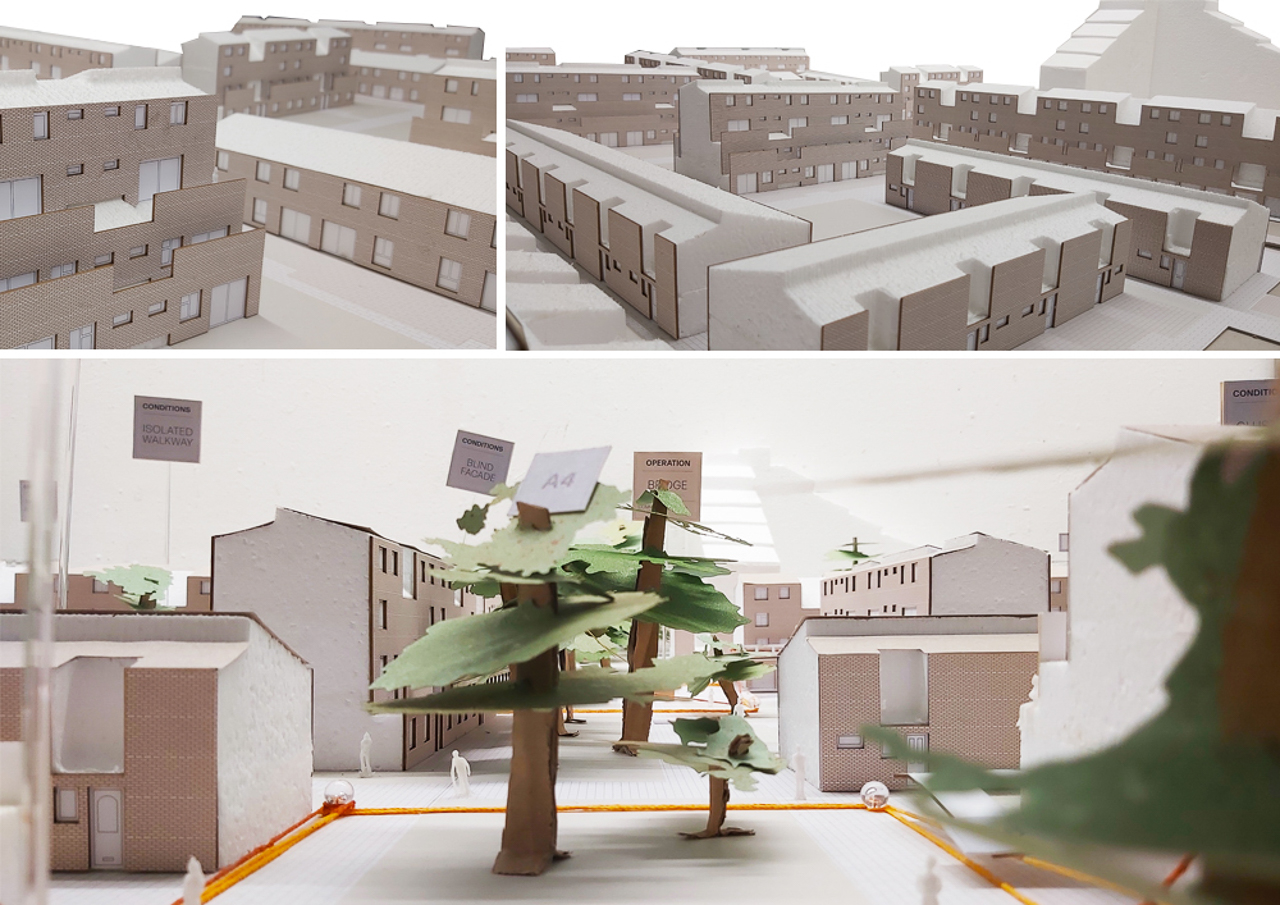
Research Model - Existing Conditions
-
Section - Cluster Operation
-
New Gateway - Corner Operation
-
Blank Wall Connection - Infill Operation
-
New Plaza - Bridge Operation
-
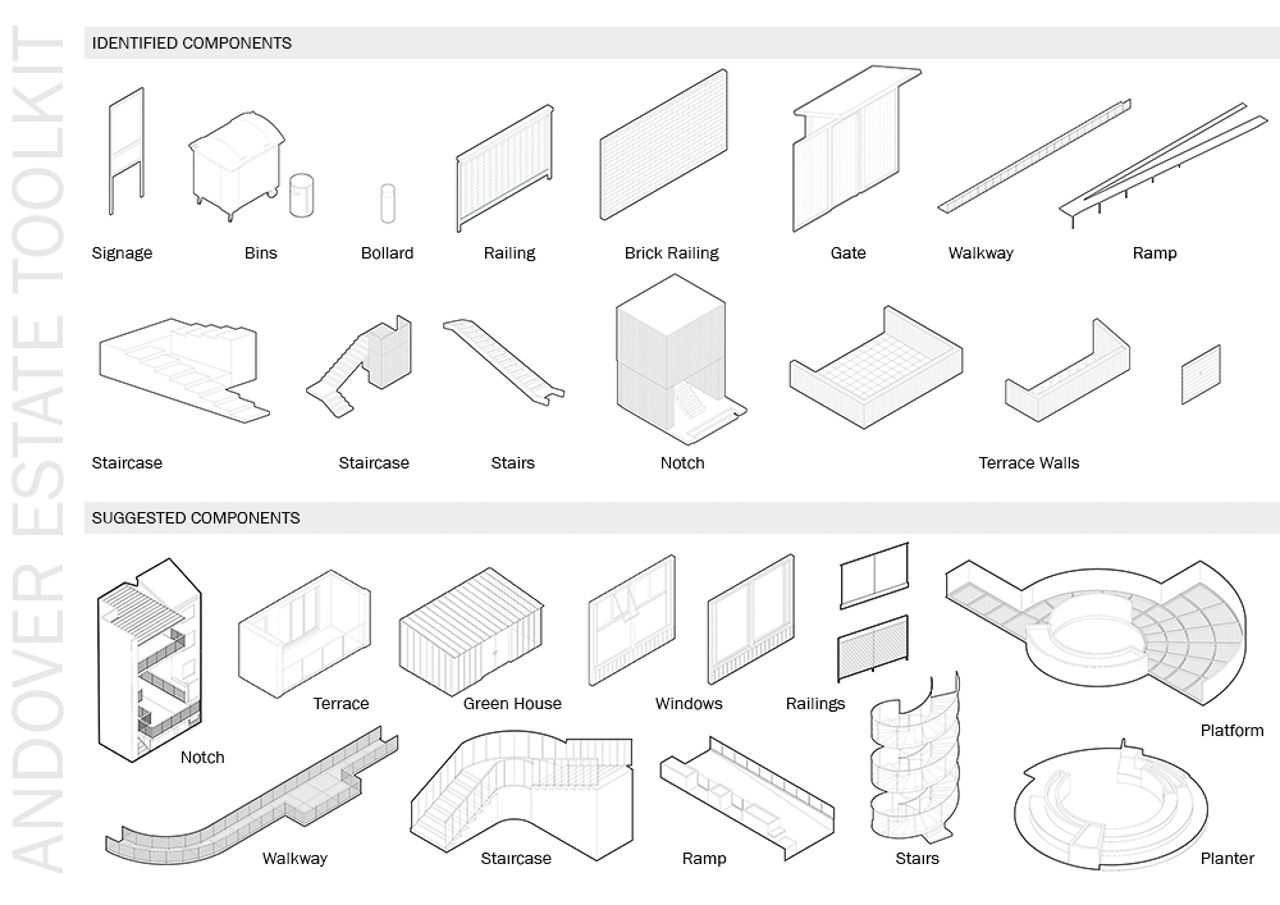
Existing and New Components - Andover Estate Toolkit
-
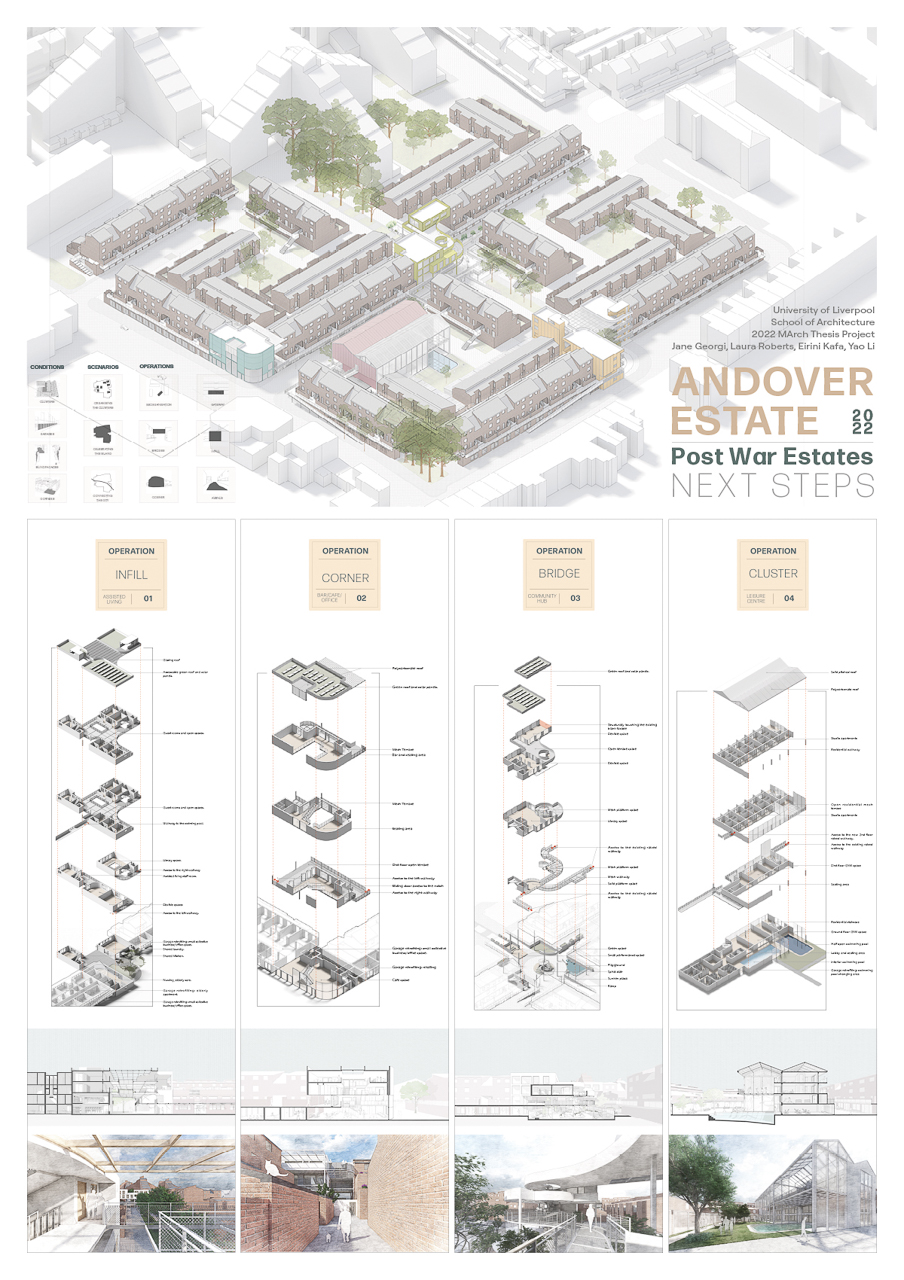
Andover Estate 2022 - Panel
-
ANDOVER ESTATE 2022
Laura Roberts, Jane Georgi, Yao Li, Eirini Kafa. London, United Kingdom
-
Name of work in English
ANDOVER ESTATE 2022
-
Name of work in original language
Post War Estates. NEXT STEPS
Prize year
Young Talent 2023
-
Work Location
London, United Kingdom
-
Author/s
Laura Roberts, Jane Georgi, Yao Li, Eirini Kafa
-
School
Liverpool School of Architecture - University of Liverpool.
Liverpool, United Kingdom
Young Talent 2023 YT Open Nominees



ANDOVER ESTATE 2022
Post War Estates. NEXT STEPS
Program
Social welfare
-
Labels
Community
Following several estate regeneration debates, our project uses Andover Estate in London as an exemplar site to prove that by identifying and restructuring what seems as common in an estate, new opportunities will arise for its redevelopment that respond to the needs of the current and future residents of the estate, as well as the general public.
Several housing estates were studied, striving to tackle issues of housing estate stigma, regeneration debates, under-utilized spaces, densification and car dependency. In order to respond to our findings, Andover Estate in London was selected and used as a testing ground for its unique and complex combination of conditions. Main drive of the project was to transform Andover Estate in a sustainable community; that being a place where people desire to visit, live and work in, either in the present or the future. A place that meets the needs of its diverse users, contributing to a higher quality of life. A place that is inclusive, safe and that offers equal opportunities to all. To do so, the whole site of Andover was surveyed thoroughly through new means of research; recording and investigating the site’s tangible and intangible boundaries, thresholds, accesses and filters. Gathering such information led to the generation of three masterplan scenarios, each addressing different objectives. By using the successful design outcomes of each, an overall strategy was created. That strategy was applied on an exemplar area through operations of big and small scales, to examine which ones could be repeatedly applicable on the whole estate. The big-scale operations were the design of four new buildings, classified as the ‘Corner, Cluster, Bridge and Infill’, which utilized under-used spaces in order to provide new housing units and to foster social cohesion through new leisure facilities. Workspaces were also designed to encourage people to visit the estate in order to gain new skills, to work and to study. The, in theory, small scale operations, were the modification of the site’s existing physical landscape, which encouraged people to walk rather than use the car. It was important to bear in mind the aspects that previously discouraged people from spending time in the estate which were then altered through a more inclusive and safe design. The project endeavors to shed light upon the importance of a housing estate’s existing conditions and to provide a new perspective to their regeneration.