-

Front view
-
Aerial view
-
View from between existing buildings
-
View from apartment
-
View towards courtyard
-
Street view
-
Diagram
-
Axonometry
-
Site Plan
-
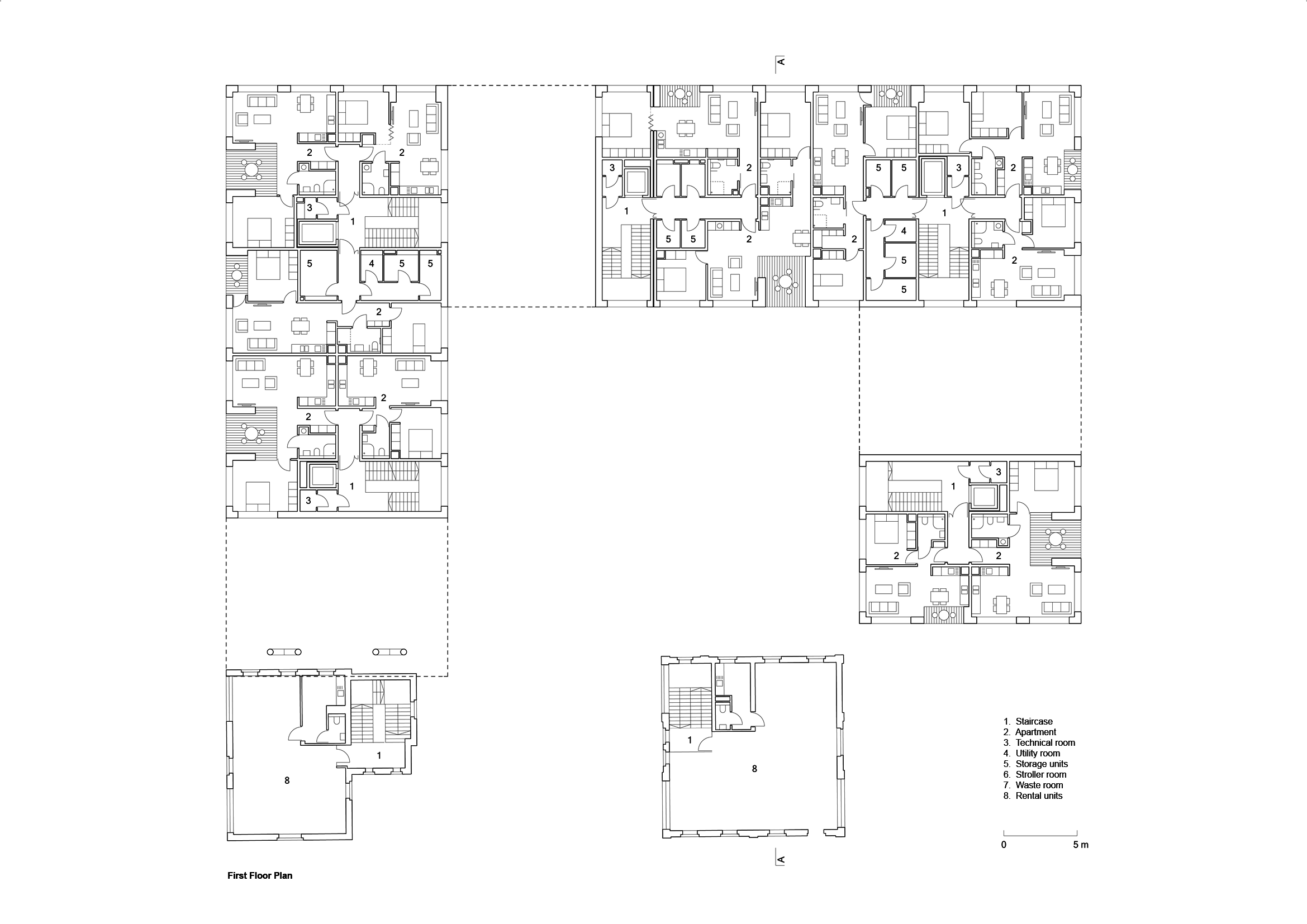
First Floor Plan
-
Fifth Floor Plan
-
Section A-A
Ajnfart - Multi-Family Housing Complex
SLAS architekci. Rybnik, Poland
-
Name of work in English
Ajnfart - Multi-Family Housing Complex
-
Name of work in original language
"AJNFART" ZESPÓŁ ZABUDOWY WIELORODZINNEJ WRAZ Z USŁUGAMI W RYBNIKU
Prize year
EUmies Awards 2026
-
Work Location
Rybnik, Poland
-
Studio
SLAS architekci
EUmies Awards 2026 Nominees


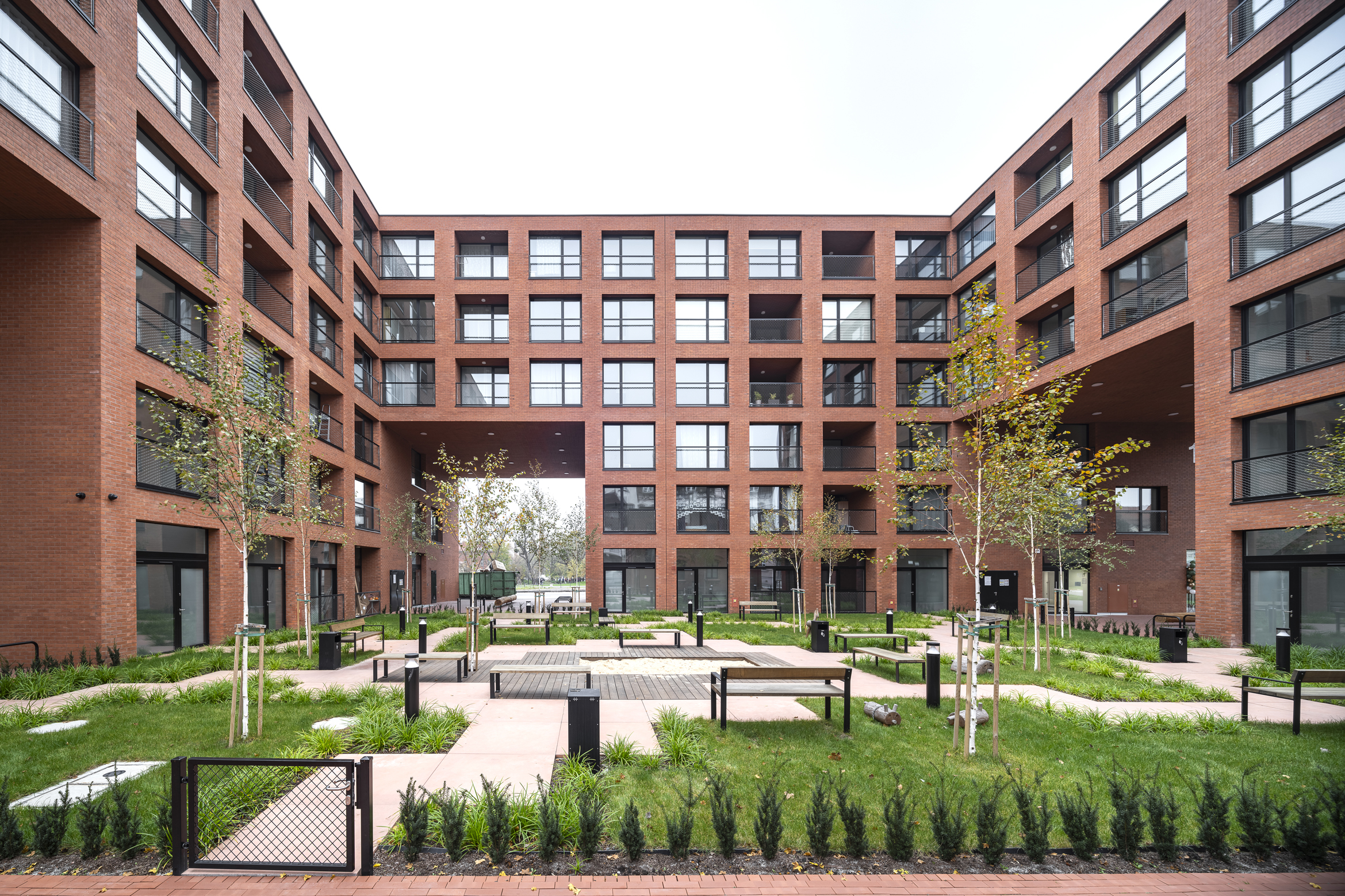
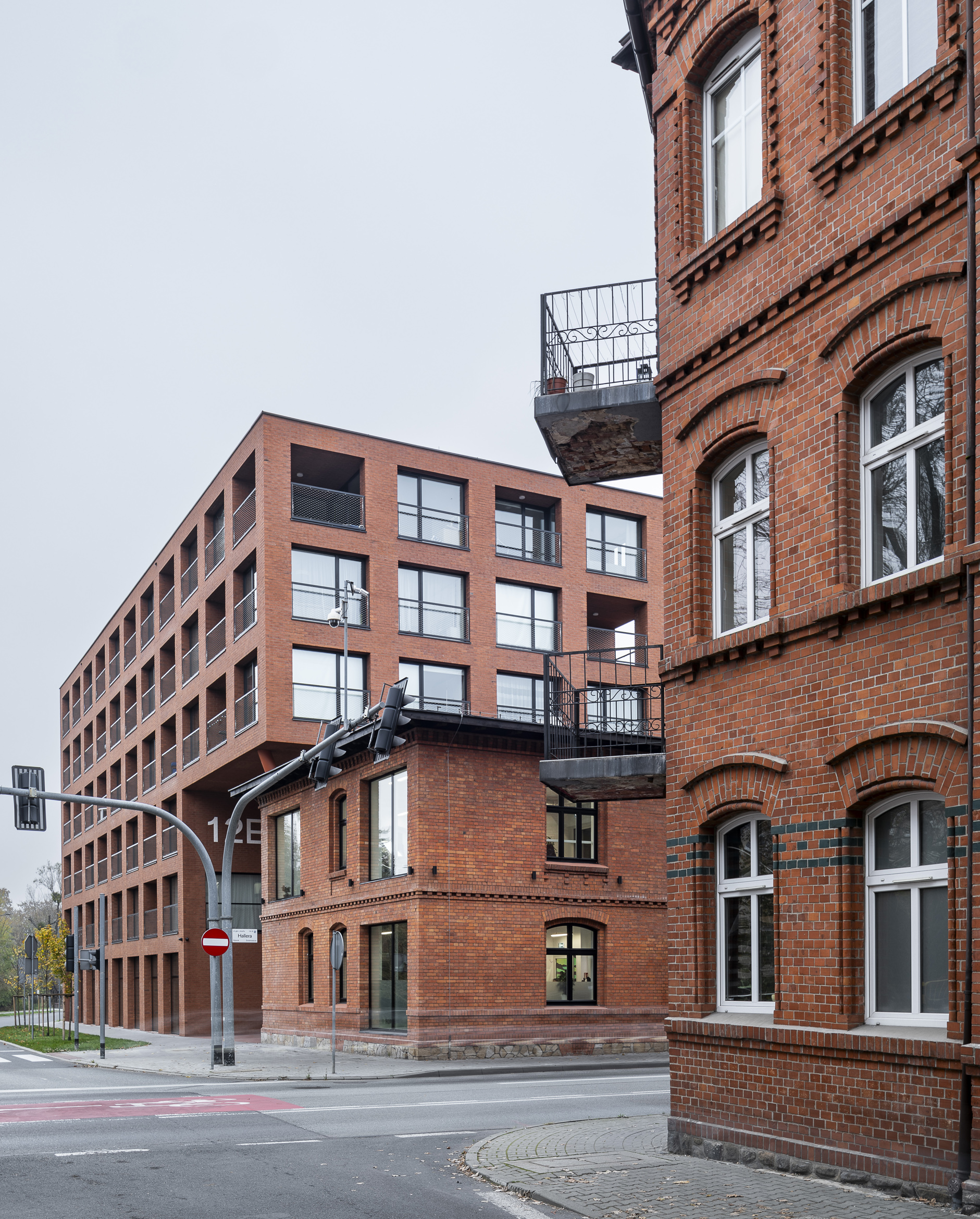




The design concept was to integrate the planned quarter into the urban fabric, incorporating historic buildings into the structure of the block and subtly defining the boundaries between public and semi-private zones. From an urban planning perspective, the development does not isolate itself from the city; instead, it leverages the existing potential by creating a series of public spaces at the intersection. This effect was achieved through oversized entrance gateways – the "Ajnfarts" – which serve not only as access points to the apartments but also as passages to a publicly accessible green courtyard, activating the area with a range of service and recreational functions.
Collaborators
Engineering: Firma Inżynierska STATYK; Installations: Instal Concept Silesia; Electrical: Patucha - Biuro Projektów Instalacji Elektrycznych
Program
Collective housing
-
Labels
Courtyard · Social
Site area
4143 m²
-
Client
multicipality of Rybnik
Total gross floor
6530 m²
Cost
1545 €/m²
The building is the larger part of the revitalized „Rzeczna” urban block in the center of Rybnik. The new structure is located in the immediate vicinity of diverse historical buildings, the new Center for Artistic Education, a parking lot, and the Nacyna river boulevards. The project's program included the design of 80 apartments with fairly varied sizes ranging from 38m² to 65m², as well as 10 commercial units and the revitalization of historic buildings. Thanks to the proximity of a multi-level parking lot, there was no need to build a private underground parking facility. All apartments and commercial units were developed as part of municipal housing. The structure of the building is defined by a series of cutouts – gates (overscaled urban rooms), whose proportions are similar in scale to the existing historic buildings. Through these gates, the urban project opens up to a functionally and ecologically rich cityscape as well as an internal green courtyard. 'Urban rooms' are not only entrance areas to the apartments but also stimulate the quarter's activity through commercial and recreational functions. The project defines a range of accessible public spaces at the interface with the existing urban fabric."
The biggest challenge of the project was to combine the scale, program, and revitalization of the entire area while preserving the identity of the place. The project treats the urban quarter as an open, diverse space, defined mainly by public spaces created at the intersection of existing and designed residential structures. These structures are a contemporary interpretation of the urban townhouse. The starting point for thinking about contemporary living space were two historic buildings located on the site.
The structure of the building is mixed – reinforced concrete slab-and-column construction with the use of steel structures in the parts of the "Ajnfart" gates. Historic buildings were the main reference for the entire complex, both because of the material used – clinker – and the articulation of the facade. The existing divisions of pilasters and cornices on the elevations of historic buildings became a simple reference for the grid layout of the elevations of the new building. The building’s structure is based on a 3.6 m module. The clinker used ensures good durability and an decent aging of the buildings.