-

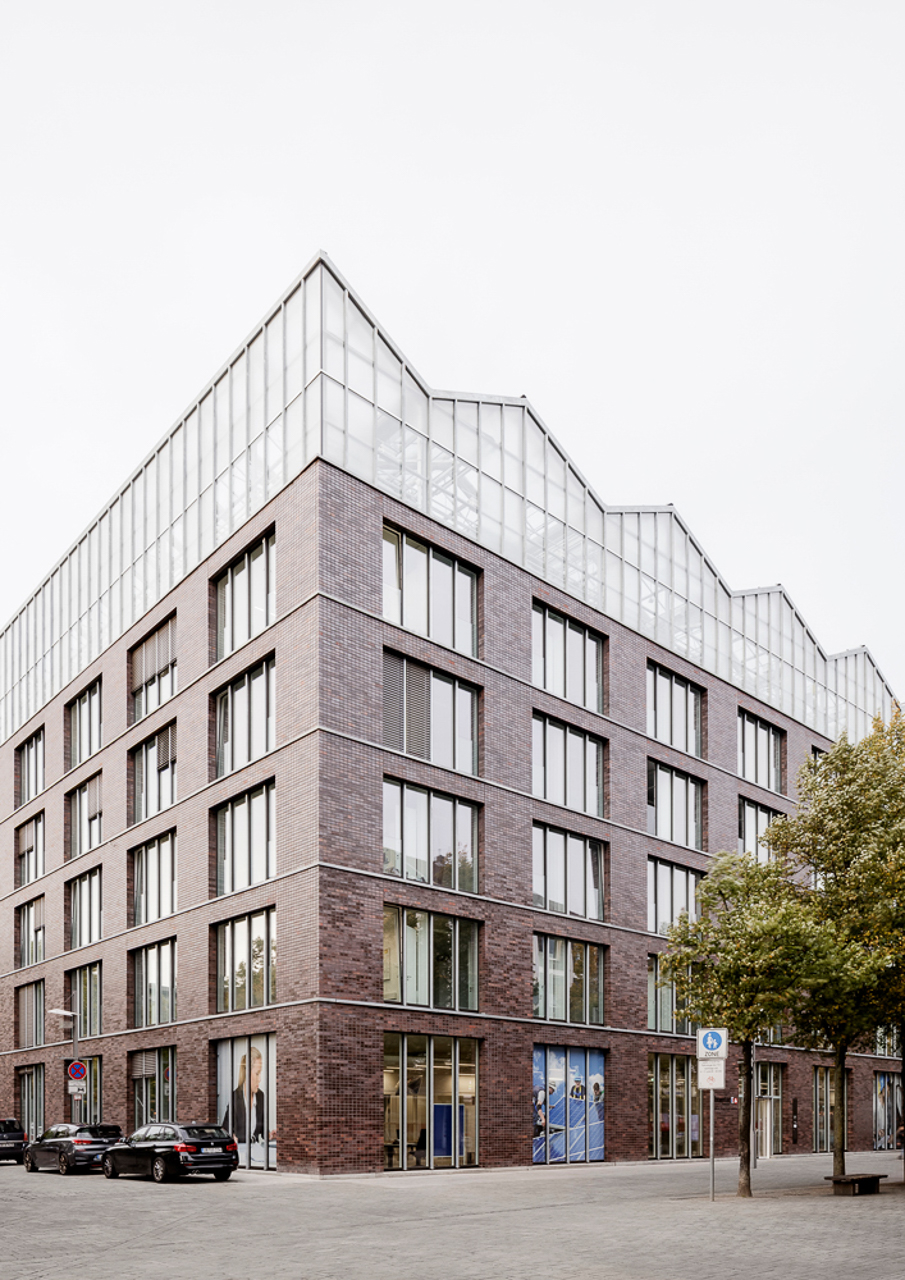
North-Eastern View from Altmarkt
-
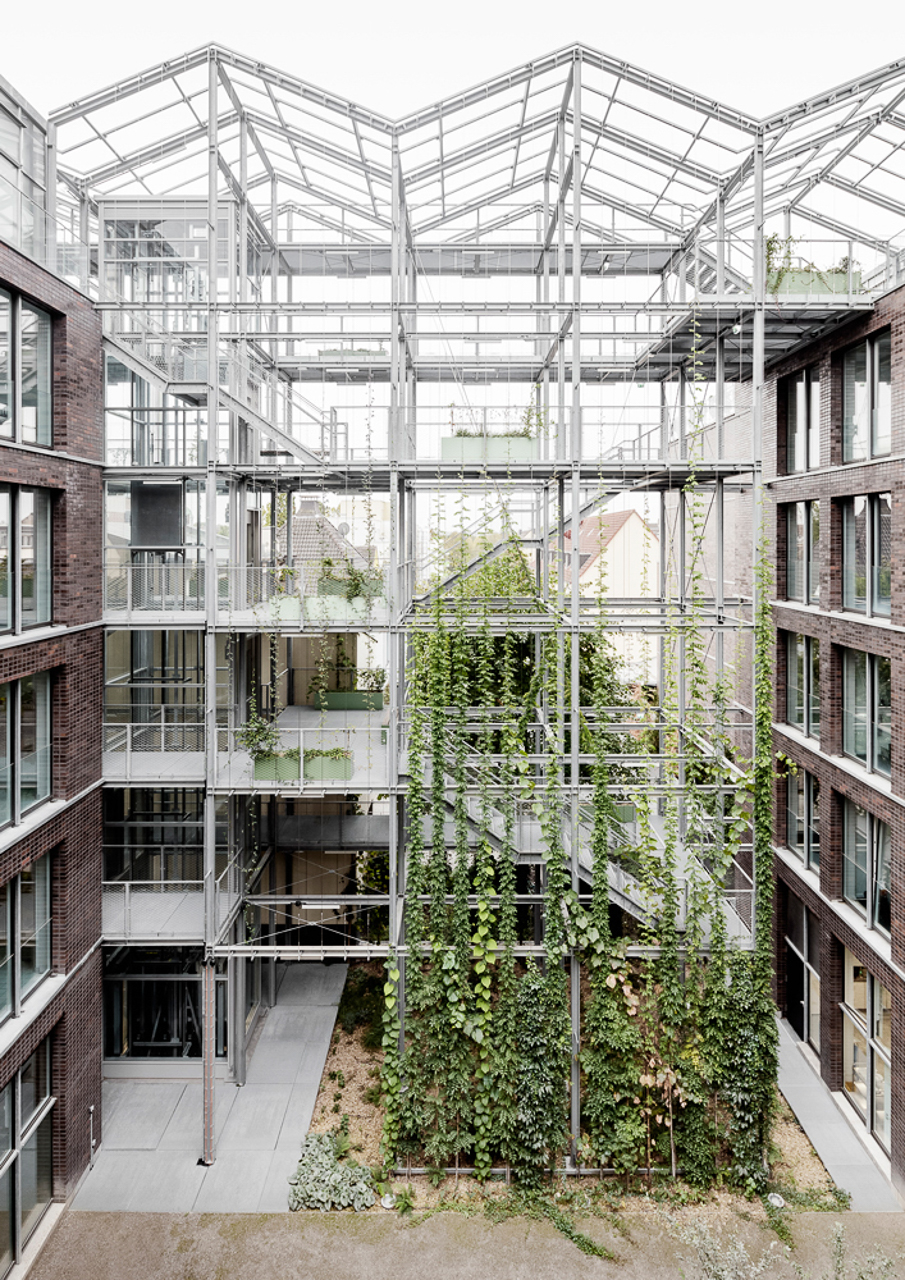
Courtyard View of the Vertical Garden
-
Rooftop Greenhouse Plant Tables
-
Foyer
-
Vertical Garden Walkway
-
Site Plan
-
Floorplan Groundfloor, 1:500
-
Typical Floorplan, 1:500
-
Section, 1:500
-
Facade Section
-
-
DE06 Kuehn Malvezzi A2 Panel
Administrative Building with Integrated Rooftop Greenhouse
Kuehn Malvezzi, atelier le balto. Oberhausen, Germany
-
Name of work in English
Administrative Building with Integrated Rooftop Greenhouse
-
Name of work in original language
Verwaltungsgebäude mit integriertem Dachgewächshaus am Altmarkt, Oberhausen
Prize year
EUmies Awards 2022
-
Work Location
Oberhausen, Germany
-
Studio
Kuehn Malvezzi, atelier le balto
EUmies Awards 2022 Nominees


Administrative Building with Integrated Rooftop Greenhouse
For the first time in Germany, a building was being constructed that combines functions as diverse as a Jobcenter and a rooftop greenhouse, in which urban agriculture is practiced and researched.
Collaborators
Collaborator (external): Haas Architekten, Berlin (Greenhouse Planner); Structural engineering: Frankenstein Consult, Berlin; Fire consulting: Hagen – Ingenieure für Brandschutz, Kleve; Building technology: HL-Technik, Munich; Building physics: Müller BBM, Gelsenkirchen
Program
Government & Civic
-
Labels
Administration
Site area
2068 m²
-
Client
OGM Oberhausener Gebäudemanagement GmbH
Total gross floor
7839 m²
Completion
2019
The historical center of Oberhausen raises the question of how urban density and public spaces beyond commercial uses can be realized in light of economic structural change. As an answer to this question, the project integrates two very different uses. For the first time in Germany, a building was being constructed that combines functions as diverse as a Jobcenter and a rooftop greenhouse, in which urban agriculture is practiced and researched. The building technology integration makes the office building usable as a resource for agricultural production. The design adds a third element, going beyond the original brief: A publicly accessible vertical garden closely links the rooftop greenhouse with the city and its central market square.
The building blends confidently but calmly into the historical city. It joins the ensemble of public buildings whose striking brick facades form the protagonists of the cityscape. The brick cladding is revealed as a façade instead of giving the impression of being solid. The stacked bond brickwork produces an atectonic visual appearance. The specificity results from the tension between the physicality of the brick building and the filigree lightness of the rooftop greenhouse. From the regularity of its structure, the greenhouse on each of the three sides of the street forms its own conclusion, which responds sensitively to each context. Floortoceiling windows, exterior views and structural clarity give the rooms inside the building a generous feeling. Contrasting the clinker cladding, the foyer on the ground floor is designed to have a raw, visible finish. The concrete construction is exposed, suspended ceilings were dispensed in favor of the experience of the full room height.
The three elements of the office building, the greenhouse and the vertical garden are modularly related to one another. A galvanized steel structure takes the basic dimensions as a starting point and varies them in different components: vertically as a division in the office windows, in the glass of greenhouse wall and the metal trellis; horizontally the platforms of the trellis continue storey by storey on the surrounding windowsills. The utilization of standardized components enables both economical construction and efficient operation. The warehouse typology of the building is sustainable in terms of adaptability to possible future developments of the city. The integration of building services, which had previously been investigated in feasibility studies and has been implemented here for the first time, means that various functions can benefit each other. Air removed from the office building, for example, is fed into the greenhouse, where waste heat and CO2 can promote plant growth.