-

Main view of the Silo building in the front, with the Mills building on the background
-
Refurbrisehd Silo building
-
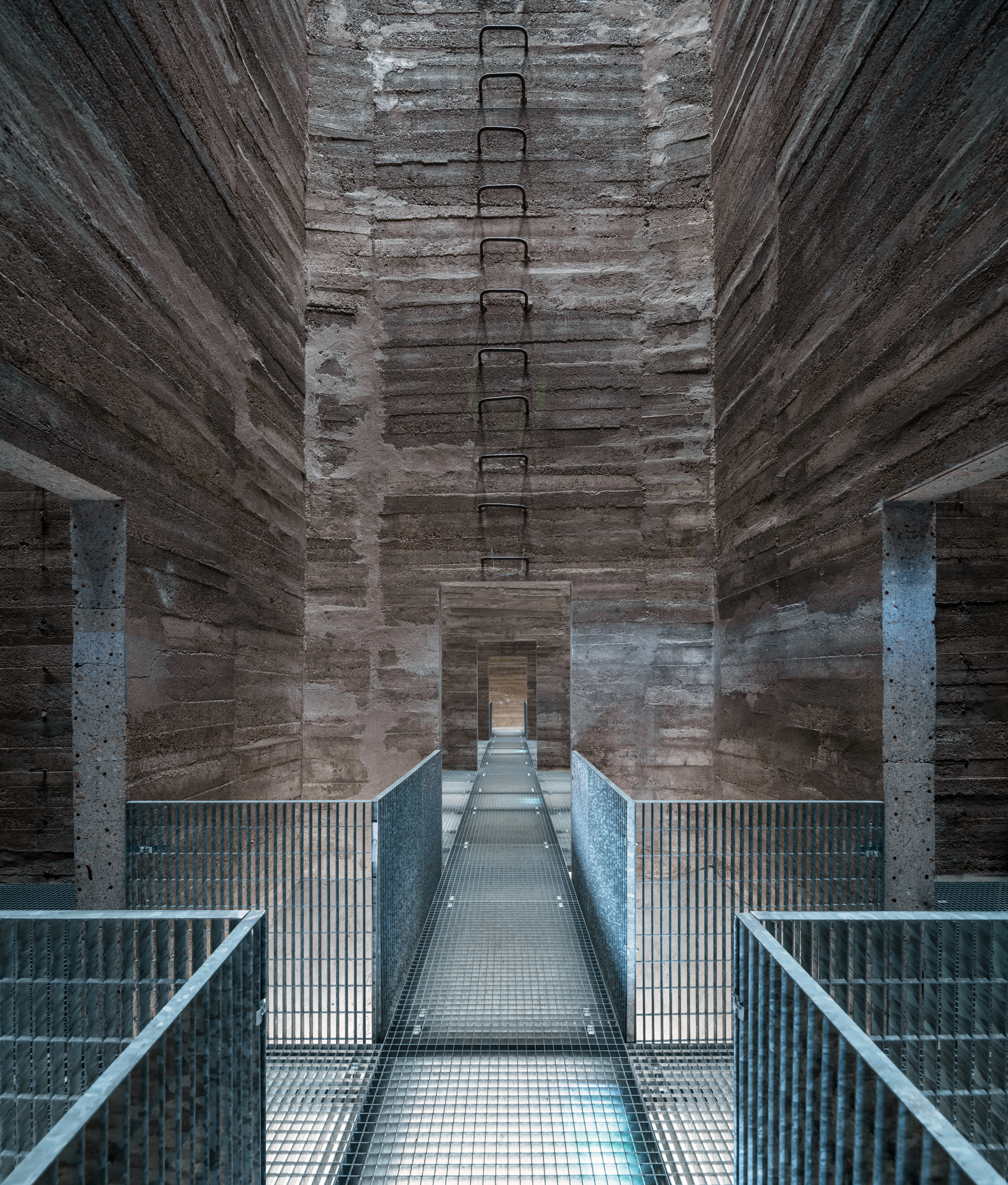
The interior of the original silo bins is now accessible through the new openings
-
The multipupose hall on the 5th floor, inserted into the previous technical room
-
The public terrace with the roof extension
-
Overall view of the Automatic Mills
-
Site plan of the city of Pardubice
-
Site plan of Automatic Mills
-
Scheme
-
Floor plans
-
Sections
-
Elevations
Adaptation of the Grain Silo in the Winternitz Automatic Mills
Prokš Přikryl architekti. Pardubice, Czechia
-
Name of work in English
Adaptation of the Grain Silo in the Winternitz Automatic Mills
-
Name of work in original language
Adaptace obilného sila ve Winternitzových automatických mlýnech
Prize year
EUmies Awards 2026
-
Work Location
Pardubice, Czechia
-
Studio
Prokš Přikryl architekti
EUmies Awards 2026 Nominees
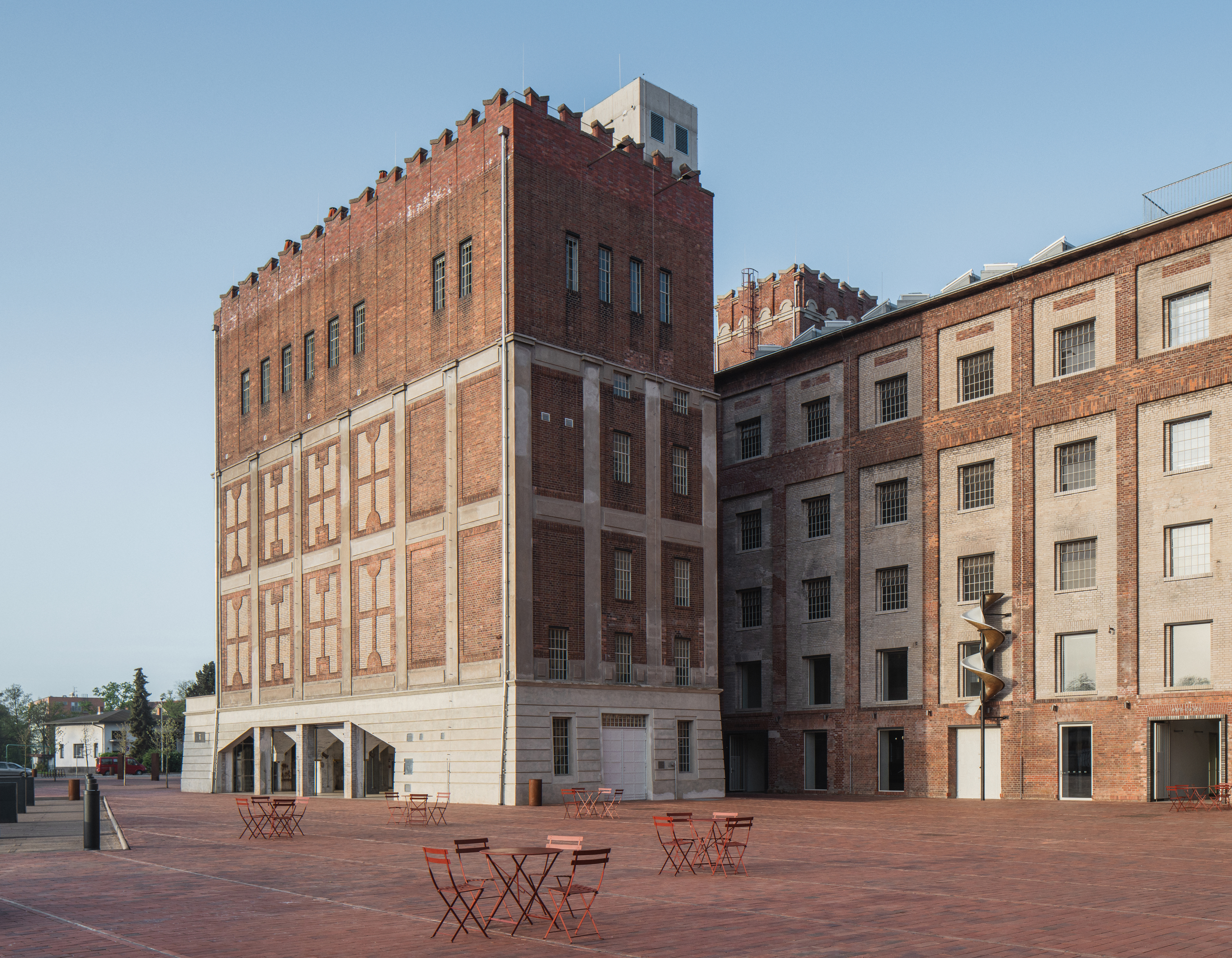



The Silo is part of the revived industrial heritage site of the Automatic Mills. Composed of several buildings and institutions together, they are linked by a brick “carpet” and the unique tension existing between them. All the buildings reinforce each other and thus form a living part of the city.
Collaborators
Civil engineer: Jan Kolář; Structure: Tomáš Bajer - MDS projekt; Structure: Vilém Silbrník - STA-CON; Fire Safety and Accessibility: Jiří Novák - Projekty PO; Building physics: Jan Slabý - Mikroklima; Building physics: Jiří Vik - Vik tepelná technika; Installations: Petr Studený - MK profi; Installations: Luboš Radoň - MK profi; Installations: Miroslav Bouček; Acoustics: Jan Tuček - SONING; Acoustics: Jaroslav Bohatý - SONING; Lighting: Ladislav Tikovský - AST; Installations: Petra Kvapilová - TECONT; Installations: Vratislav Čapek - TRAMONTÁŽ; Geotermal boreholes: Pavel Müller - GEROTOP; graphical system: Richard Wilde - Publikum design
Program
Mixed use - Cultural & Social
-
Labels
Compact · Architecture · Art Gallery · Dance · Foundation · Installation · Theatre · Music · Facilities
Site area
3300 m²
-
Client
Automatic Mills foundation
Total gross floor
1848 m²
Cost
1840 €/m²
The Automatic Mills, a national cultural monument, is one of the first buildings designed by Josef Gočár, who was to become one of the greatest Czech architect of the 20th century. Standing on the banks of the Chrudimka River in the centre of Pardubice, the monumental mill building was created in 1909. In 1924, the complex was extended to include a grain silo, the conversion of which we designed. The automatic mills operated continuously for more than 100 years until 2013. Since 2016, the mill brownfield has been undergoing transformation into a cultural and social urban district.
The main purpose of the Silo conversion is its social use, which has replaced the previous industrial function. The multi-purpose hall hosts theatres, lectures, concerts and social events. The roof terrace with bar offers a new view of the city. Exhibitions will be held in the newly accessible grain bins. Here, the very essence of the silo becomes visible. The silo ground floor now forms a covered public space and a basement, almost an underworld of their own, with public toilets provides facilities for the new square. The idea of opening the building to the square went hand in hand with the overall opening of the site to the city. Opening the gates, opening the parterre. The base, that had been mysteriously closed, is now broken through by a wide new opening. Today, as in the past, a single communication core connects the whole. The main change is the hall inserted into the former machine room on the 5th floor. Together with the hall, the roof has been made wheelchair accessible.
The construction interventions involved mainly creating a full-length basement for the building, insertion of a communication core and construction of an open hall space in place of the pillared hall on the 5th floor. The condition of the 100-year-old concrete, which is now approximately C16/20, was very good, showed no defects and no repair was necessary. However, the horizontal structures did not meet the required loads and therefore were all replaced with new ones. The building is partially heated. Due to the listed facades, the above-ground heated spaces are insulated internally. The building is heated by a ground-to-water heat pump with 6 geothermal boreholes 120 m deep. Colours and brickworks are confined to the facades, the interior is muted. All original surfaces are retained, including the patinas, or various drill holes and scars left by the demolished partition walls. Simply put, the aim is to develop the building in its rationality and monumentality.