-

IMAGE 12.png
-
IMAGE 11.png
-
IMAGE 3.jpg
-
IMAGE 1.jpg
-
IMAGE 2.jpg
-
IMAGE 5.png
-
SITUATION PLAN- 1.500.jpg
-
GROUND FLOOR- 1.200.jpg
-
BASEMENT- 1.200.jpg
-
DETAILS- 1.20.jpg
-
FACADE- 1.200.jpg
-
SECTION- 1.200.jpg
-
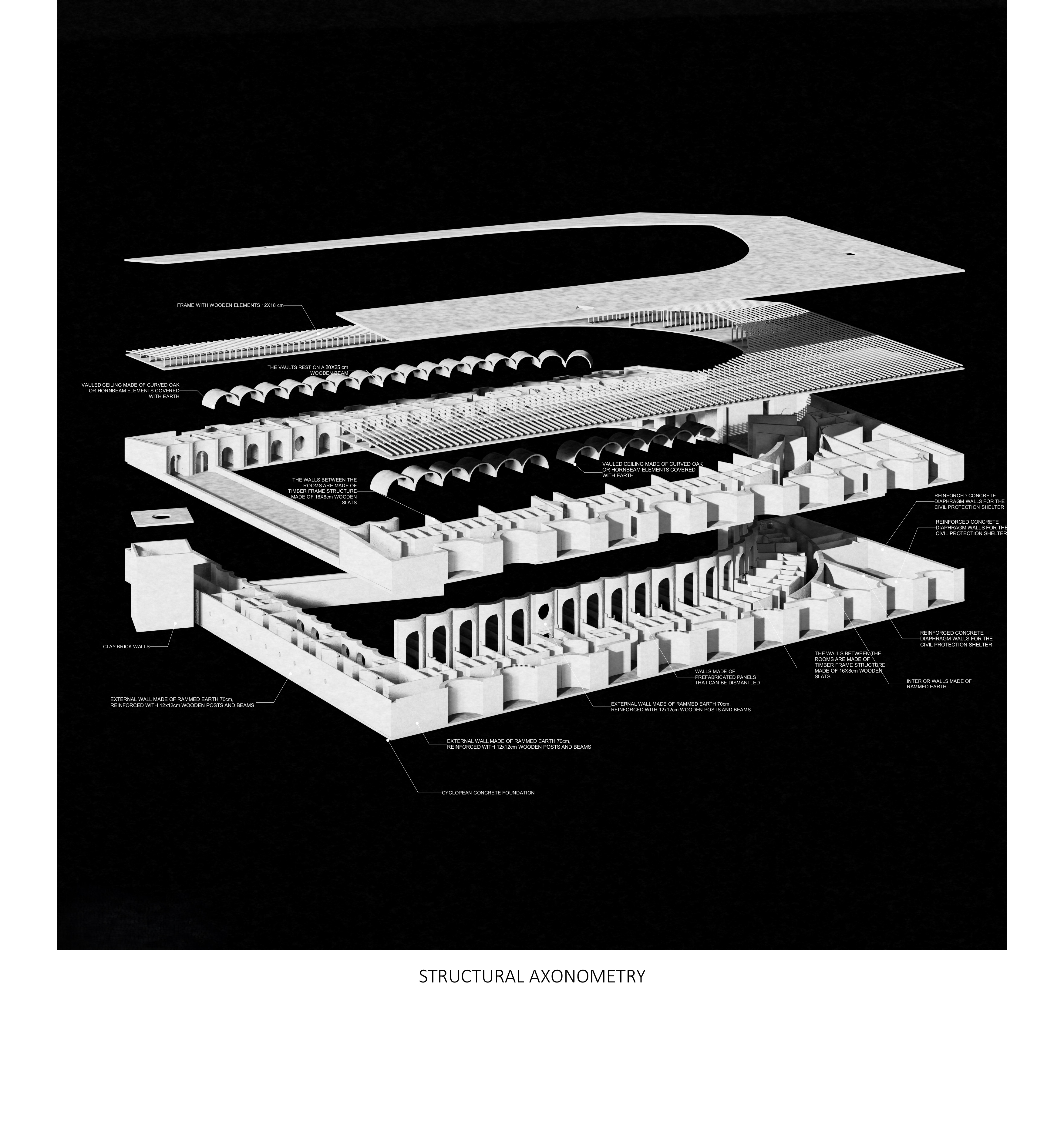
STRUCTURAL AXONOMETRY_.jpg
A Last Home
Alexandru Florin Ardelean. Slatina-Nera, Romania
-
Name of work in English
A Last Home
-
Name of work in original language
Ultima Casă
Prize year
Young Talent 2025
-
Work Location
Slatina-Nera, Romania
-
Author/s
Alexandru Florin Ardelean
-
School
Faculty of Architecture and Urban Planning - Polytechnic University of Timisoara.
Timișoara, Romania
Young Talent 2025 YT Nominees


A Last Home
Centru de Îngrijire Paliativă Pentru Persoanele Diagnosticate cu Cancer
Program
Health
-
Labels
Specialized Centre
The palliative care center is both socially urgent and delicately designed from an architectural and symbolic perspective. Chosen to address issues like overcrowding and the lack of centers in Romania, the project seeks to improve medical services and the mental, spiritual, and emotional well-being of patients. The existing wooden church on the site plays a central role in the design, and the project goes beyond the functional needs of a medical center, fostering introspection and connection.
The proposed palliative care center is more than a medical facility; it reflects the human experience of life and suffering. It offers a comforting space where individuals can accept the transient nature of existence. The design addresses both physical and emotional needs, creating a journey through spaces that are rhythmically arranged and sometimes fragmented, symbolizing life’s final stages. The layout is intentionally closed off to the landscape, yet open to the central courtyard and the existing church, which serves as the heart of the community. This church becomes the core of the building, with the structure’s massiveness evoking protection and safety. Though the structure appears isolated, large windows open to the central courtyard, offering tranquility and connection to nature. The landscape is integrated through intimate loggias and a spacious terrace, connecting patients to light, sun, and nature—elements as vital as medication that manages to keep them connected to reality. The interior follows a pathway, guiding individuals through various spatial experiences, with physical and psychological thresholds marking transitions. Rooms for immobilized, independent, and dependent patients are designed as microcosms of peace and intimacy, tailored to individual needs. From the dialogue with the existing church to the functional zones leading to the farewell space, the design symbolizes both an end and a new beginning. The access is grand yet fragmented, guiding visitors toward the building’s heart. The materiality of the structure, with beaten earth surfaces, reflects the impermanence of human life while embracing sustainable principles. The building embraces the church, forming a quiet symbiosis that nurtures the community and guides this final journey.