-

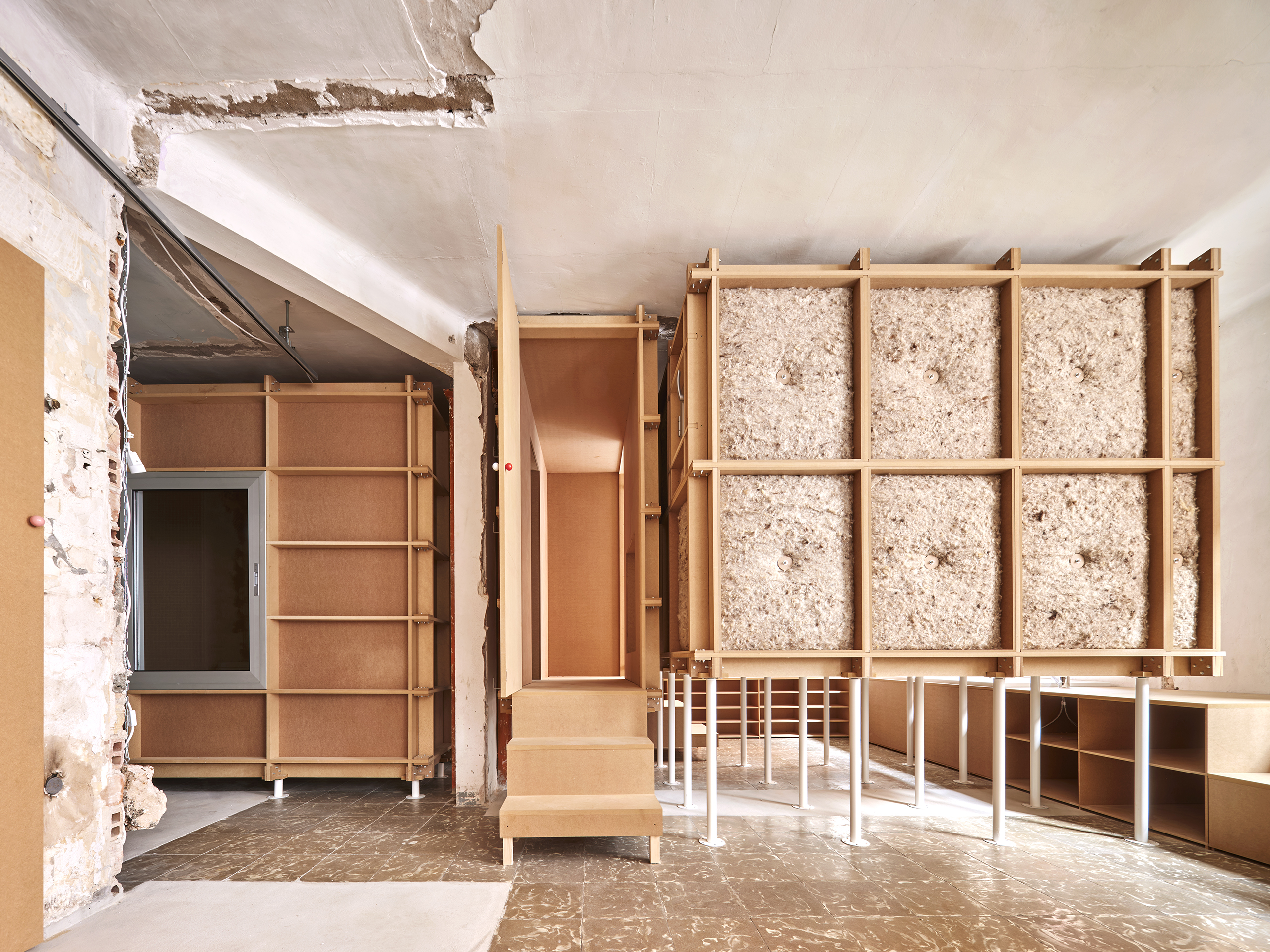
View of the new construction elements.
-
Detail of the bedroom insulated with natural sheep’s wool.
-
Detail of the bathtub placed along the façade.
-
Access to the main bathroom.
-
Detail of the entrance and main bathroom area.
-
Interior detail of the new construction.
-
Floor plan
-
Diagram of thermal gradients and cross ventilation
-
Top view
-
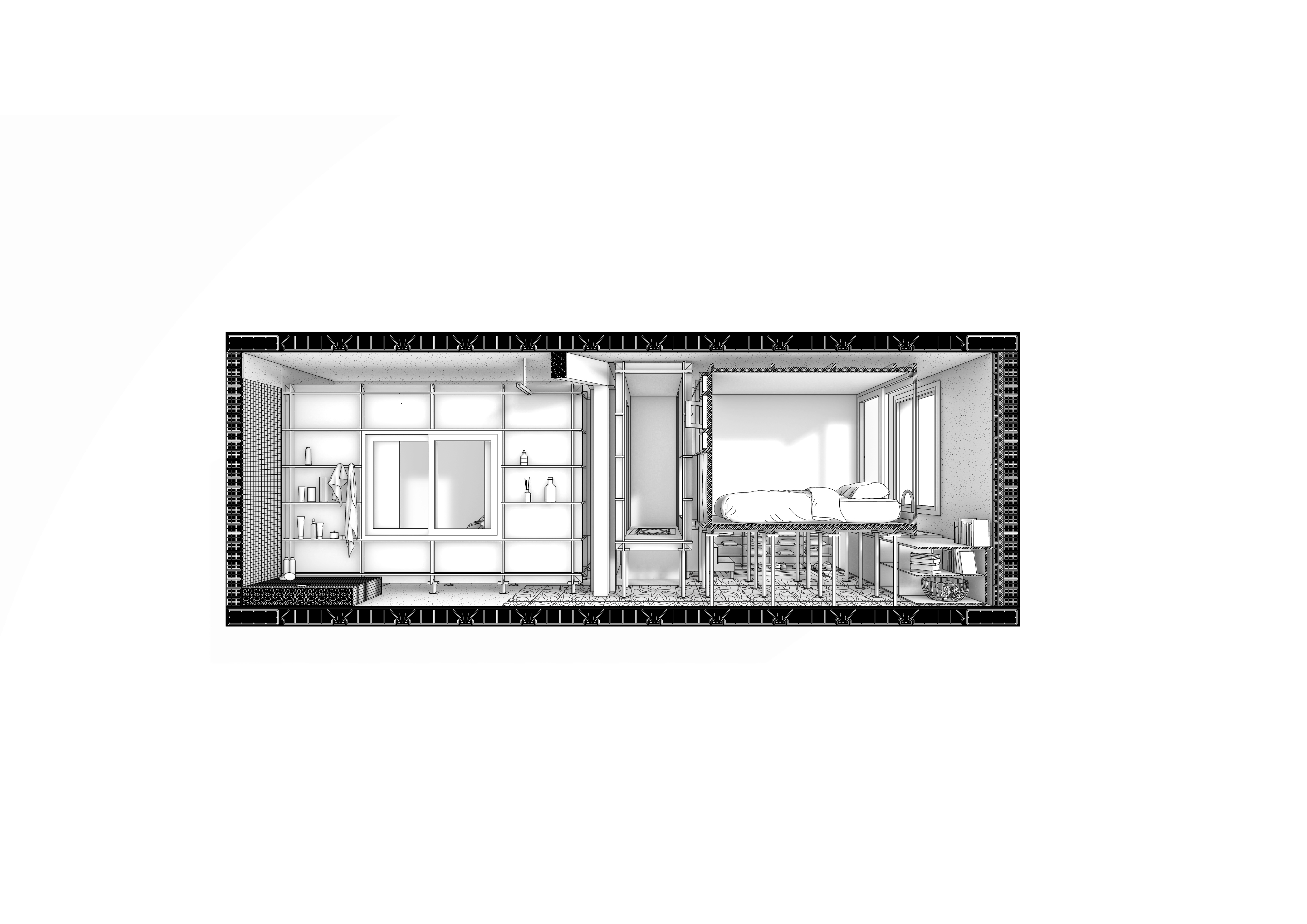
Cross section
-
Material efficiency diagram
-
Name of work in English
10K House
-
Work Location
Barcelona, Spain
-
Studio
TAKK // Mireia Luzárraga + Alejandro Muiño
Nominees



“10k House” is the refurbishment of a 50 m² flat in Barcelona, carried out with a material execution budget of only 10,000 euros, aiming to update the home according to new models of use and environmental awareness within the framework of the current affordable housing crisis and climate change.
Collaborators
Collaborator (office): Berta Ribaudí; Collaborator (office): Roger Monfort
Program
Single house
-
Labels
Infill · Family
Site area
50 m²
-
Client
Martí Delclòs
Total gross floor
50 m²
Cost
200 €/m²
Located in Barcelona, "10k House" is the careful renovation of an existing apartment that replaces the conventional room-and-corridor layout with a spatial organization based on thermal gradients. The kitchen and bathroom are reimagined as central, social, and gender-neutral spaces. Using a restrained material palette—mainly MDF and sheep’s wool—the project ensures affordability, material honesty, and low environmental impact while proposing an adaptable, open, and energy-efficient domestic model.
"10k House" responds to Spain’s ongoing housing crisis—especially affecting younger generations—by exploring how domestic space can be radically transformed with an extremely limited budget. Conceived as a form of economic and environmental resistance, the project seeks independence from the fossil-fuel industry for both heating and cooling, testing new ways for architecture to confront climate change at the domestic scale. The conventional room-and-corridor layout is replaced by a thermal gradient-based organization that optimizes natural heat and ventilation flows. Instead of isolated rooms, spaces are nested by temperature, improving comfort and energy efficiency. Materials are minimized and visibly reused: no plaster, paint, or tiles are applied, allowing previous layers to remain as traces of memory.
Built entirely on-site through dry construction, the apartment can be assembled by non-experts—including the client—reframing renovation as a collaborative, low-tech, and climate-conscious practice for affordable living. Structural and partition elements are prefabricated with CNC technology and mounted using standard screws. Materials were selected for cost-efficiency, sustainability, and availability: standard MDF panels for structure and cladding, and locally sourced sheep’s wool for insulation. Recycled table legs elevate built elements, allowing water and electricity routes to remain visible and accessible. Surfaces are left uncoated preserving traces of previous configurations while minimizing waste and labor. No tiles, plaster, or paint are applied. This construction logic reduces carbon emissions, and cost. Its modular nature enables easy disassembly, maintenance, and future adaptation, offering a resilient renovation model under current economic and environmental constraints.